
Vollenhovia kaselela
- Bilimsel Adı
- Vollenhovia kaselela
- Oymak (Tribe)
- Crematogastrini
- Alt Familya
- Myrmicinae
- Yazar (Tanımlayan)
- Clouse, 2007
- Dağılım
- 0 ülkede bulundu
Giriş
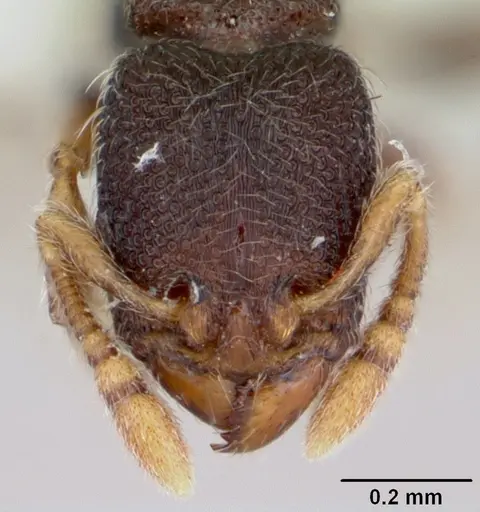
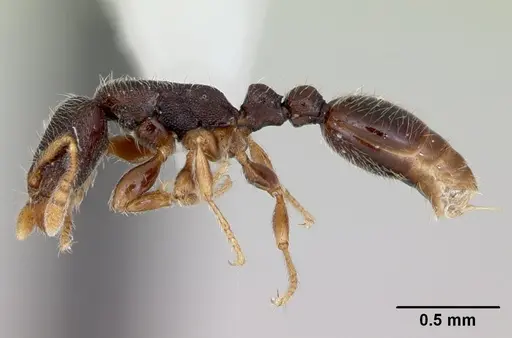
Vollenhovia kaselela is a tiny ant native only to Pohnpei Island in the Federated States of Micronesia . Workers measure just 1.9-2.0mm in total length, making them among the smallest ant species known . Their body is mostly blackish brown, with orange-brown mandibles, clypeus, and leg segments . The head has fine striations on the gena (area behind the eyes), while the mesosoma is covered in small punctures . Ronald M. Clouse first described this species in 2007,and its biology remains almost entirely unknown . The name 'kaselela' means 'beautiful' or 'perfect' in the Pohnpeian language . In their natural habitat, workers have been found walking on rotten logs, suggesting they nest in decaying wood in tropical forests .
Quick Summary
- Difficulty: Unknown, Insufficient data for difficulty rating
- Origin & Habitat: Pohnpei Island, Federated States of Micronesia, tropical Pacific island environment [1][2]
- Colony Type: Unconfirmed, colony structure has not been documented in scientific literature
- Size & Growth:
- Queen: Undescribed, queen caste has not been documented [1]
- Worker: 1.9-2.0mm total length [1]
- Colony: Unknown, no colony size data available
- Growth: Unknown
- Development: Unknown, no development data exists for this species (Development timeline unconfirmed. Based on typical Myrmicinae patterns and small body size, development likely takes 4-8 weeks at tropical temperatures, but this is purely estimated.)
- Antkeeping:
- Temperature: Likely 24-28°C based on tropical island origin, no direct data exists, suggest starting in this range and observing colony activity [1]
- Humidity: Likely requires high humidity given the tropical origin and rotting wood nesting preference. Keep the nest substrate consistently moist but not waterlogged [1].
- Diapause: Unlikely, tropical species from Pohnpei Island where temperatures remain warm year-round [2]
- Nesting: In nature, found on rotten logs suggesting they nest in decaying wood. In captivity, a small Y-tong (AAC) nest or plaster nest with tight chambers scaled to their tiny size would likely work. Avoid large open spaces.
- Behavior: Behavior is undocumented in scientific literature. Like other Crematogastrini ants, Vollenhovia kaselela has a modified stinger used to smear venom onto enemies rather than piercing. However, no specific defensive behavior has been observed. Their tiny size means excellent escape prevention is critical, they can squeeze through the tiniest gaps.
- Common Issues: this species has no established captive breeding history, obtaining a colony may be impossible, no biological or behavioral data exists to guide care decisions, tiny size makes escape prevention challenging, use fine mesh barriers, colony size and growth rate are completely unknown, tropical humidity requirements may be difficult to maintain consistently
Discovery and Distribution
Ronald M. Clouse first described Vollenhovia kaselela in 2007 from specimens collected on Pohnpei Island in the Federated States of Micronesia [1]. This species is known only from this single island location, making it endemic to Pohnpei [2]. The original specimens were collected between 1994 and 2002,with the paratype worker found walking on a rotten log [1]. The species name 'kaselela' comes from the Pohnpeian language, meaning 'beautiful' or 'perfect' [1]. This ant remains one of the least-studied species in the Myrmicinae subfamily, with virtually no biological research conducted since its description [1][2].
Identification and Appearance
Workers of Vollenhovia kaselela are tiny, measuring just 1.9-2.0mm in total length [1]. The head is roughly rectangular, tapering slightly toward the mandibles, with a concave median vertex [1]. The most distinctive features are the striations (fine parallel lines) on the gena (area behind the eyes) and the extensive punctures (small dots) covering the mesosoma [1][2]. The body is predominantly blackish brown, while the mandibles, clypeus (a plate on the face), and leg segments are orange-brown [1]. They have 12-segmented antennae with an indistinct three-segmented club [1]. This species can be distinguished from other small Vollenhovia by its larger size, darker coloration, and the combination of striations on the gena with punctures on the pronotum [1].
Natural History
The natural history of Vollenhovia kaselela remains almost completely unknown. The only documented collection method was finding workers walking on a rotten log, suggesting they nest in decaying wood in tropical forest environments [1]. No information exists about their diet, colony size, queen reproduction, nuptial flights, or any behaviors [1]. As a tropical species from Pohnpei Island, they likely experience warm temperatures and high humidity year-round [2]. Pohnpei is a volcanic island in the western Pacific with a tropical climate, receiving heavy rainfall throughout the year. These environmental conditions should guide any captive care attempts.
Housing and Care Recommendations
Since no captive keeping information exists for this species, all recommendations are estimates based on the species' likely needs. Provide a small nest with chambers scaled to their tiny 2mm size, a Y-tong (AAC) nest or plaster nest with narrow passages would be appropriate [1]. Maintain temperatures in the 24-28°C range, reflecting their tropical island origin. Keep the nest substrate consistently moist but not waterlogged, mimicking the humid conditions of rotting wood in a tropical forest. Because of their extremely small size, escape prevention must be excellent, use fine mesh barriers and ensure all connections are sealed. Feed small live prey items appropriate to their size, such as springtails or tiny fruit fly portions. Sugar water may also be accepted. Start with conservative approaches and adjust based on colony behavior.
Challenges and Considerations
Vollenhovia kaselela presents extreme challenges for antkeepers. This species has no established captive breeding history, meaning obtaining a colony may be virtually impossible outside of wild collection on Pohnpei Island, which would require permits and is not recommended [1]. The complete lack of biological data means keepers would be pioneering all aspects of their care with no guidance. Additionally, being a tropical species from a specific Pacific island, their temperature and humidity requirements may be difficult to replicate accurately. The tiny worker size also creates practical challenges for feeding and escape prevention. For these reasons, Vollenhovia kaselela cannot be recommended for any keeper except the most experienced and dedicated researchers attempting to establish the first captive colony.
Frequently Asked Questions
Is Vollenhovia kaselela available for purchase in the antkeeping hobby?
No, this species is extremely rare and has no established captive breeding populations. It is known only from Pohnpei Island in Micronesia and has never been documented in the antkeeping trade [1].
How big do Vollenhovia kaselela workers grow?
Workers are among the smallest ants, measuring only 1.9-2.0mm in total length [1].
Where is Vollenhovia kaselela found in the wild?
This species is endemic to Pohnpei Island in the Federated States of Micronesia. It has never been found anywhere else in the world [1][2].
What do Vollenhovia kaselela ants eat?
Unknown, no feeding observations have been documented. Based on typical Myrmicinae behavior, they likely accept small live prey and sugar sources, but this is unconfirmed.
Do Vollenhovia kaselela ants sting?
They have a modified stinger typical of Crematogastrini, used to smear venom rather than pierce, but no defensive behavior has been documented for this species [1].
Can I keep Vollenhovia kaselela in a test tube setup?
A test tube setup could work for a founding colony, but the chambers must be extremely small-scale to accommodate their tiny 2mm size. The key concern is escape prevention, their small size allows them to squeeze through standard cotton plugs. Use fine mesh barriers instead.
What temperature should I keep Vollenhovia kaselela at?
No official data exists, but based on their tropical origin on Pohnpei Island, aim for 24-28°C. This is an estimate based on typical tropical ant requirements, not confirmed research.
Does Vollenhovia kaselela need hibernation or diapause?
Unlikely, Pohnpei Island maintains tropical temperatures year-round with no cold season. This species almost certainly does not require diapause, but no research confirms this.
How fast do Vollenhovia kaselela colonies grow?
Unknown, no colony growth data exists for this species. Based on their very small worker size, development may be relatively fast (4-8 weeks egg to worker) typical of tiny Myrmicinae, but this is purely estimated.
Is Vollenhovia kaselela suitable for beginners?
No. This species has no captive care history, no available colonies, and almost no biological data to guide keepers. It cannot be recommended for any keeper level until more information becomes available.
What type of nest does Vollenhovia kaselela need?
In nature, they are found on rotten logs suggesting they nest in decaying wood. In captivity, a small Y-tong (AAC) nest or plaster nest with tight chambers scaled to their tiny size would be appropriate. Avoid large, open spaces.
Are Vollenhovia kaselela aggressive?
Unknown, no behavioral observations have been documented. Based on their tiny size and typical Myrmicinae patterns, they are likely shy and non-aggressive, but this is unconfirmed.
Report an Issue
The current care sheet is based fully on literature. See inconsistencies, or something that's incorrect? Please , it will be resolved after review from an admin. Contributing to the blogs tab also helps providing information, to make us be able to further improve the caresheets. Thank you for your support!
References

Bu bakım rehberi şu lisans altındadır: CC BY-SA 4.0 .
Topluluk Blogları
CASENT0173092
AntWeb'de Görüntüle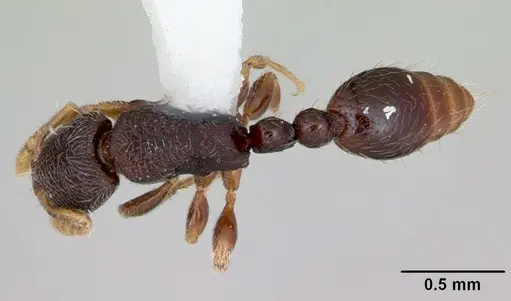
Literatür
Dağılım haritası yükleniyor...Ürünler yükleniyor...