
Tetramorium nursei
- Bilimsel Adı
- Tetramorium nursei
- Oymak (Tribe)
- Crematogastrini
- Alt Familya
- Myrmicinae
- Yazar (Tanımlayan)
- Bingham, 1903
- Dağılım
- 0 ülkede bulundu
Giriş
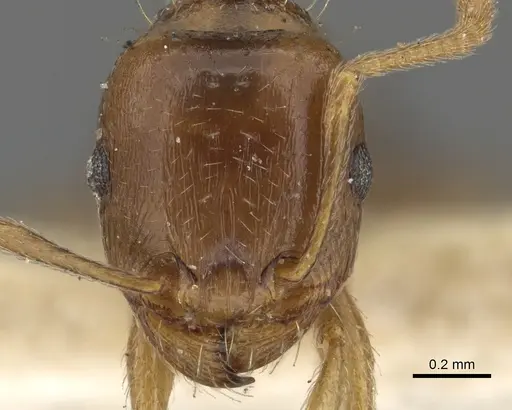
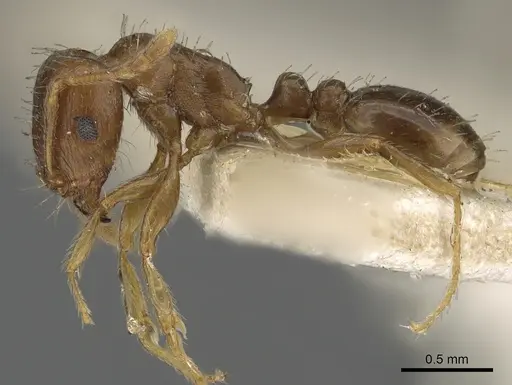
Tetramorium nursei is a small, dark yellowish-brown ant. Workers measure 3.0-3.2mm in total length . It belongs to the caespitum species group, which is predominantly Palaearctic, making this one of the few genuine Palearctic components of the Indian Tetramorium fauna . The worker has a narrow, high petiole, short frontal carinae, and minute triangular propodeal spines. Most of the head and body are smooth and shiny, with numerous erect hairs on the dorsal surfaces . Tetramorium nursei ranges across Pakistan (type locality Quetta), northwestern India, China (Xinjiang), and Iran . It is adapted to temperate and arid subtropical climates, and has been collected from agricultural fields, roadsides, under soil, and on trees . Note: a record from Kerala is considered dubious and likely a misidentification . The queen has not been described.
Quick Summary
- Difficulty: Medium
- Origin & Habitat: Native to Pakistan, northwestern India, China (Xinjiang), and Iran. Found in temperate and arid subtropical climates, typically between 1400-2000m elevation. Collected from agricultural fields, roadsides, under soil, and on trees [2][7][6][3][4].
- Colony Type: Unknown. Based on caespitum-group patterns, likely single-queen (monogyne) colonies. No data on ergatoid reproductives.
- Size & Growth:
- Queen: Unknown, queen has not been described.
- Worker: 3.0-3.2mm [1]
- Colony: Unknown. Inferred from related Tetramorium species, possibly up to several hundred workers.
- Growth: Moderate, inferred from genus patterns
- Development: Estimated 6-10 weeks based on typical Tetramorium development at 20-24°C (No direct data for this species. Estimate based on caespitum-group.)
- Antkeeping:
- Temperature: Keep at 20-26°C with a gentle gradient. This species comes from temperate and arid subtropical regions, so it handles cooler conditions well [2]. Room temperature is often suitable.
- Humidity: Low to moderate. Allow the nest substrate to dry partially between waterings. Avoid constant dampness, these ants are from arid climates, not humid forests.
- Diapause: Likely required. Based on its Palearctic distribution, provide a winter rest of 8-12 weeks at 10-15°C. Do not hibernate below 5°C.
- Nesting: Y-tong (AAC) or plaster nests with a moisture gradient work well. Test tube setups are fine for founding colonies.
- Behavior: Workers are active foragers on trees and ground surfaces [7]. Their small size (3mm) means escape prevention must be thorough, use fine mesh on ventilation. Not aggressive but will defend the nest. Moderate escape risk.
- Common Issues: small size makes escapes likely without fine mesh barriers, no documented biology means care adjustments based on colony behavior are expected, likely requires hibernation, colonies not cooled may decline, founding phase may be slow, typical of Tetramorium, wild-caught colonies may carry parasites
Housing and Nest Setup
Tetramorium nursei does well in Y-tong (AAC) or plaster formicariums that allow you to control humidity. Provide a moisture gradient, keep one side slightly damp and the other drier so workers can choose their preferred conditions. For founding colonies, a simple test tube setup works well. Because workers are only 3mm, use fine mesh on all ventilation holes to prevent escapes. Start with a small outworld and expand as the colony grows. They don't need large spaces initially.
Feeding and Diet
Tetramorium nursei is a generalist feeder. Offer protein sources like small insects (fruit flies, small mealworms, crickets) and carbohydrates such as sugar water or honey. In the wild, workers forage on trees and ground surfaces [7]. Feed prey items small enough for workers to handle. Remove uneaten prey after 24-48 hours to prevent mold. Keep sugar water available constantly.
Temperature and Seasonal Care
Maintain temperatures between 20-26°C. This species comes from temperate and arid subtropical regions of Pakistan, India, China, and Iran, so it tolerates cooler conditions than most tropical ants [2]. A heating cable on one side creates a useful gradient. During winter, provide a diapause period of 8-12 weeks at 10-15°C. Do not cool below 5°C. Colonies that miss proper winter rest may become stressed and decline.
Colony Development
Little is known about the specific development of Tetramorium nursei. Based on typical Tetramorium caespitum-group patterns, expect 6-10 weeks from egg to first worker at optimal temperatures (around 22-24°C). Founding queens likely seal themselves in a chamber and rely on stored fat until workers emerge (claustral founding). Early workers (nanitics) will be smaller than mature workers. Growth is typically moderate, don't expect rapid expansion. Patience is important during the founding phase.
Behavior and Observation
Workers are active foragers, collecting from trees and ground surfaces [7]. They are not particularly aggressive but will defend the nest if threatened. Their small size makes them quick and requires careful observation. In the wild they nest under soil, stones, and in protected microhabitats. In captivity, they will explore the outworld and form foraging trails. Like other members of Crematogastrini, they possess a functional stinger but use a smearing defense, venom is wiped onto enemies rather than injected.
Frequently Asked Questions
How long does it take for Tetramorium nursei to get their first workers?
Expect 6-10 weeks from egg to first worker at optimal temperatures (22-24°C). This is an estimate based on typical Tetramorium caespitum-group development, no specific data exists for this species.
Do Tetramorium nursei ants need hibernation?
Yes, likely required. Based on their Palearctic distribution, provide 8-12 weeks of winter rest at 10-15°C. Do not hibernate below 5°C.
What do Tetramorium nursei ants eat?
They are generalist feeders. Offer small insects (fruit flies, small mealworms) for protein and sugar water or honey for carbohydrates. Remove uneaten prey after 24-48 hours.
How big do Tetramorium nursei colonies get?
Unknown, possibly several hundred workers based on related Tetramorium species. No specific data exists for this species.
Can I keep Tetramorium nursei in a test tube?
Yes, test tubes work well for founding colonies. Use fine mesh on the cotton because these are small ants (3mm workers) and can escape through standard cotton barriers.
Are Tetramorium nursei ants good for beginners?
Medium difficulty. Their small size and escape risk make them slightly challenging for complete beginners, but their generalist diet and tolerance for temperature variation make them manageable once you understand basic antkeeping.
Do Tetramorium nursei ants sting?
They have a functional stinger, typical of Myrmicinae, but use a smearing defense typical of the Crematogastrini tribe. They are not aggressive and their small size means any sting would be very mild.
What temperature is best for Tetramorium nursei?
Keep them at 20-26°C with a gradient. They tolerate cooler conditions than tropical ants, reflecting their temperate origin. Room temperature is often suitable.
When should I move my colony to a formicarium?
Move to a larger nest (Y-tong or plaster) when the colony reaches 20-30 workers or the test tube becomes crowded. These ants do well in formicariums that allow humidity control.
Where is Tetramorium nursei native to?
Pakistan, northwestern India, China (Xinjiang), and Iran. They are adapted to temperate and arid subtropical climates at higher elevations [2][7][6].
Report an Issue
The current care sheet is based fully on literature. See inconsistencies, or something that's incorrect? Please , it will be resolved after review from an admin. Contributing to the blogs tab also helps providing information, to make us be able to further improve the caresheets. Thank you for your support!
References

Bu bakım rehberi şu lisans altındadır: CC BY-SA 4.0 .
Topluluk Blogları
CASENT0901103
AntWeb'de Görüntüle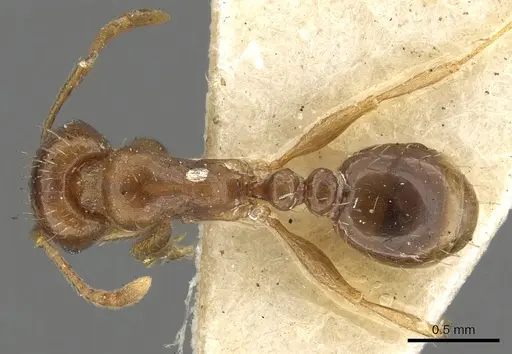
Literatür
Dağılım haritası yükleniyor...Ürünler yükleniyor...