
Tetramorium breviscapus
- Bilimsel Adı
- Tetramorium breviscapus
- Oymak (Tribe)
- Crematogastrini
- Alt Familya
- Myrmicinae
- Yazar (Tanımlayan)
- Wagner <i>et al.</i>, 2017
- Dağılım
- 0 ülkede bulundu
Giriş
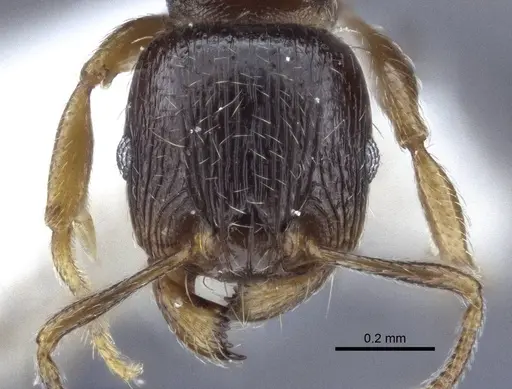
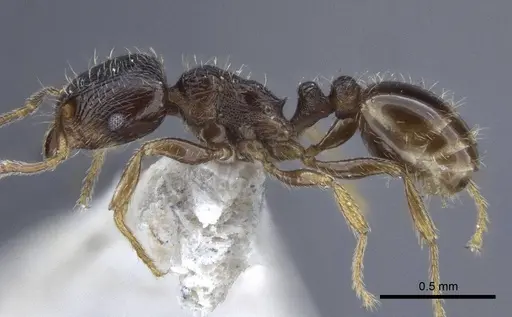
Tetramorium breviscapus is a newly described ant from the Balkans, formally separated from the Tetramorium caespitum complex in 2017 . Workers are small (size data unavailable) with a distinctive truncated head and the shortest antennae scape of any species in the complex . They are dark brown to blackish, with the mesosoma often lighter than the head and abdomen . This species is more thermophilic than its relatives, found in open, sunny habitats from sea level to about 500 m across Croatia, Bosnia & Herzegovina, and Greece . What makes it special is its recent discovery and limited distribution - it's one for keepers who enjoy working with a less common, scientifically documented species.
Quick Summary
- Difficulty: Medium
- Origin & Habitat: Balkans region: Croatia, Bosnia & Herzegovina, and Greece. Lives in open habitats at low to moderate altitudes (mean 210 m, range 3–527 m) [1][3]. Prefers warmer microclimates than related species, average activity temperature around 22°C [1].
- Colony Type: Unconfirmed based on published data, likely monogyne (single queen) as typical for the Tetramorium caespitum complex. Colony size at maturity is unknown but probably in the low thousands based on related species.
- Size & Growth:
- Queen: Inferred from genus patterns: ~7–9 mm (specific data unavailable)
- Worker: Size data unavailable (only head measurements are known, actual body length is not recorded). Inferred from the Tetramorium genus: workers typically 3–5 mm.
- Colony: Unknown – no published data for this species
- Growth: Unknown (estimated Moderate based on genus patterns)
- Development: Unknown – no published data for this species (Development times are estimated from better-studied Tetramorium species, exact timing for T. breviscapus is not established.)
- Antkeeping:
- Temperature: Keep the nest area at 22–26°C. This species is thermophilic, with field activity around 22°C [1]. Use a heating cable on one side to create a gradient. Avoid sustained temperatures below 18°C during the active season.
- Humidity: Provide a dry to moderate gradient. Since these ants come from open, sunny habitats, keep most of the nest substrate dry and only slightly moisten one area. Avoid constant dampness.
- Diapause: Yes – inferred from the temperate Balkan range. Reduce temperature to 10–15°C for 3–4 months (roughly November–February). Gradual cooling and warming are important.
- Nesting: In nature they nest in soil and under stones. In captivity, Y‑tong (AAC) or plaster nests work well. Test tubes are ideal for founding colonies. Provide some dry areas for foraging.
- Behavior: Workers are active, individual foragers hunting small insects and collecting honeydew. Their defense mechanism is a modified stinger used to smear venom onto enemies (subfamily Myrmicinae, tribe Crematogastrini). They are not aggressive toward keepers. Their small size means escape prevention is critical – use fine mesh (0.5 mm or smaller) and fluon barriers.
- Common Issues: small size – escape is a major risk, standard ant mesh may not contain them., newly described species – very little captive care information is documented., slow early growth can lead to overfeeding or disturbance, patience is required., founding colonies may fail if disturbed, keep them dark and quiet., warmth must be maintained year‑round except during diapause.
Temperature and Care
Tetramorium nigrumcapus is more thermophilic than most other Tetramorium species, with an average activity temperature around 22°C [1]. Keep the nest area at 22–26°C during the active season. A heating cable placed on top of the nest (never underneath, to avoid drying) creates a useful gradient. Room temperature in heated homes may suffice, but use a thermometer to be sure. In winter, they need a diapause period at 10–15°C for about 3–4 months – this is essential for their seasonal cycle and is inferred from the temperate Balkan range.
Housing and Nest Setup
For founding colonies, a standard test tube setup works well: fill one‑third with water, plug with cotton, and place the queen in the open end. Cover with a dark cloth until workers appear. Once the colony has about 20–30 workers, you can move them to a Y‑tong (AAC) or plaster nest – these hold humidity well and allow observation. For the foraging area, use a plastic container with fine mesh on ventilation holes (0.5 mm or smaller). Because the workers are small, fluon barriers help prevent escapes. Provide a water tube for constant drinking water.
Feeding and Diet
Like most Tetramorium, T. breviscapus is an omnivorous forager. In captivity, offer sugar water or honey water at all times, plus small live prey such as fruit flies or pinhead crickets. Occasional protein sources like boiled egg white or cat food can be given. Feed small amounts 2–3 times per week and remove leftovers after 24 hours to prevent mold. Because the exact dietary preferences of this species are undocumented, observe your colony and adjust. Avoid overfeeding – uneaten prey can stress a small colony.
Colony Development
Founding behavior is unconfirmed for Tetramorium nigrumcapus. Based on genus patterns, queens likely found claustrally – sealing themselves in a chamber and raising the first brood on stored reserves. The first workers (nanitics) will begin foraging immediately. Colony growth rate is unknown for this species but is presumed moderate based on related Tetramorium. Expect a slow start – be patient and disturb the queen as little as possible. Once the colony reaches about 50 workers, growth may accelerate. Mature colony size is undocumented but probably reaches the low thousands.
Winter Care and Diapause
As a species from the temperate Balkans, Tetramorium nigrumcapus likely requires a winter diapause. In late autumn (around November), gradually lower the temperature over 1–2 weeks to 10–15°C. Keep them in this range for 3–4 months (November–February). You can use a cool basement, garage, or a refrigerator (not freezer). Do not feed during diapause, but keep a water source available. In early spring, slowly warm them back to room temperature and resume feeding. Skipping diapause may weaken colonies over time.
Behavior and Temperament
Tetramorium nigrumcapus workers are active, individual foragers. They hunt small insects and collect honeydew. Their defense mechanism is a modified stinger used to smear venom onto enemies (subfamily Myrmicinae, tribe Crematogastrini) – they are not aggressive toward keepers. Their small size (~3–5 mm, inferred) makes escape a major risk: use fine mesh (0.5 mm or smaller) and fluon barriers. Despite that, established colonies are resilient and interesting to observe due to their constant foraging activity.
Frequently Asked Questions
How long does it take for Tetramorium breviscapus to produce first workers?
The development time is unknown for this species. Based on related Tetramorium, it may take 6–10 weeks at optimal temperatures, but this is not confirmed.
What do Tetramorium breviscapus ants eat?
They are omnivores. Offer sugar water or honey water constantly, plus small live prey like fruit flies, and occasional protein such as boiled egg or cat food. There are no species‑specific studies, so observe and adjust.
Do Tetramorium breviscapus ants sting?
They have a stinger, but their defense mechanism is to smear venom rather than inject it (subfamily Myrmicinae, tribe Crematogastrini). Stings are mild and rarely felt. They are not aggressive toward keepers.
What temperature do Tetramorium breviscapus need?
Keep them at 22–26°C. This species is thermophilic, with field activity averaging 22°C [1]. A heating cable provides a useful gradient. Avoid prolonged temperatures below 18°C during the active season.
Do Tetramorium breviscapus need hibernation?
Yes, likely. Being from the temperate Balkans, they need a winter rest period. Gradually reduce temperature to 10–15°C for 3–4 months (November–February). This is inferred from their geographic range.
Are Tetramorium breviscapus good for beginners?
They are medium difficulty. The main challenges are their small size (escape prevention is critical), the need for consistent warmth, and the lack of published captive care data. Experienced keepers should do well, beginners may struggle.
How big do Tetramorium breviscapus colonies get?
Specific data is unavailable. Based on related Tetramorium species, mature colonies may reach the low thousands of workers, but this is an estimate.
Can I keep multiple Tetramorium breviscapus queens together?
This species is probably monogyne (single queen) based on genus patterns. Combining unrelated queens is not recommended and likely leads to fighting.
When should I move Tetramorium breviscapus to a formicarium?
Wait until the colony has about 20–30 workers and the test tube appears crowded. Moving too early can stress the queen. Use a Y‑tong or plaster nest with good humidity control. Seal all connections – these ants will exploit any gap.
Why are my Tetramorium breviscapus escaping?
Their small size (estimated ~3–5 mm) means they can escape through very small gaps. Use fine mesh (0.5 mm or smaller), apply fluon to smooth surfaces, and check all seals. Standard ant mesh may not be enough.
What is the best nest type for Tetramorium breviscapus?
Y‑tong (AAC) nests hold humidity well and allow observation. Plaster nests are also suitable but require careful watering. Test tubes are perfect for founding. Avoid nests with large open chambers – these ants prefer tighter spaces.
Is Tetramorium breviscapus invasive anywhere?
No. Its natural range is limited to the Balkans (Croatia, Bosnia & Herzegovina, Greece). It has not been documented as invasive elsewhere. Never release ant colonies outside their native range.
Report an Issue
The current care sheet is based fully on literature. See inconsistencies, or something that's incorrect? Please , it will be resolved after review from an admin. Contributing to the blogs tab also helps providing information, to make us be able to further improve the caresheets. Thank you for your support!
References

Bu bakım rehberi şu lisans altındadır: CC BY-SA 4.0 .
Topluluk Blogları
CASENT0916687
AntWeb'de Görüntüle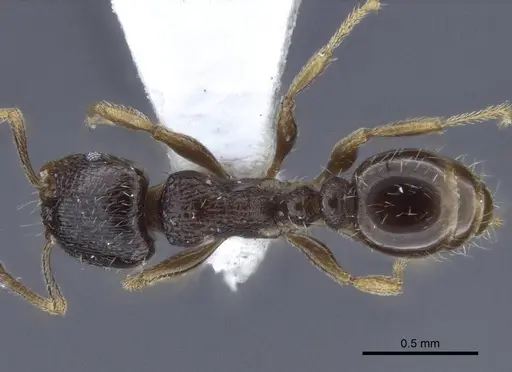
Literatür
Dağılım haritası yükleniyor...Ürünler yükleniyor...