
Temnothorax kykkos
- Bilimsel Adı
- Temnothorax kykkos
- Oymak (Tribe)
- Crematogastrini
- Alt Familya
- Myrmicinae
- Yazar (Tanımlayan)
- Salata <i>et al.</i>, 2024
- Dağılım
- 0 ülkede bulundu
Giriş
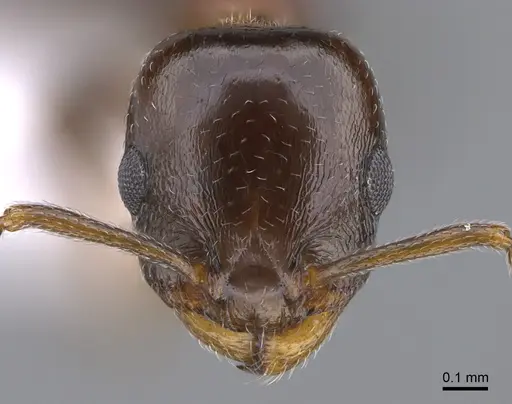
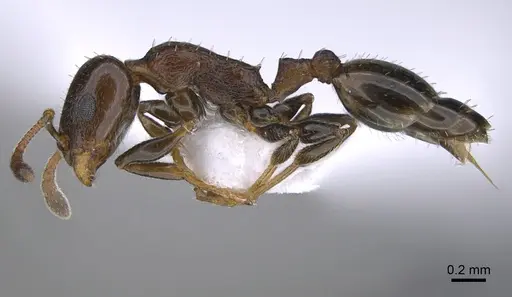
Temnothorax kykkos is a tiny ant species recently described in 2024 and endemic to Cyprus . Workers are uniformly brown, with a smooth, shiny head and a triangular petiolar node . It belongs to the Temnothorax angustulus group, one of only two Cypriot representatives . Unlike many Mediterranean ants, T. kykkos is less thermophilous, preferring cooler microhabitats at higher elevations (181-1344 m) . The species was discovered at Kykkos Monastery in the Troodos Mountains, where workers forage on tree trunks and shrubs near streams . Queens have not been described yet.
Quick Summary
- Difficulty: Medium
- Origin & Habitat: Endemic to Cyprus, found at altitudes from 181 to 1344 m in the Troodos Mountains. Workers inhabit pine forests and areas near streams, foraging on trunks of Robinia pseudoacacia and from Pistacia and leguminose bushes [1][2]. Likely nests inside dry stems of shrubs and large herbs, as inferred from related Greek species [3].
- Colony Type: Unconfirmed. Based on typical Temnothorax patterns, likely single-queen (monogyne) colonies, possibly with ergatoid replacement reproductives.
- Size & Growth:
- Queen: Size data unavailable, queen not described, inferred from genus patterns ~4-5 mm.
- Worker: ~2-3 mm, inferred from Temnothorax genus (no total length data available) [1][2].
- Colony: Up to 500 workers at maturity.
- Growth: Moderate.
- Development: 6-10 weeks estimated at room temperature (20-24°C). (Development time is estimated from related species, specific data for T. kykkos is not available.)
- Antkeeping:
- Temperature: Keep at 20-24°C. This species prefers cooler conditions, avoid overheating. Room temperature is ideal. Provide a slight temperature gradient so workers can choose their preferred zone [1][2].
- Humidity: Moderate humidity: keep the nest substrate slightly moist but not waterlogged, with a dry zone for nesting. These ants inhabit areas near streams but nest in dry stems, so a gradient is best [3].
- Diapause: Likely required. As a Cypriot mountain species, they probably experience cool winters. Reduce temperature to 10-15°C for 2-3 months during winter.
- Nesting: Y-tong (AAC) nests with narrow chambers work well, they mimic natural dry plant stems. Test tube setups are fine for founding. Avoid large, open spaces. Use fine mesh and fluon barriers for escape prevention due to tiny size [3].
- Behavior: Peaceful, non-aggressive ants. Workers forage individually or in small groups. They use venom smearing for defense (no functional stinger). Their tiny size makes escape prevention critical, use fine mesh and tight barriers. Less active below 18°C [1].
- Common Issues: escape prevention is critical due to tiny size (2-3 mm), standard barriers may fail., colony growth is slow, not a fast-growing species., overheating is a real risk, keep away from direct heat sources., wild-caught colonies may carry parasites, quarantine new colonies., founding queens may struggle without proper humidity, provide a water tube.
Housing and Nest Setup
Temnothorax kykkos needs appropriately scaled housing. A Y-tong (AAC) nest with narrow chambers works well, these ants naturally nest in dry plant stems [3]. Avoid large open formicaria. Test tube setups are fine for founding colonies, but move them to a proper nest when the colony reaches 15-20 workers. The nest material should hold some moisture but not become waterlogged, provide a water tube for drinking and moderate humidity. Because of their tiny size, use fluon barriers and fine mesh on all openings, standard barrier gaps often let them through.
Temperature and Seasonal Care
This species is less thermophilous than many Mediterranean ants, preferring cooler conditions around 20-24°C [1][2]. It occurs at higher elevations in Cyprus (up to 1344 m) and is adapted to temperate mountain environments. Room temperature is ideal, avoid heating cables or direct sunlight. During winter, provide a natural diapause period by reducing temperatures to 10-15°C for 2-3 months. Do not force hibernation if your room stays above 18°C year-round, a slight reduction is usually enough. If workers become very sluggish or cluster tightly, the temperature may be too low.
Feeding and Diet
Temnothorax kykkos likely accepts small live prey such as fruit flies, pinhead crickets, and springtails. They probably also collect honeydew from aphids and will accept sugar water or honey occasionally. Feed protein 2-3 times per week and keep a constant sugar source available. Remove uneaten prey after 24 hours to prevent mold. Because of their small size, prey items should be appropriately sized, anything larger than the workers’ head is likely ignored. Observe your colony’s preferences and adjust feeding accordingly.
Behavior and Colony Dynamics
Temnothorax kykkos are peaceful and non-aggressive. Workers forage individually or in small groups for small prey and honeydew. Their primary defense mechanism is venom smearing (they lack a functional stinger). Colonies grow slowly but steadily once established, with the queen laying eggs continuously during warm months. Colony size likely stays under 500 workers at maturity. Workers are active during the day, especially in warmer hours, and become less active in cooler conditions. Their tiny size makes them excellent escape artists, always verify barriers are secure. [1][2]
Frequently Asked Questions
How long does it take for Temnothorax kykkos to produce first workers?
Expect 6-10 weeks from egg to first worker at room temperature (20-24°C). This is based on typical Temnothorax development, specific data for this newly described species is not yet available.
Can I keep multiple queens together?
Not recommended. Combining unrelated queens of this species has not been documented, and Temnothorax species typically form single-queen colonies. Start with one founding queen for best results.
What size colony does Temnothorax kykkos reach?
Likely up to 500 workers at maturity, based on typical Temnothorax patterns. This is a small species with a modest colony size, they will never become massive like some Camponotus species.
Do Temnothorax kykkos ants sting?
No. This species uses venom smearing for defense and lacks a functional stinger. They are completely harmless to keepers.
What temperature is ideal for Temnothorax kykkos?
Keep them at 20-24°C, this is cooler than many Mediterranean ants prefer. They are less thermophilous and naturally occur at higher elevations in Cyprus where temperatures are milder [1][2].
Do they need hibernation?
Yes, a winter rest period is likely beneficial. Reduce temperatures to 10-15°C for 2-3 months during winter to mimic their natural seasonal cycle in the Cypriot mountains.
Why are my ants escaping?
Their tiny 2-3 mm size means they can squeeze through gaps that seem sealed. Use fluon on nest edges, fine mesh on ventilation holes, and check all connections carefully. Even small gaps around tubes need barriers.
Are Temnothorax kykkos good for beginners?
They are moderate difficulty. While peaceful and manageable, their tiny size requires careful escape prevention, and their slow growth requires patience. They are not the easiest starter species but are rewarding for attentive keepers.
What do Temnothorax kykkos eat?
Small live prey like fruit flies, pinhead crickets, and springtails. They likely accept sugar water or honey and may tend aphids for honeydew. Feed protein 2-3 times weekly with a constant sugar source available.
When should I move from test tube to formicarium?
Move once the colony reaches 15-20 workers or when the test tube shows signs of degradation. A small Y-tong nest with appropriately sized chambers works well, avoid large nests designed for bigger ants.
Report an Issue
The current care sheet is based fully on literature. See inconsistencies, or something that's incorrect? Please , it will be resolved after review from an admin. Contributing to the blogs tab also helps providing information, to make us be able to further improve the caresheets. Thank you for your support!
References

Bu bakım rehberi şu lisans altındadır: CC BY-SA 4.0 .
Topluluk Blogları
CASENT0923712
AntWeb'de Görüntüle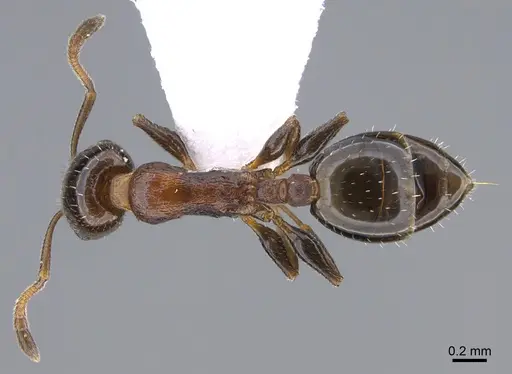
Literatür
Dağılım haritası yükleniyor...Ürünler yükleniyor...