
Temnothorax inermis
- Bilimsel Adı
- Temnothorax inermis
- Oymak (Tribe)
- Crematogastrini
- Alt Familya
- Myrmicinae
- Yazar (Tanımlayan)
- Forel, 1902
- Dağılım
- 0 ülkede bulundu
Giriş
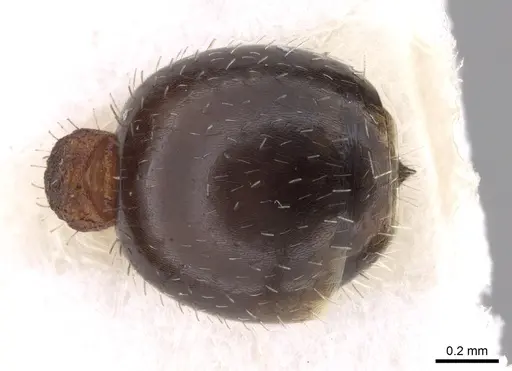
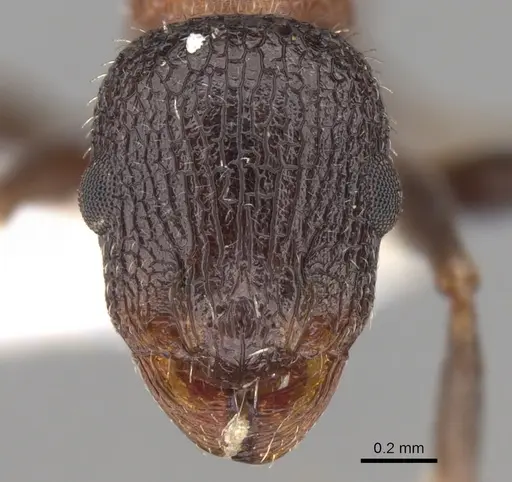
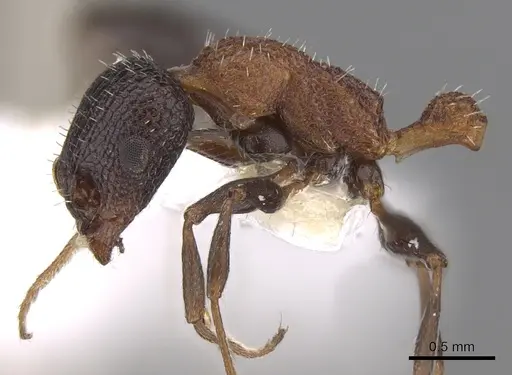
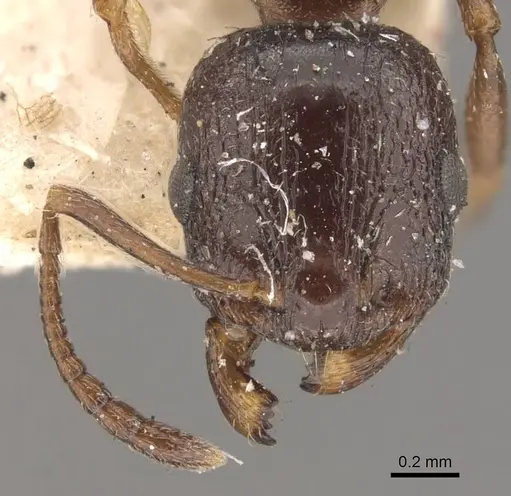
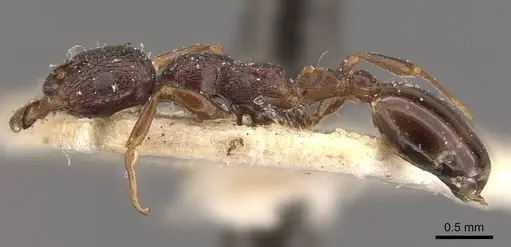
Temnothorax inermis is a small, shiny ant native to the Himalayas in northern India. Workers measure about 4mm and have a distinctive appearance: the head and thorax are dark brown to nearly black, while the abdomen is a darker chestnut-brown. The antennae, legs, and mandibles are lighter chestnut-brown. The body is mostly smooth and polished: the head and mesosoma have very slight longitudinal ridges, while the abdomen is completely smooth and shiny. The most important identifying feature is the propodeum (the rear of the thorax) which lacks any teeth or spines, giving this species its name 'inermis' meaning unarmed . The tiny hairs on the body (pilosity) are extremely sparse, almost absent . This species is endemic to India, found specifically in the Himalayan region of Himachal Pradesh at elevations around 1500 meters above sea level . As a Himalayan mountain species, these ants are adapted to cooler, temperate conditions.
Quick Summary
- Difficulty: Easy
- Origin & Habitat: Himalayas of northern India, specifically Himachal Pradesh at approximately 1500 meters elevation. Found in mountainous, temperate forest habitats [4][5].
- Colony Type: Colony structure is unconfirmed for this species. Most Temnothorax species are single-queen colonies (monogyne), though some can have multiple queens.
- Size & Growth:
- Queen: Unknown, likely larger than workers, based on Temnothorax genus patterns
- Worker: 4mm [6]
- Colony: Unknown, probably under 500 workers, but typical Temnothorax colonies are modest
- Growth: Moderate
- Development: 6-10 weeks at optimal temperature (estimated from genus-level data for similar temperate species) (Development time is estimated based on related Temnothorax species, specific data for T. inermis is not available)
- Antkeeping:
- Temperature: Keep at 18-22°C. As a Himalayan species, they prefer cooler temperatures than tropical ants. Room temperature in most homes should work well. Inferred from their mountain habitat, no precise data available.
- Humidity: Moderate humidity. Keep the nest substrate slightly moist but not waterlogged. Inferred from typical forest floor conditions, no specific data available.
- Diapause: Yes, as a Himalayan species from 1500m elevation, they likely require a winter dormancy period. A cold period of 2-3 months at 5-10°C is recommended based on genus patterns. No specific data for this species.
- Nesting: Small chambers work best. In nature they likely nest under stones or in small cavities in rotting wood. A Y-tong (AAC) nest or small test tube setup works well. They prefer tight, enclosed spaces scaled to their tiny 4mm size.
- Behavior: These are peaceful, small ants with minimal aggression. Workers are slow-moving and forage individually. They are not aggressive defenders. Like other members of the tribe Crematogastrini, they have a modified stinger used to smear venom rather than sting, but this is rarely used against keepers. Their tiny size (4mm) means escape prevention is important, they can squeeze through small gaps. They show typical Temnothorax foraging behavior, searching for small insects, honeydew, and sugary liquids.
- Common Issues: escape prevention is critical due to their small 4mm size, use fine mesh and tight-fitting lids, as a Himalayan species, incorrect winter temperatures can harm colonies, they need genuine cold dormancy, slow growth may cause beginners to overfeed or disturb the colony unnecessarily, wild-caught colonies may have parasites that are difficult to treat in captivity, small colony size means they are sensitive to disturbance, minimize nest inspections
Housing and Nest Setup
Temnothorax inermis is a tiny ant, so your nest needs to have small chambers and narrow passages scaled to their 4mm worker size. A Y-tong (AAC) nest works very well for this species, the small chambers mimic the tight cavities they naturally nest in. Alternatively, a small test tube setup with a cotton plug can work for founding colonies. The nest material should be able to hold some moisture but not stay constantly wet. These ants prefer enclosed nests with minimal light exposure, so cover the nest with a dark cloth or use an opaque outworld. The outworld can be simple, a small plastic container connected to the nest works fine. Because they are so small, use a thin tube (like 3mm diameter) to connect nest and outworld, and ensure all openings are sealed with fluon or similar barrier. Escape prevention is critical: even though they are not strong climbers, their small size lets them squeeze through gaps that seem impossible. These housing recommendations are based on general knowledge of Temnothorax species, as no specific nest data is available.
Feeding and Diet
Like most Temnothorax species, T. inermis is omnivorous and will accept a variety of foods. Offer small protein sources like fruit flies, pinhead crickets, or small mealworms. Since these ants are tiny, the prey items should be appropriately sized, no larger than the ants themselves. They also readily accept sugar sources such as honey water or sugar water, especially during the founding stage when the queen needs energy. Feed them small drops of honey water (diluted 1:4 with water) a few times per week. For protein, offer a small insect piece once or twice weekly. Remove any uneaten food after 24 hours to prevent mold. During hibernation, stop all feeding, the colony will be dormant and won't eat. These feeding recommendations are based on general ant-keeping practices for small temperate ants.
Temperature and Seasonal Care
As a Himalayan mountain species, T. inermis prefers cooler temperatures than most commonly kept ants. Keep the nest area at 18-22°C, this is comfortable room temperature for most homes. They can tolerate brief periods slightly outside this range, but avoid prolonged exposure to temperatures above 25°C or below 15°C. During the active season (spring through fall), room temperature is usually ideal. In winter, they require a genuine dormancy period. Reduce temperature to 5-10°C for 2-3 months, this mimics the Himalayan winter they evolved in. You can achieve this by moving the colony to an unheated garage, basement, or refrigerator during winter. Do not feed them during dormancy. In spring, gradually warm them back to room temperature over a week or two before resuming feeding. This seasonal cycle is important for the health of the colony and may trigger reproduction. These recommendations are inferred from their high-altitude origin, no precise temperature or diapause data is available for this species. [4]
Behavior and Colony Dynamics
Temnothorax inermis is a peaceful species with low aggression. Workers are slow-moving and tend to forage individually rather than in groups. They are not territorial or aggressive toward humans. They have a modified stinger used to smear venom rather than sting, but this defense is almost never used against keepers. Their tiny size (4mm) makes them vulnerable to larger pests, but they are not helpless. Colonies remain relatively small, expect under 500 workers at maturity. The queen likely founds the colony claustrally, meaning she seals herself in a chamber and raises the first brood alone without foraging. First workers (nanitics) are smaller than normal workers and may take 6-10 weeks to emerge. After the colony establishes, you may see workers patrolling the outworld searching for food. They are not particularly active or exciting to watch, but their subtle behaviors are interesting for keepers who appreciate smaller, more docile species. The colony will establish multiple chambers within the nest for brood storage, queen, and food. These behavioral notes are inferred from the genus, no specific observations are recorded.
Frequently Asked Questions
How long does it take for Temnothorax inermis to have first workers?
Expect first workers (nanitics) to emerge 6-10 weeks after the queen lays her first eggs. This timeline is estimated from related Temnothorax species since specific development data for T. inermis is not available. The exact time depends on temperature, warmer temperatures within their range speed up development slightly.
Do Temnothorax inermis ants sting?
They have a stinger but it is modified for smearing venom rather than piercing. Like other members of the tribe Crematogastrini, they use a smear defense. However, they are very docile and not aggressive toward keepers. Even if they did try to defend themselves, their small size means the effect would be barely noticeable.
What temperature do Temnothorax inermis need?
Keep them at 18-22°C. As a Himalayan species, they prefer cooler conditions than most tropical ants. Room temperature is usually perfect. In winter, they need a cold period at 5-10°C for 2-3 months. These recommendations are inferred from their mountain habitat, no specific temperature data is available.
Can I keep multiple queens together?
Not recommended. While colony structure is unconfirmed for this species, combining unrelated queens has not been documented and likely results in fighting. Most Temnothorax species establish single-queen colonies.
How big do Temnothorax inermis colonies get?
Colonies likely reach under 500 workers at maturity, but may be smaller. This is typical for the genus, they are small colonies compared to ants like Camponotus or Formica. No specific colony size data exists for this species.
Do they need hibernation?
Yes. As a Himalayan species from 1500m elevation, they require a winter dormancy period. Keep them at 5-10°C for 2-3 months during winter. This is inferred from their high-altitude origin and is essential for their health.
What do Temnothorax inermis eat?
They are omnivorous. Offer small insects (fruit flies, pinhead crickets) for protein and sugar water or honey water for carbohydrates. Feed small amounts a few times per week, removing uneaten food after 24 hours.
Are Temnothorax inermis good for beginners?
Yes, they are a good beginner species. They are small, docile, and have simple care requirements. The main challenges are escape prevention (due to their tiny size) and providing proper winter dormancy. Their activity level is lower than some other species, so they are better suited for keepers who enjoy watching subtle behaviors.
When should I move them to a formicarium?
Wait until the colony has at least 20-30 workers before moving to a formicarium. For founding colonies, a test tube setup is best. Once the colony outgrows the test tube (usually around 50+ workers), you can move to a small Y-tong or AAC nest.
Why are my Temnothorax inermis dying?
Common causes include: temperatures too high (above 25°C), incorrect humidity (too wet or too dry), disturbance during founding, or parasites from wild-caught colonies. Check that temperatures are in the 18-22°C range and the nest is not too humid. Also ensure they had a proper winter dormancy if due.
Report an Issue
The current care sheet is based fully on literature. See inconsistencies, or something that's incorrect? Please , it will be resolved after review from an admin. Contributing to the blogs tab also helps providing information, to make us be able to further improve the caresheets. Thank you for your support!
References

Bu bakım rehberi şu lisans altındadır: CC BY-SA 4.0 .
Topluluk Blogları
CASENT0906162
AntWeb'de Görüntüle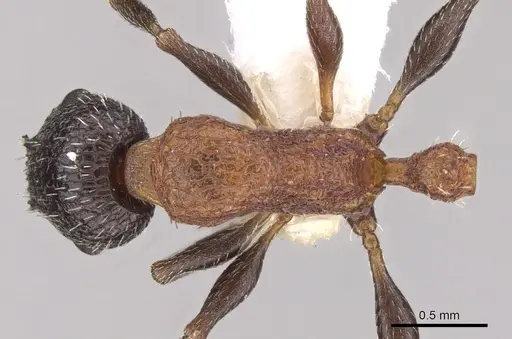
CASENT0909053
AntWeb'de Görüntüle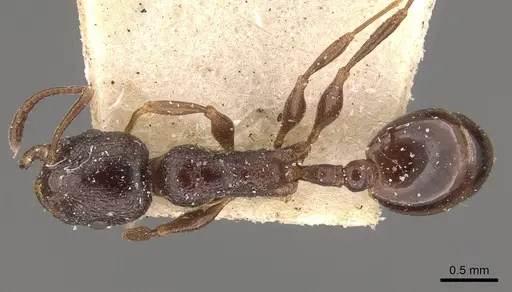
Literatür
Dağılım haritası yükleniyor...Ürünler yükleniyor...