
Temnothorax desioi
- Bilimsel Adı
- Temnothorax desioi
- Oymak (Tribe)
- Crematogastrini
- Alt Familya
- Myrmicinae
- Yazar (Tanımlayan)
- Menozzi, 1939
- Dağılım
- 0 ülkede bulundu
Giriş
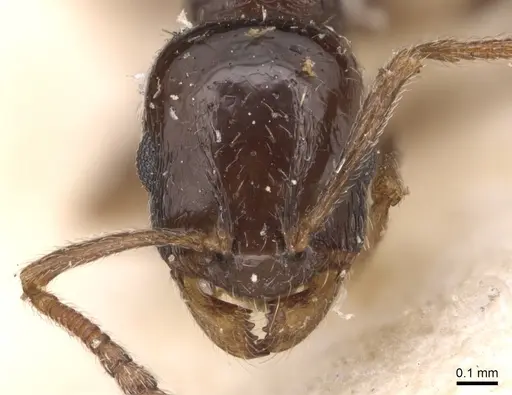
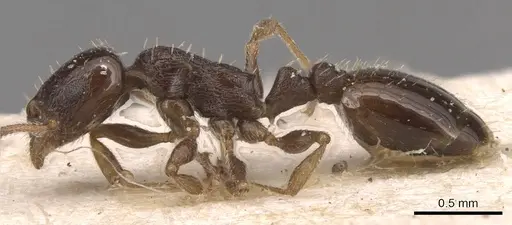
Temnothorax desioi is a tiny ant native to the high Himalayas, found at elevations between 3000-4300 meters . Workers measure 2.2-2.9mm total length, making them one of the smaller ant species you'll encounter . They have a distinctive color pattern: the head and most of the abdomen are brown, while the middle body section (mesosoma), legs, antennae, and the base of the abdomen are yellowish . This species is classified as a cold-climate specialist, adapted to cool mountain conditions . These ants inhabit meadows, rocky slopes with vegetation, and areas near springs in the Karakoram and Himalayan regions . They're associated with plants like Tamarix, Salix, Juniperus, Ephedra, and Artemisia . The species was originally described from the Karakoram mountains in Pakistan and is now known from parts of northern India, Pakistan, and recently recorded in Tibet, China .
Quick Summary
- Difficulty: Medium
- Origin & Habitat: High Himalayas and Karakoram mountains at 3000-4300m elevation. Found in meadows, rocky vegetated slopes, and edges of springs in India, Pakistan, and Tibet (China) [1][7].
- Colony Type: Believed to be monogyne (single queen), but this is unconfirmed by specific studies, typical for the genus Temnothorax.
- Size & Growth:
- Queen: Not recorded, based on related Temnothorax species, queens are estimated 4-5mm (inferred).
- Worker: 2.2-2.9mm [2][3]
- Colony: Maximum colony size unknown, estimated under 200 workers based on related species.
- Growth: Moderate, likely slower due to cold-climate adaptation.
- Development: Unknown, estimated 8-12 weeks based on related temperate Temnothorax species, but likely longer due to cold adaptation. (Development likely slower than tropical ants due to high-altitude cold adaptation.)
- Antkeeping:
- Temperature: Keep cool, around 15-20°C. This cold-climate specialist from high elevations (3000-4300m) is not adapted to warm conditions [1][4]. Avoid temperatures above 22°C. Provide a gradient if possible.
- Humidity: Moderate humidity, keep the nest substrate consistently moist but not waterlogged. They occur near springs and meadows [1], so some moisture is beneficial, but avoid saturation.
- Diapause: Yes, required. Gradually cool to 5-10°C for 3-4 months during winter, mimicking high-altitude conditions [1].
- Nesting: Y-tong (AAC) nests or test tubes work well. These tiny ants need tight connections and small chambers scaled to their 2-3mm size.
- Behavior: They use a smear defense: a flattened stinger adapted to wipe venom onto enemies rather than piercing. They are non-aggressive and will flee rather than fight. Escape prevention is critical due to their tiny size, they can slip through gaps smaller than 1mm.
- Common Issues: escape prevention is critical, they can slip through standard barriers., cold requirements make them unsuitable for warm rooms or heated setups., slow colony growth may frustrate beginners expecting rapid development., overheating kills them quickly, keep temperature below 22°C., unconfirmed founding behavior means care during early colony stages is uncertain.
Temperature and Cooling
Temnothorax desioi is a cold-climate specialist adapted to high-altitude conditions where temperatures remain cool year-round [4]. This is the most critical aspect of their care, they cannot handle warm conditions that most other ant species tolerate. Keep their nest area at 15-20°C, with 18°C being an ideal target. If your room is warmer, use a cooling method or place the nest in a cooler location. A small fan or thermoelectric cooler can help during summer. Never place their nest near heat sources or in direct sunlight. Signs of overheating include workers clustering away from heat sources and brood dying. Unlike tropical ants that thrive at 25°C+, this species will struggle and may die at those temperatures [1].
Housing and Escape Prevention
Given their tiny 2.2-2.9mm worker size, escape prevention is absolutely critical [2][3]. Standard ant keeping equipment often has gaps that these ants can slip through. Use fine mesh (0.5mm or smaller) on all ventilation holes. Check all connections between the outworld and nest, even tiny gaps at tube connections can allow escapes. Y-tong (AAC) nests work well because the porous material holds moisture and provides appropriate chamber sizes. Test tube setups are also suitable, use a small diameter tube (10-12mm) rather than larger ones. The nest should have small, tight chambers scaled to their tiny body size. When setting up the outworld, ensure food dishes have steep sides they cannot climb and consider using fluon or barrier tape on container edges.
Feeding and Diet
No specific dietary studies exist for Temnothorax desioi. Based on related Temnothorax species, they likely feed on honeydew and small arthropods. Offer sugar water (honey or sucrose solution) in a small container with a cotton wick to prevent drowning. For protein, provide tiny prey items like fruit flies, small mealworms, or aphids. Due to their small size, prey items should be appropriately sized, anything larger than themselves will be ignored. Feed small amounts every 2-3 days and remove uneaten food promptly to prevent mold. Fresh water should always be available.
Humidity and Water
This species naturally occurs near springs and meadows at high elevations, indicating they need moderate to good humidity [1]. Keep the nest substrate consistently moist, the Y-tong or test tube cotton should be damp but not flooded. A water tube attached to the nest provides a reliable drinking source. During winter dormancy, reduce watering but don't let the nest dry out completely. Monitor for condensation inside the nest, some condensation is good, but excessive moisture can drown colonies. The key is balance: damp enough to prevent desiccation but not so wet that mold becomes a problem.
Winter Dormancy (Diapause)
As a cold-climate species from 3000-4300m elevation, Temnothorax desioi requires a winter dormancy period to stay healthy [1]. During late autumn, gradually reduce the temperature over 2-3 weeks to around 5-10°C. Keep them in this cool state for 3-4 months, essentially mimicking the harsh Himalayan winter. You can use a refrigerator (not freezer) set to appropriate temperatures, or simply move them to an unheated garage or basement that stays cool but above freezing. Do not feed them during dormancy. In early spring, gradually warm them back up over several weeks. Skipping this dormancy can weaken or kill the colony over time.
Frequently Asked Questions
Can I keep Temnothorax desioi in a test tube?
Yes, test tubes work well for this species. Use a small diameter tube (10-12mm) rather than larger ones since these are tiny ants at only 2.2-2.9mm [2][3]. Ensure the cotton is packed firmly but allows some moisture through. Connect the test tube to an outworld using a narrow tube with excellent escape prevention, these tiny ants can squeeze through remarkably small gaps.
What temperature do Temnothorax desioi ants need?
Keep them cool at 15-20°C, ideally around 18°C. This is a cold-climate specialist from high Himalayan elevations where temperatures remain low year-round [4]. They cannot handle warm conditions, avoid room temperatures above 22°C or they may overheat and die [1]. A cooling method may be necessary during summer.
How long does it take for Temnothorax desioi to develop from egg to worker?
Development time has not been studied. Based on related temperate Temnothorax species, expect 8-12 weeks from egg to first worker at optimal cool temperatures, but cold adaptation may lengthen this. The first workers (nanitics) will be smaller than normal workers. Patience is key with this species.
Do Temnothorax desioi ants sting?
Temnothorax desioi has a stinger, but it is adapted for smearing venom rather than piercing (smear defense). They are non-aggressive and will typically flee rather than defend. The venom is very mild and poses no danger to humans.
Are Temnothorax desioi good for beginners?
This species is intermediate in difficulty. While not the hardest species, their cold-temperature requirements, tiny size, and unconfirmed founding behavior make them more challenging than common beginner species like Lasius or Camponotus. They require attention to escape prevention and temperature control. Only attempt this species after experience with at least one other ant species.
Do Temnothorax desioi need hibernation?
Yes, absolutely. As a high-altitude cold-climate species, they require a winter dormancy period of 3-4 months at temperatures around 5-10°C [1]. This is essential for their health and longevity. Skip dormancy at your own risk, it will weaken or kill the colony.
How big do Temnothorax desioi colonies get?
Maximum colony size is unknown. Based on typical Temnothorax species, expect a maximum of around 100-200 workers. These are small colonies compared to many other ant species. Growth is relatively slow, so reaching this size may take 2-3 years from founding.
Why are my Temnothorax desioi dying?
The most common causes are: 1) overheating, they need cool temperatures below 22°C,2) escape, their tiny size allows escapes through tiny gaps,3) improper humidity, too dry or too wet,4) skipping winter dormancy. Check each of these factors. Also ensure prey is not too large for these tiny 2-3mm workers.
Can I keep multiple Temnothorax desioi queens together?
This is not recommended. Temnothorax desioi is believed to be monogyne based on genus patterns, and there are no observations of multiple queens cooperating. Unrelated queens will likely fight. Pleometrosis is unconfirmed and risky for this species.
What do Temnothorax desioi eat?
Offer sugar water (honey or sucrose solution) as a constant energy source. For protein, provide tiny prey like fruit flies, small mealworms, or aphids. They may also accept small fruit pieces. Due to their tiny 2-3mm size, all prey items should be appropriately small. Remove uneaten food promptly to prevent mold.
Report an Issue
The current care sheet is based fully on literature. See inconsistencies, or something that's incorrect? Please , it will be resolved after review from an admin. Contributing to the blogs tab also helps providing information, to make us be able to further improve the caresheets. Thank you for your support!
References

Bu bakım rehberi şu lisans altındadır: CC BY-SA 4.0 .
Topluluk Blogları
CASENT0904558
AntWeb'de Görüntüle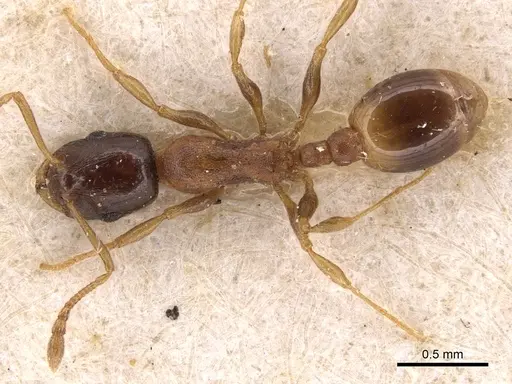
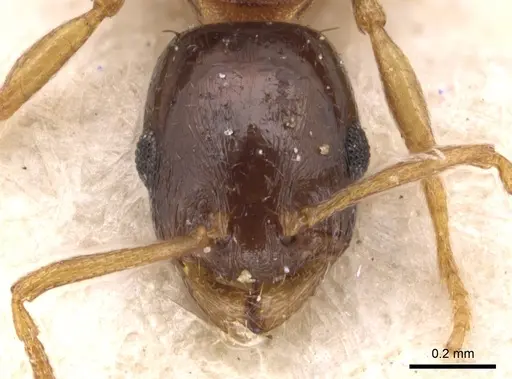
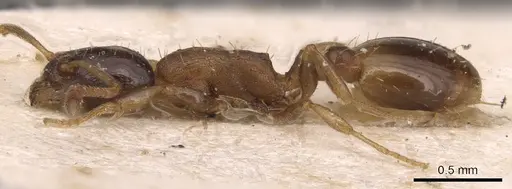
CASENT0904559
AntWeb'de Görüntüle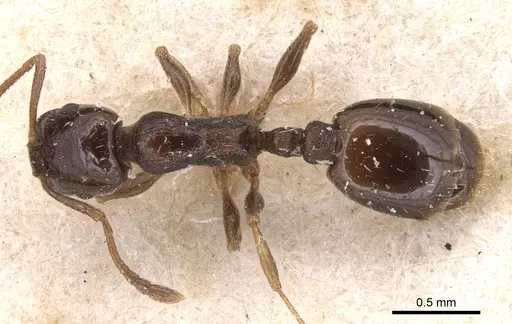
Literatür
Dağılım haritası yükleniyor...Ürünler yükleniyor...