
Strumigenys warditeras
- Bilimsel Adı
- Strumigenys warditeras
- Oymak (Tribe)
- Attini
- Alt Familya
- Myrmicinae
- Yazar (Tanımlayan)
- Bolton, 2000
- Dağılım
- 0 ülkede bulundu
Giriş
Strumigenys warditeras is an extremely rare trap-jaw ant known only from a single worker collected in Costa Rica in 1983 . Workers are tiny at 2.2mm total length, with elongated mandibles that snap shut to capture tiny prey like springtails . The species was described in 2000 and remains the only member of its species group. It has never been kept in captivity, and virtually nothing is known about its colony structure, behavior, or care requirements .
Quick Summary
- Difficulty: Expert
- Origin & Habitat: Only known from lowland rainforest leaf litter near Cahuita, Costa Rica, at about 70m elevation [1].
- Colony Type: Unknown, only a single worker has ever been found. Colony structure is unstudied.
- Size & Growth:
- Queen: Unknown, queen never collected or described [1].
- Worker: 2.2mm total length [1].
- Colony: Unknown, no colony has ever been documented.
- Growth: Unknown, no captive colonies exist.
- Development: Unknown, no breeding data exists for this species. Related Strumigenys species typically take 6-8 weeks from egg to worker at warm temperatures, but this is purely speculative. (Development time is entirely unstudied.)
- Antkeeping:
- Temperature: Keep at 24-28°C based on lowland rainforest habitat. Avoid drops below 22°C. This is a best guess since no captive data exists [1].
- Humidity: Requires very high humidity. Keep the nest substrate consistently moist but not waterlogged. Mist regularly. This is inferred from the leaf-litter habitat [1].
- Diapause: Unknown, Costa Rica is tropical with minimal seasonal variation. Likely no true diapause, but this has not been studied.
- Nesting: In the wild, they live in leaf litter and rotting wood on the forest floor. For captive care (if ever attempted), a small naturalistic setup with moist leaf litter and fine-mesh ventilation is recommended. All nesting advice is speculative.
- Behavior: This species has never been observed in any setting. Based on related Strumigenys, they are trap-jaw predators that hunt tiny arthropods like springtails. They likely move slowly and rely on chemical senses due to very small eyes. Escape risk is moderate due to tiny size (use fine mesh). Aggression toward colony members is probably low, but unconfirmed. All behavior notes are inferred [1].
- Common Issues: no captive husbandry information exists, this species may be impossible to keep, extreme rarity means no established care protocols or experienced keepers to consult, tiny size makes feeding difficult, only the smallest live prey will be accepted, single known specimen means we lack basic biological data for accurate care, high humidity requirements create mold risk in captive setups
Species Overview and Rarity
Strumigenys warditeras is known from a single worker collected in Costa Rica in 1983 using a Winkler extractor. The species was described in 2000 by Barry Bolton as Strumigenys warditeras and later moved to Strumigenys. No additional specimens have been found in over 40 years despite extensive surveys in Costa Rica [1][2]. It remains the only member of its species group. For antkeepers, this species is an enigma with no established care protocols.
Identification and Morphology
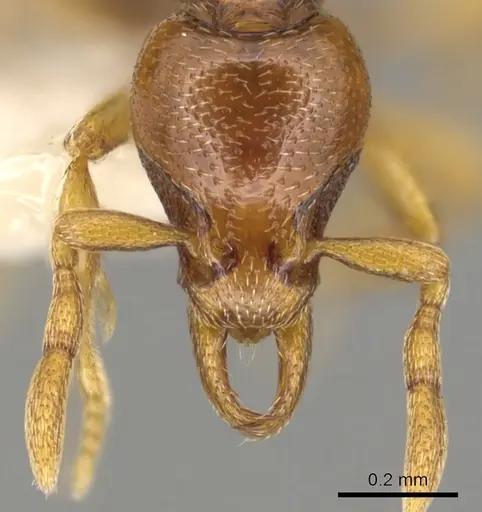
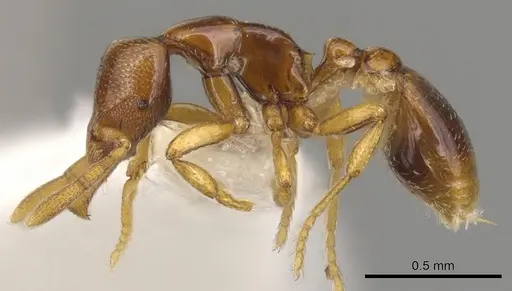
Workers measure 2.2mm total length [1]. They have elongated, narrow mandibles that meet only at the tips when closed, and lack broad, spoon-shaped hairs on the antennae. The petiole has a curtain of spongiform tissue on its ventral surface. The gaster has fine longitudinal striations at the base. Eyes are extremely small, with only four ommatidia, suggesting limited vision [1].
Natural Habitat
The only known specimen was collected from lowland rainforest leaf litter at about 70m elevation near Cahuita on Costa Rica's Caribbean coast [1]. This region has a tropical climate with high year-round humidity. Like other Strumigenys, this species likely lives in the top few centimeters of forest floor, among decaying leaves and rotten wood. The Winkler sample processed sifted leaf mold and rotten wood, confirming ground-dwelling habits [1].
Trap-Jaw Hunting Behavior
No direct observations exist for S. warditeras. All Strumigenys possess a trap-jaw mechanism where mandibles snap shut at extreme speeds to capture springtails and other tiny prey. They use sensory hairs on the mandibles to detect prey contact. Due to the tiny eyes, they likely rely heavily on chemical and tactile senses while hunting. In a captive setting, you would need to provide live micro-arthropods like springtails as the primary food source [1].
Housing and Care Recommendations
Since no successful captive colonies exist, all recommendations are speculative. For related Strumigenys species, a small naturalistic terrarium with moist leaf litter and decaying wood works well. Maintain very high humidity (80%+), warm temperatures (24-28°C), and provide live micro-arthropods. Escape prevention requires fine mesh (0.5mm or smaller). If you ever acquire a colony, start with a test tube setup with moist cotton. Document everything, as any successful captive care would be a scientific contribution. This advice is based on related species and has no direct support for S. warditeras.
Conservation and Legal Considerations
This species is endemic to Costa Rica and known from a single specimen. Its conservation status is unknown, but it could be critically endangered. Costa Rica has strict regulations on collecting native wildlife. The ethical approach is to appreciate this species from published literature rather than attempting to collect it. If a colony were ever available through legitimate captive breeding, it would be unprecedented for research. The extreme rarity means this species is not suitable for antkeeping. [1]
Frequently Asked Questions
Can I keep Strumigenys warditeras as a pet ant?
It is extremely unlikely you will ever find this species for sale. Only a single worker has ever been collected, and no captive colonies exist. This is not a realistic species to keep, consider more common Strumigenys species instead [2][1].
How big do Strumigenys warditeras colonies get?
Unknown, no colony has ever been documented. Based on related Strumigenys, colonies might reach up to 500 workers, but this is purely speculative.
What do Strumigenys warditeras eat?
Based on related species, they are predators of tiny arthropods like springtails and mites. They likely cannot handle larger prey. In captivity, you would need to provide live micro-arthropods [1].
Are Strumigenys warditeras good for beginners?
Absolutely not. This species has never been kept in captivity and lacks any established care information. Even expert antkeepers would face extreme challenges with this ant.
Where does Strumigenys warditeras live in the wild?
Only known from lowland rainforest leaf litter near Cahuita, Costa Rica [1].
How long do Strumigenys warditeras workers live?
Unknown, no lifecycle studies exist. Related Strumigenys workers typically live several months to over a year, but this is unconfirmed for this species.
Do Strumigenys warditeras need hibernation?
No, Costa Rica is tropical with minimal temperature variation. They likely do not enter diapause, though activity may reduce during drier periods [1].
What makes Strumigenys warditeras special?
It is one of the rarest ant species in the world, known from only one specimen. This represents both a scientific mystery and an ethical consideration, appreciating rare species from afar may be more appropriate than attempting to keep them [1].
Report an Issue
The current care sheet is based fully on literature. See inconsistencies, or something that's incorrect? Please , it will be resolved after review from an admin. Contributing to the blogs tab also helps providing information, to make us be able to further improve the caresheets. Thank you for your support!
References

Bu bakım rehberi şu lisans altındadır: CC BY-SA 4.0 .
Topluluk Blogları
CASENT0900197
AntWeb'de Görüntüle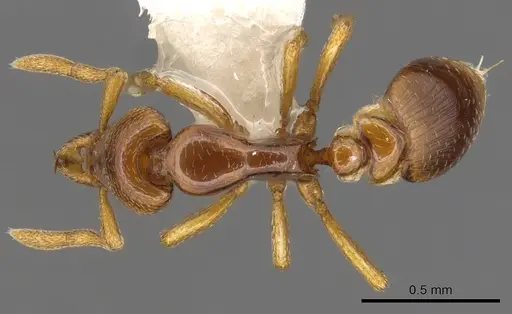
Literatür
Dağılım haritası yükleniyor...Ürünler yükleniyor...