
Strumigenys perissognatha
- Bilimsel Adı
- Strumigenys perissognatha
- Oymak (Tribe)
- Attini
- Alt Familya
- Myrmicinae
- Yazar (Tanımlayan)
- Bolton, 2000
- Dağılım
- 0 ülkede bulundu
Giriş
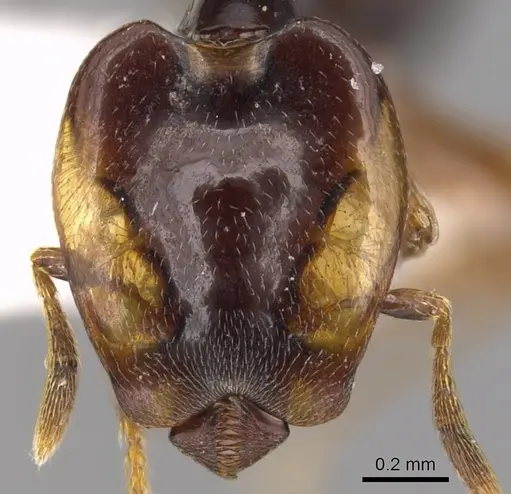
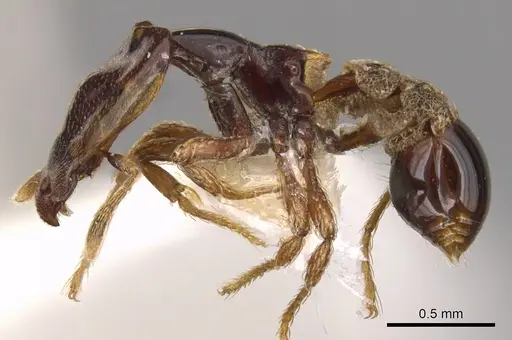
Strumigenys perissognatha is a very distinctive tiny ant measuring 2.9-3.1mm in total length . This species belongs to the Strumigenys substricta group and is known only from the Amazonian regions of Brazil and Colombia . The worker has an extremely dorsoventrally flattened head, about three times wider than deep, and uniquely shaped mandibles that together form a diamond-shaped outline when closed . The frontal carinae are greatly expanded laterally and appear translucent, allowing the antenna scapes to be visible through them . The entire body is smooth, with dense spongiform tissue surrounding the petiole and postpetiole . Nothing is documented about the biology of this species in the scientific literature . As a member of the genus Strumigenys, it is almost certainly a specialized predator on springtails and other micro-arthropods, using its trap-jaw mandibles to capture prey. The few known specimens have been collected from mature forest environments in Colombia at elevations around 200-330m using Winkler sampling methods .
Quick Summary
- Difficulty: Hard
- Origin & Habitat: Amazonian rainforest regions of Brazil (Amazonas: Manaus) and Colombia (Putumayo) [2][3]. Collected from mature forest floor environments using Winkler samples of leaf litter [2].
- Colony Type: Colony structure is unconfirmed. No queen or colony samples have been documented in scientific literature [1]. Based on genus patterns, likely single-queen colonies.
- Size & Growth:
- Queen: Unknown, no queen caste has been documented [1]
- Worker: 2.9-3.1mm total length [1]
- Colony: Unknown, no colony size data exists [1]
- Growth: Unknown
- Development: Unknown, no development data exists for this species (Based on related Strumigenys species, expect several months from egg to first worker. More research is needed.)
- Antkeeping:
- Temperature: Keep warm, tropical conditions are best. Based on Amazonian habitat, aim for 24-28°C, but precise requirements are unknown. Avoid temperatures below 20°C.
- Humidity: High humidity is essential, these are forest floor ants from the Amazon [2]. Keep nest substrate consistently moist but not waterlogged. Provide good ventilation to prevent mold.
- Diapause: Unlikely required, this is a tropical species from the Amazon basin with no documented seasonal dormancy. Maintain consistent conditions year-round.
- Nesting: Use a naturalistic setup with moist substrate or a well-humidified Y-tong/plaster nest. Their tiny size and predaceous nature suggest they do well in setups that retain humidity while allowing access to live prey.
- Behavior: Behavior is unconfirmed but likely similar to other Strumigenys species, they are specialized predators using trap-jaw mandibles to capture springtails and other tiny arthropods [1]. Their extremely flattened head morphology suggests adaptation to hunting in tight spaces like leaf litter crevices. Escape prevention is critical due to their tiny size, they can easily pass through standard barrier setups. Use fine mesh and tight-fitting lids. Likely shy and non-aggressive toward humans. As Myrmicinae, they have a functional stinger, but these tiny predators pose minimal threat to keepers.
- Common Issues: escape prevention is critical due to their tiny 3mm size, they will squeeze through standard barriers, no documented care information exists, this is one of the least studied Strumigenys species, specialized diet means they likely need live springtails or micro-arthropods, sugar sources unlikely to be accepted, high humidity requirements can lead to mold problems if ventilation is poor, wild-caught colonies may have parasites that are difficult to treat without knowing their biology
Appearance and Identification
Strumigenys perissognatha workers are tiny at just 2.9-3.1mm total length [1]. The most striking feature is their extremely flattened head, in profile, the head is about three times wider than it is deep [1]. When viewed from the front with mandibles closed, the entire head and mandible complex forms a distinctive diamond shape [1]. The frontal carinae are greatly expanded laterally and appear translucent, allowing you to see the antenna scapes through them [1]. The body is entirely smooth and glossy, with dense spongiform tissue surrounding the petiole and postpetiole, this tissue completely encircles these segments in dorsal view [1]. The mandibles are short and powerful, designed as trap-jaws typical of the genus [1].
Natural History and Biology
The biology of Strumigenys perissognatha is completely undocumented in scientific literature [1]. This species is only known from a handful of worker specimens collected in Brazil and Colombia [2]. However, we can make reasonable inferences from what is known about the genus Strumigenys as a whole. All Strumigenys species are specialized predators, primarily hunting springtails (Collembola) and other tiny arthropods found in leaf litter [1]. They use their specialized trap-jaw mandibles to capture prey with incredible speed. The extremely flattened head of S. perissognatha suggests it hunts in tight spaces within the forest floor leaf litter, similar to other flattened Strumigenys species. The few specimens from Colombia were collected from mature rainforest at elevations of 200-330m using Winkler extraction from leaf litter samples [2].
Housing and Nest Setup
Due to their tiny size and likely springtail-predating diet, these ants require careful setup. Use a naturalistic terrarium-style setup with several centimeters of moist substrate (like a mix of soil and coco fiber) to maintain humidity while providing hunting ground for live prey. Alternatively, a well-humidified Y-tong or plaster nest with connected outworld works well. The nest chamber should be small and appropriately scaled to their 3mm body size, avoid large open spaces. Escape prevention is absolutely critical: use fine mesh (at least 0.5mm or smaller), tight-fitting lids, and reliable barrier methods like fluon on smooth surfaces. These tiny ants can and will escape through gaps you wouldn't believe possible. Provide a water tube and keep the nest area humid at all times.
Feeding and Diet
Based on genus-level knowledge, Strumigenys perissognatha almost certainly requires live prey, primarily springtails (Collembola) which are their natural prey in the wild [1]. These are specialized predators and do not forage for sugar or honeydew like many ants. You will need to culture a steady supply of springtails or obtain them regularly. Other tiny live prey like booklice (Psocoptera), minute beetles, and other micro-arthropods may also be accepted. Do not expect these ants to accept sugar water, honey, or dead protein sources, Strumigenys are obligate predators that require live, moving prey to trigger their hunting response. Feed small prey items every few days, adjusting based on colony consumption.
Temperature and Humidity
As a tropical Amazonian species, Strumigenys perissognatha requires warm and humid conditions. Based on their habitat in the Amazon basin [2], aim for temperatures in the 24-28°C range. Avoid temperatures below 20°C as this could stress or kill them. Use a low-wattage heating cable or mat on one side of the setup to create a gentle temperature gradient if your room temperature is below this range. Humidity should be high, think damp forest floor. Keep the substrate consistently moist but not waterlogged, with some slightly drier areas available. Use ventilation to prevent mold while maintaining humidity.
Behavior and Temperament
Specific behavior is unconfirmed for this species, but Strumigenys in general are shy, cryptic ants that spend most of their time hunting in leaf litter and soil crevices [1]. They are not aggressive and will flee from disturbance rather than engage. Their trap-jaw mandibles are designed for capturing tiny prey, not defending against large threats, they pose minimal danger to keepers. However, their tiny size means escape prevention must be excellent. They are likely nocturnal or crepuscular hunters. Workers probably forage individually or in small groups rather than forming large foraging trails. Colonies are likely small even when mature, possibly under 100 workers based on typical Strumigenys colony sizes.
Frequently Asked Questions
How long does it take for Strumigenys perissognatha to go from egg to worker?
This is completely unknown, no development data exists for this species. Based on related Strumigenys species, expect several months (possibly 3-6 months) from egg to first worker at optimal temperature. More research is needed.
Can I keep Strumigenys perissognatha in a test tube setup?
A test tube can work as a founding setup, but these ants are specialized predators requiring live prey. A naturalistic setup with moist substrate may be better long-term. Regardless of nest type, escape prevention with fine mesh is essential due to their 3mm size.
What do Strumigenys perissognatha ants eat?
Based on genus patterns, they almost certainly eat live springtails and other tiny micro-arthropods. They are specialized predators and unlikely to accept sugar, honey, or dead protein. You will need to culture or obtain live springtails regularly.
Are Strumigenys perissognatha good for beginners?
No, this is an expert-level species. Nothing is known about their captive care, they require live springtail prey cultures, and their tiny size makes escape prevention challenging. They are not recommended for beginners.
Do Strumigenys perissognatha need hibernation?
Unlikely, this is a tropical Amazonian species with no documented seasonal dormancy. Maintain consistent warm, humid conditions year-round.
How big do Strumigenys perissognatha colonies get?
Unknown, no colony size data exists. Based on typical Strumigenys species, colonies are likely small, possibly under 100-500 workers even at maturity.
Why are my Strumigenys perissognatha dying?
Without documented care information, troubleshooting is difficult. Common issues likely include: escape through tiny gaps, stress from incorrect temperature (too cold), starvation without adequate live springtail prey, and mold from excessive humidity with poor ventilation.
Can I keep multiple Strumigenys perissognatha queens together?
Unknown, no data exists on colony founding or queen behavior. Do not attempt combining unrelated queens without documented evidence this species tolerates it.
When should I move Strumigenys perissognatha to a formicarium?
There is no specific guidance for this species. Given their tiny size and specialized diet, a naturalistic setup with moist substrate may be preferable to traditional formicaria long-term. Wait until colony is established and active.
Report an Issue
The current care sheet is based fully on literature. See inconsistencies, or something that's incorrect? Please , it will be resolved after review from an admin. Contributing to the blogs tab also helps providing information, to make us be able to further improve the caresheets. Thank you for your support!
References

Bu bakım rehberi şu lisans altındadır: CC BY-SA 4.0 .
Topluluk Blogları
CASENT0900213
AntWeb'de Görüntüle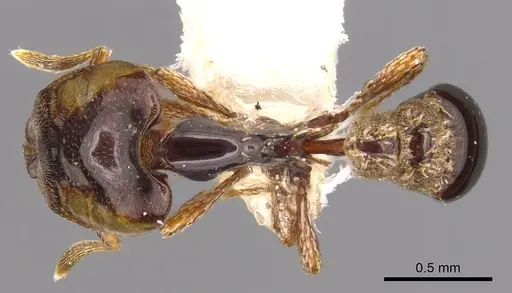
Literatür
Dağılım haritası yükleniyor...Ürünler yükleniyor...