
Strumigenys lygatrix
- Bilimsel Adı
- Strumigenys lygatrix
- Oymak (Tribe)
- Attini
- Alt Familya
- Myrmicinae
- Yazar (Tanımlayan)
- Bolton, 2000
- Dağılım
- 0 ülkede bulundu
Giriş
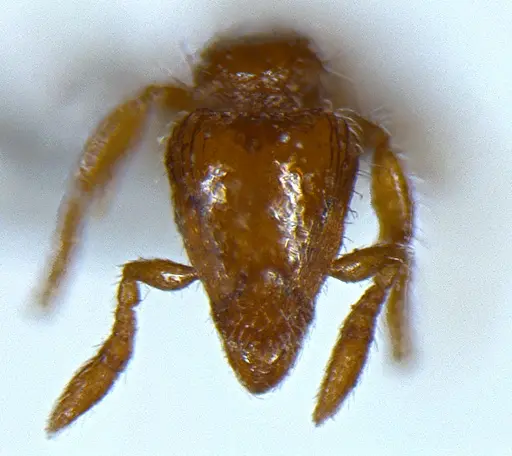
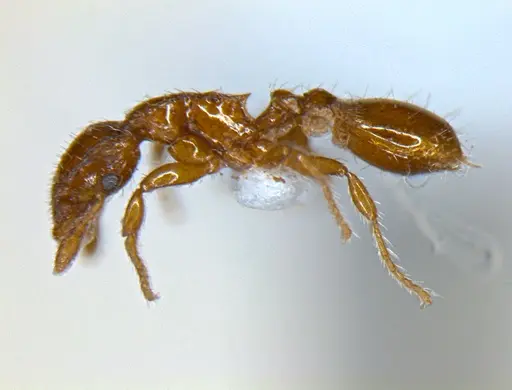
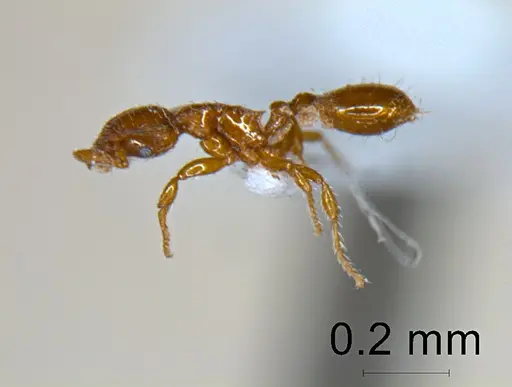
Strumigenys lygatrix is an extremely tiny ant species native to the Neotropical region, specifically found in Argentina and southern Brazil . Workers measure just 1.9mm in total length . They belong to the tribe Attini (subfamily Myrmicinae), and are the only member of the Strumigenys lygatrix group . This species is a habitat specialist restricted to primary forest environments, where they live in leaf litter on the forest floor .
Quick Summary
- Difficulty: Expert
- Origin & Habitat: Native to Argentina (Salta) and southern Brazil (Santa Catarina) [1]. A habitat specialist found exclusively in primary forest leaf litter [2][3].
- Colony Type: Colony structure is unconfirmed. Based on related Strumigenys species, colonies are likely small with fewer than 100 workers.
- Size & Growth:
- Queen: Unconfirmed, no queen description available
- Worker: 1.9mm total length [1]
- Colony: Likely small, under 100 workers based on genus patterns
- Growth: Unknown, likely slow given tiny colony sizes
- Development: Unconfirmed, estimated 6-10 weeks based on related Attini species (No direct development data exists for this species. Estimates based on genus-level data for similar tiny predatory ants.)
- Antkeeping:
- Temperature: Keep at 24-26°C, these are tropical forest floor ants that need warmth
- Humidity: High humidity required, think damp forest floor. Keep the nest substrate consistently moist but not waterlogged
- Diapause: No, tropical species does not require hibernation
- Nesting: Best kept in a naturalistic setup with fine substrate (like coco peat or soil mix) that holds moisture well. Y-tong nests with very small chambers may work, but their tiny size makes standard setups challenging. The key is maintaining high humidity while allowing some ventilation to prevent mold.
- Behavior: These are tiny, slow-moving predatory ants that specialize in hunting springtails and other micro-arthropods. They have specialized mandibles for capturing small prey. Workers forage individually in the leaf litter layer. Due to their extremely small size, escape prevention is absolutely critical, they can squeeze through gaps that would hold back larger ants. They possess a functional stinger but it is not medically significant to humans. Colonies are peaceful but require specialized care.
- Common Issues: escape prevention is critical, they are extremely tiny and can squeeze through standard barrier gaps, specialized diet requirement, they need live springtails or micro-arthropods, standard ant food is unlikely to be accepted, high humidity needs, drying out kills colonies quickly, slow colony growth, beginners may lose patience and give up, wild-caught colonies may have parasites that are difficult to treat in captivity
Housing and Escape Prevention
Housing Strumigenys lygatrix presents unique challenges due to their extreme tiny size. Standard test tube setups may work for founding colonies, but you must use additional barriers, these ants can walk right past standard fluon barriers if the coating is not perfect. Many keepers use double barriers or fine mesh coverings. The outworld should be small and contained, with no gaps larger than 0.5mm anywhere. A naturalistic setup with a moist substrate layer works well, these ants naturally live in leaf litter and need to be able to walk through damp material while hunting. Avoid tall, open spaces that make it easy for them to climb and escape.
Feeding and Diet
This is the most critical aspect of keeping Strumigenys lygatrix. As members of the tribe Attini, they are specialized predators that primarily hunt springtails and other tiny soil-dwelling arthropods. They are unlikely to accept standard ant foods like sugar water, honey, or protein flakes. You must cultivate a constant supply of live springtails to keep your colony fed. Other acceptable prey includes tiny isopods, booklice (psocids), and other micro-arthropods roughly 1-3mm in size. Feed small prey items every few days, removing any uneaten prey after 24 hours to prevent mold. A well-established springtail culture is essential before acquiring this species.
Temperature and Humidity
Strumigenys lygatrix comes from tropical primary forests in Argentina and Brazil, so they need warm, humid conditions. Keep the nest area at 24-26°C, use a heating cable on one side of the nest if your room temperature is below this range. Place the heating on top of the nest, not underneath, to avoid drying out the substrate. Humidity is crucial: the substrate should feel damp to the touch at all times. These ants desiccate quickly if conditions are too dry. However, avoid stagnant, overly wet conditions that promote mold. A balance of moisture retention and ventilation is key. Some keepers use a water reservoir connected to the nest to maintain humidity.
Colony Establishment
Since nothing is known about the founding behavior of this specific species, we must infer from related Attini ants. Queens likely seal themselves in a small chamber (claustral founding) and survive on stored fat reserves until their first workers emerge. The first workers (nanitics) will be extremely tiny. Do not disturb the founding chamber until at least 6-8 weeks have passed. Once workers emerge, they will begin foraging for prey. Colony growth is likely slow, do not expect rapid expansion. A healthy established colony may reach 50-100 workers over several years.
Frequently Asked Questions
Can I keep Strumigenys lygatrix in a test tube?
Yes, test tubes can work for founding colonies, but you must use excellent escape prevention. These ants are extremely tiny, about 1.9mm, and can squeeze through gaps that larger ants cannot [1]. Use fine mesh over any openings and consider additional barriers like fluon. Keep the test tube horizontally or with a small water reservoir that won't flood the colony.
What do Strumigenys lygatrix eat?
They eat live springtails and other micro-arthropods. As a specialized predator in the tribe Attini, they are unlikely to accept sugar water, honey, or processed ant foods. You need to culture live springtails before getting this ant. Other acceptable prey includes tiny isopods, booklice, and soil mites roughly 1-3mm in size.
How long does it take for Strumigenys lygatrix to produce first workers?
The exact development time is unconfirmed, but based on related Attini species, expect 6-10 weeks from egg to first worker at optimal temperature (24-26°C). Colony growth is slow, do not expect rapid expansion. A well-established colony may take several years to reach 50-100 workers.
Are Strumigenys lygatrix good for beginners?
No. This is an expert-level species due to their extremely tiny size (making escape prevention difficult), specialized live-prey diet requiring springtail cultures, and high humidity requirements. Beginners should start with easier species like Lasius, Camponotus, or Tetramorium before attempting Strumigenys.
Do Strumigenys lygatrix need hibernation?
No. This is a tropical species from Argentina and Brazil that does not experience cold winters [1]. They should be kept warm year-round at 24-26°C. Do not attempt to hibernate them.
Why are my Strumigenys lygatrix dying?
The most common causes are: drying out (they need constant humidity), lack of live prey (they will starve without springtails), escape (they are so tiny they often go unnoticed when they escape), and mold from overly wet conditions. Check your humidity levels, ensure you have a thriving springtail culture, and verify all barriers are secure.
How big do Strumigenys lygatrix colonies get?
Based on genus patterns, colonies likely remain small, probably under 100 workers even at maturity. This is typical for Attini ants, which are solitary hunters rather than large colonial foragers.
When should I move Strumigenys lygatrix to a formicarium?
Only move them once the colony is established with at least 10-20 workers and you have a reliable springtail culture. Foraging becomes more efficient in a proper setup, but the transition must be done carefully to avoid escapes. Many keepers successfully keep them in modified test tube setups long-term.
Can I keep multiple queens of Strumigenys lygatrix together?
This has not been documented. Based on related Strumigenys species, they are likely single-queen colonies. Do not attempt to combine unrelated queens, they will likely fight. If you acquire multiple founding queens, house them separately.
Report an Issue
The current care sheet is based fully on literature. See inconsistencies, or something that's incorrect? Please , it will be resolved after review from an admin. Contributing to the blogs tab also helps providing information, to make us be able to further improve the caresheets. Thank you for your support!
References

Bu bakım rehberi şu lisans altındadır: CC BY-SA 4.0 .
Topluluk Blogları
ANTWEB1047738
AntWeb'de Görüntüle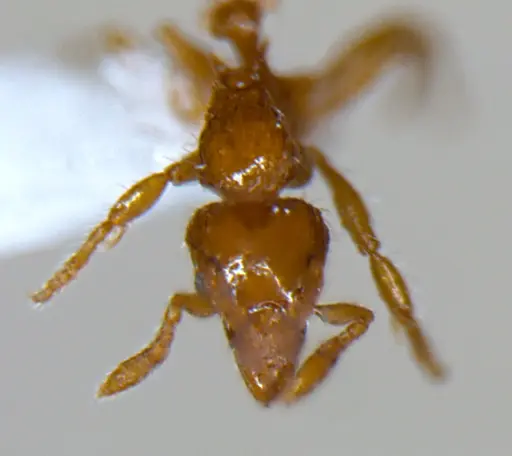
Literatür
Dağılım haritası yükleniyor...Ürünler yükleniyor...