
Strumigenys impidora
- Bilimsel Adı
- Strumigenys impidora
- Oymak (Tribe)
- Attini
- Alt Familya
- Myrmicinae
- Yazar (Tanımlayan)
- Bolton, 1983
- Dağılım
- 0 ülkede bulundu
Giriş
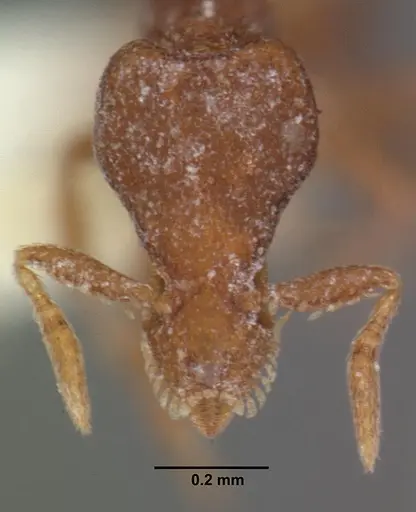
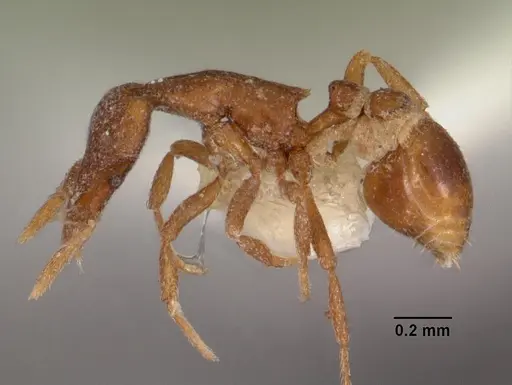
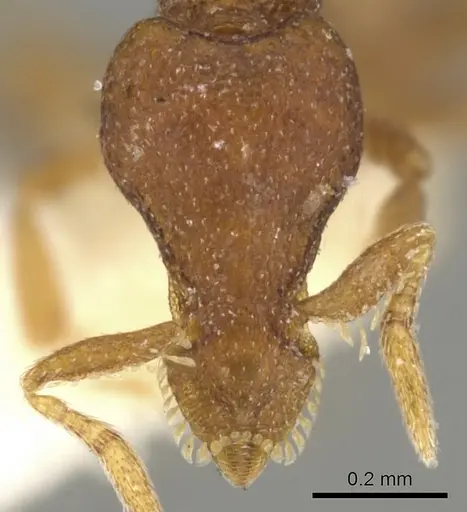
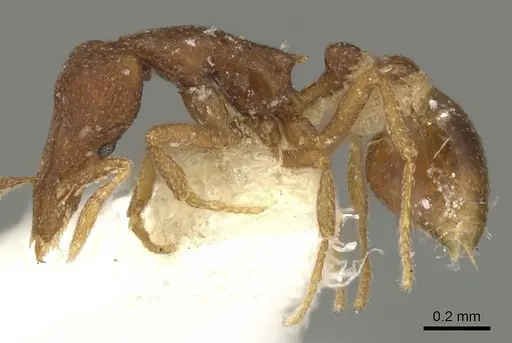
Strumigenys impidora is an extremely rare tiny ant from the Ivory Coast in West Africa. Workers measure just 2.1-2.2mm and are easily recognized by their strongly flattened head and complete lack of standing hairs on the body . This species belongs to the dacetine ant group (tribe Attini), known for specialized trap-jaw mandibles used to hunt small prey like springtails. It has only been found in primary forest habitats around Abidjan, collected from a dead trunk in Banco National Park . The genus Strumigenys contains over 850 species worldwide, but S. impidora remains one of the most poorly known due to its extremely limited distribution and rarity in collections.
Quick Summary
- Difficulty: Expert
- Origin & Habitat: Ivory Coast, West Africa, primary rainforest habitat in Banco National Park near Abidjan . Nests in dead wood in humid forest environments.
- Colony Type: Colony structure is unconfirmed, only known from a handful of worker specimens collected in 1977. Most Strumigenys species are single-queen colonies, but this species has not been studied.
- Size & Growth:
- Queen: Unknown, queen has not been described
- Worker: 2.1-2.2mm total length
- Colony: Unknown, only three specimens ever collected
- Growth: Unknown
- Development: Unknown, no breeding colonies have been established in captivity (No captive breeding data exists for this species due to its extreme rarity)
- Antkeeping:
- Temperature: Tropical species, keep at 24-28°C. Based on Ivory Coast climate, they need consistently warm conditions [1].
- Humidity: Keep nest substrate consistently moist but not waterlogged. The species inhabits dead wood in primary forest, indicating high moisture requirements.
- Diapause: No, tropical species, no hibernation needed. Maintain warm conditions year-round.
- Nesting: Natural nesting in dead wood/rotting branches. In captivity, a small test tube setup or a plaster nest with fine chambers works well. Avoid large open spaces, these tiny ants prefer tight confines.
- Behavior: This species has a functional sting (like other Myrmicinae-Attini), but it is not medically significant to humans and they rarely sting. Workers are small and cryptic, foraging slowly. They are specialized predators of springtails. Escape prevention is critical due to their tiny size, they can squeeze through very small gaps.
- Common Issues: extreme rarity makes acquiring this species nearly impossible, no captive breeding data exists, all attempts would be experimental, tiny size means escape prevention must be excellent, humidity requirements are critical, dry conditions will kill colonies, specialized diet may be difficult to provide, need live springtails
Species Identification and Distinction
Strumigenys impidora is a member of the chyatha-complex within the emarginata-group. The most striking feature is the strongly flattened head, much flatter than related species . Unlike its closest relatives Strumigenys chyatha and Strumigenys behasyla, this species completely lacks standing hairs on the head and clypeus. The head also lacks the transverse bands of suborbicular hairs seen in related species. Workers have mandibles with five relatively large teeth following the basal lamella, plus smaller teeth and denticles toward the tip. The antennal scapes are broad and flattened, bent close to the base . The body is uniformly light brown. These features make identification straightforward under magnification.
Distribution and Rarity
This species is known only from the type locality in Ivory Coast, Banco National Park near Abidjan. The original collection was on March 3,1977,from a dead trunk in primary forest . A 2018 survey of ants in the Abidjan district found only a single occurrence of this species at the CNF [2]. This extreme rarity makes S. impidora one of the most sought-after and difficult to obtain Strumigenys species for antkeeping. It appears to be endemic to the remaining primary forest fragments in the Abidjan area, which are under pressure from urban expansion.
Housing and Setup
Because of their tiny size (around 2mm), housing needs careful attention to scale. A small test tube setup works well for a small group, with the water reservoir properly sized to prevent flooding. For established colonies, a small plaster nest or Y-tong block with appropriately sized chambers is ideal, chambers should be tight as larger spaces stress these ants. Maintain high humidity by keeping the nest substrate moist and covering most ventilation while allowing some airflow to prevent mold. A layer of moist soil or coco peat in the outworld allows natural foraging. Escape prevention is critical, even tiny gaps in lid seals can allow escape. Use fluon on rim edges and ensure any mesh barriers are fine enough to contain these workers. [1]
Feeding and Diet
Strumigenys are specialized predators in the dacetine ant group. They primarily hunt springtails (Collembola) and other tiny soil arthropods. Their trap-jaw mandibles allow rapid strikes to capture prey. In captivity, establish a springtail culture before acquiring this species. Other small prey like booklice (psocids), dust mites, and fruit fly larvae may be accepted. Unlike many Myrmicinae, they do not typically collect honeydew or nectar, protein from live prey is the primary dietary requirement. Feed small prey every few days, adjusting based on colony size and consumption. Remove uneaten prey to prevent mold. [1]
Temperature and Humidity Requirements
As a tropical species from the Ivory Coast, Strumigenys impidora requires warm and humid conditions. Maintain temperatures in the 24-28°C range, avoiding drops below 22°C. A small heating cable on one side of the nest can create a gentle gradient. Room temperature may be sufficient in warm climates or heated rooms. Humidity should be high, keep the nest substrate consistently moist but never waterlogged. Dry conditions quickly lead to colony decline. Monitor condensation as an indicator, some condensation is normal and desirable. Avoid placing the nest near air conditioning vents or in areas with fluctuating temperatures. [1]
Difficulty and Keeper Experience
This species is rated Expert difficulty due to several factors. First, extreme rarity makes acquisition nearly impossible, they are simply not available in the antkeeping hobby. Second, no captive breeding has been documented, so any attempt is experimental. Third, their specialized predatory diet requires established live springtail cultures. Fourth, their tiny size demands excellent escape prevention and appropriately scaled housing. For these reasons, Strumigenys impidora is a species for advanced keepers with specific interest in rare dacetine ants. Related and more commonly kept Strumigenys species like Strumigenys membranifera or Strumigenys louisianae may serve as better practice species. [1]
Frequently Asked Questions
Is Strumigenys impidora available for purchase?
No, this species is extremely rare and has never been available in the antkeeping hobby. It is known only from a handful of specimens collected in 1977 in the Ivory Coast. More commonly kept Strumigenys like Strumigenys membranifera or Strumigenys louisianae are available and can serve as practice for this group.
How long do Strumigenys impidora workers live?
This has not been studied. Based on related Strumigenys species, workers likely live several months to over a year. Queen lifespan would be several years, but no data exists for this species.
Can I keep Strumigenys impidora in a test tube colony?
Yes, a test tube setup is appropriate for this tiny species. Use a small-diameter tube with an appropriately sized water reservoir. Ensure the cotton is packed firmly to prevent flooding and use fluon or other barriers on the rim to prevent escape.
What do Strumigenys impidora eat?
They are specialized predators requiring live springtails and other tiny arthropods. Establish a springtail culture before acquiring any Strumigenys. They do not collect nectar or honeydew, protein from small live prey is essential.
Do Strumigenys impidora need hibernation?
No, being a tropical species from the Ivory Coast, they do not require hibernation. Maintain warm temperatures (24-28°C) year-round without cooling periods.
How big do Strumigenys impidora colonies get?
Unknown for this species. Based on related Strumigenys, colonies likely reach a few hundred workers at most. Most Strumigenys maintain relatively small colonies compared to other ants.
Are Strumigenys impidora good for beginners?
No, this species is rated Expert difficulty due to extreme rarity, specialized dietary requirements, tiny size, and lack of any captive breeding data. Even experienced antkeepers would struggle to obtain and maintain this species.
Why is Strumigenys impidora so rare?
This species has an extremely limited distribution, known only from Banco National Park in the Ivory Coast. The primary forest habitat in the Abidjan area is fragmented and under threat. A 2018 survey found only a single occurrence, confirming its rarity in the wild [2].
Report an Issue
The current care sheet is based fully on literature. See inconsistencies, or something that's incorrect? Please , it will be resolved after review from an admin. Contributing to the blogs tab also helps providing information, to make us be able to further improve the caresheets. Thank you for your support!
References

Bu bakım rehberi şu lisans altındadır: CC BY-SA 4.0 .
Topluluk Blogları
CASENT0102547
AntWeb'de Görüntüle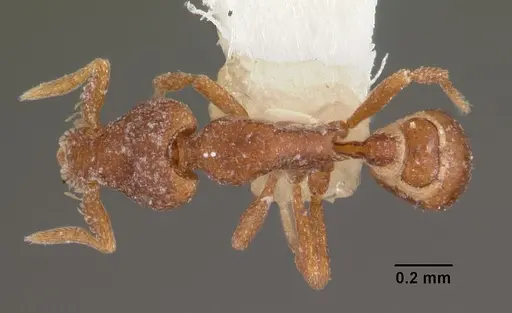
CASENT0900075
AntWeb'de Görüntüle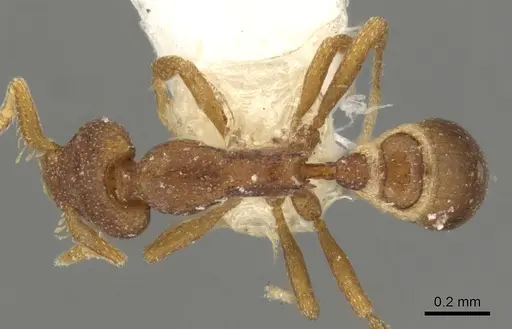
Literatür
Dağılım haritası yükleniyor...Ürünler yükleniyor...