
Strumigenys heterodonta
- Bilimsel Adı
- Strumigenys heterodonta
- Oymak (Tribe)
- Attini
- Alt Familya
- Myrmicinae
- Yazar (Tanımlayan)
- Rigato & Scupola, 2008
- Dağılım
- 0 ülkede bulundu
Giriş
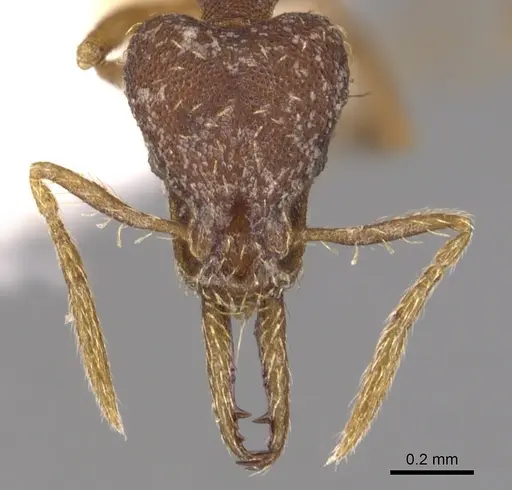
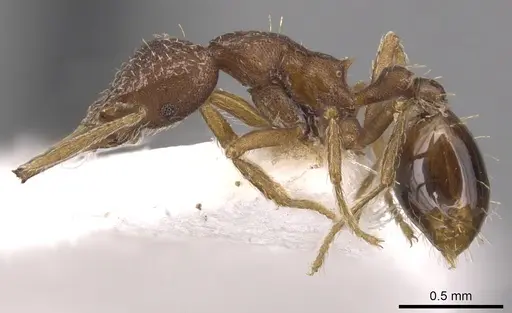
Strumigenys heterodonta is a tiny predatory ant measuring just 2.8-3.0 mm in total length . This species belongs to the Strumigenys gundlachi group and was described from a single location in Ecuador's Pichincha province at 2940 m altitude - making it one of the highest-elevation Strumigenys species known . Workers are uniformly yellowish-brown (testaceous) and possess remarkably long, narrow mandibles with four preapical teeth and denticles that vary in size - this variable tooth structure is what gives the species its name (heterodonta means 'different tooth' in Greek) . The preapical teeth are notably heterogeneous in size compared to related species, with the largest tooth positioned at the apical third of the mandible . This species is extremely rare - only eight specimens have ever been collected, all from the same Andean location . As a member of the dacetine ant tribe Attini, it likely uses the specialized hunting behavior typical of Strumigenys: capturing small prey, especially springtails, with a rapid snap of the long mandibles . The high-altitude cloud forest habitat suggests it prefers cool, damp conditions.
Quick Summary
- Difficulty: Expert
- Origin & Habitat: Andes mountains of Ecuador, Pichincha province at Pasochoa (2940 m altitude), cold montane cloud forest [1]. Collected under bark [1].
- Colony Type: Colony structure is unconfirmed, only eight workers have been collected. Based on genus patterns, likely single-queen (monogyne), but this has not been directly observed.
- Size & Growth:
- Queen: Unknown, queen caste has not been described [1]
- Worker: 2.8-3.0 mm total length [1]
- Colony: Unknown, only eight workers known from type series [1]
- Growth: Unknown, no colony development data exists
- Development: Unconfirmed, no direct observations. Based on typical Strumigenys patterns, expect 6-10 weeks at optimal temperature. (No breeding or development data exists for this species. Estimates based on genus-level patterns.)
- Antkeeping:
- Temperature: Based on the high-altitude origin (2940 m) [1], this species likely prefers cool conditions. Start around 18-22 °C and observe colony activity. Avoid warm conditions, they come from cold cloud forests above 2000 m [2].
- Humidity: High humidity required, think damp cloud forest conditions. Keep the nest substrate consistently moist but not waterlogged. Provide a humidity gradient so ants can choose their preferred zone [2].
- Diapause: Unknown, no data on overwintering requirements. The high-altitude origin suggests they may tolerate or require cooler temperatures during winter months, but this is unconfirmed [1].
- Nesting: Found under bark in nature [1], suggests they nest in rotting wood or under loose bark in damp conditions. In captivity, a naturalistic setup with damp substrate (like a soil-filled formicarium) or a Y-tong nest with good moisture retention works well. Avoid dry conditions.
- Behavior: Dacetine ants are specialized predators using their long mandibles to capture small prey, primarily springtails [2]. They are typically slow-moving but can deliver a quick snap with their mandibles. Workers are tiny (under 3 mm) and can escape through standard barrier gaps, excellent escape prevention is essential. Generally non-aggressive toward humans, but will defend the nest.
- Common Issues: no established care protocols exist, you will need to experiment and document your observations, escape prevention is critical due to tiny worker size (under 3 mm), use fine mesh barriers and tight-fitting lids, high humidity can lead to mold if ventilation is inadequate, balance moisture with airflow, cold-temperature preference may conflict with typical room temperatures, may require a cooling setup in warm environments
Housing and Nest Setup
This species has never been kept in captivity, so established protocols do not exist. Based on the natural history of related Strumigenys species and the collection data (found under bark at 2940 m altitude [1]), you should aim for cool, damp conditions. A naturalistic setup with damp soil substrate works well, this mimics the rotting wood and bark microhabitat where they were found. Alternatively, a Y-tong (AAC) nest with good moisture retention can provide the humidity they need while allowing you to observe the colony. The nest should be kept consistently moist but never waterlogged. Given their tiny size (under 3 mm), excellent escape prevention is essential, use fine mesh barriers and ensure all connections are sealed. Provide a dark area for the nest since they were found under bark in low-light conditions [2].
Feeding and Diet
Strumigenys are specialized predators, primarily hunting springtails (Collembola) and other tiny arthropods [2]. In captivity, you should offer live springtails as a primary food source, these are the natural prey and provide the most appropriate nutrition. Other small live prey like micro-arthropods, fruit flies, or tiny crickets may be accepted. Some Strumigenys species will accept sugar water or honey occasionally, but protein from live prey should form the bulk of their diet. Feed small amounts every few days and remove uneaten prey to prevent mold. Do not overfeed, these are small ants with modest appetites. The long, specialized mandibles are designed for catching small, fast-moving prey, so offering appropriately-sized live food is important for natural foraging behavior [2].
Temperature Requirements
This is perhaps the most critical aspect for keeping Strumigenys heterodonta. The species was collected at 2940 m altitude in the Ecuadorian Andes, a cold, cloud forest environment [1]. Unlike most tropical ants, this species likely prefers cool conditions. Aim for temperatures in the range of 18-22 °C. Avoid warm conditions entirely, temperatures above 25 °C are likely stressful or fatal. In most homes, you may need to use a cooling setup or place the colony in a cool room. Monitor with a thermometer and be prepared to adjust. The high-altitude origin also suggests they may tolerate cooler temperatures than typical tropical ants, potentially even requiring a winter cool period, though this is unconfirmed [1].
Humidity and Water
High humidity is essential, this species comes from a cloud forest environment at high altitude where moisture is constantly present [2]. Keep the nest substrate consistently damp, similar to a forest floor that never fully dries out. However, avoid creating standing water or waterlogged conditions, as this can drown the colony and promote harmful mold. A humidity gradient allows the ants to self-regulate, provide both a moist area and a slightly drier area within the enclosure. Mist the outworld occasionally but rely on damp substrate for consistent humidity. Good ventilation is also important to prevent stagnant air and mold growth, but avoid excessive airflow that dries out the nest [2].
Understanding the Challenge
Strumigenys heterodonta represents one of the most challenging ant species to keep because essentially no captive husbandry information exists. This species has only ever been collected once, from a single location, and only eight workers are known to science [1]. There are no established breeding lines in captivity, no documented care protocols, and no observations of colony development. You will essentially be pioneering the husbandry of this species. This makes it an expert-level species suitable only for experienced antkeepers who are comfortable experimenting and adapting care based on colony response. Success would represent a significant contribution to antkeeping knowledge. Before attempting to keep this species, ensure you have experience with other Strumigenys or similarly difficult dacetine ants, and be prepared to document your observations carefully [1].
Frequently Asked Questions
Is Strumigenys heterodonta a good species for beginners?
No. This is an expert-level species that is not recommended for beginners. It has never been kept in captivity, no care protocols exist, and the high-altitude cold-environment requirements make it challenging. Only experienced antkeepers should attempt this species [1].
What do Strumigenys heterodonta ants eat?
Based on genus-level information, they are specialized predators that primarily hunt springtails and other tiny arthropods [2]. Offer live springtails as a primary food source. Some individuals may accept sugar water occasionally, but protein from live prey should form the main diet [2].
What temperature do Strumigenys heterodonta ants need?
Cool temperatures are essential. Based on their high-altitude origin (2940 m in the Ecuadorian Andes [1]), aim for 18-22 °C. Avoid warm conditions above 25 °C. This is unlike most ant species that prefer warmth [1].
How big do Strumigenys heterodonta colonies get?
Unknown. Only eight workers have ever been collected, and no mature colonies have been studied. Based on related Strumigenys species, colonies likely reach dozens to a few hundred workers, but this is an estimate [1].
Can I keep Strumigenys heterodonta in a test tube?
A test tube setup can work for the founding colony if you maintain high humidity, but a naturalistic or Y-tong setup may be better for long-term housing. The key is maintaining cool, damp conditions regardless of the nest type.
Where is Strumigenys heterodonta found in the wild?
Only known from a single location in Pichincha province, Ecuador, at Pasochoa at 2940 m altitude. This is in the Andes mountains, a cold, cloud forest environment. They were collected under bark [1].
Why is Strumigenys heterodonta so rare?
This species is known from only eight collected specimens, all from the same location in Ecuador. The high-altitude cloud forest habitat (2940 m) is a specialized environment that likely supports limited populations. The species was only described in 2008,suggesting it may have a very restricted range [1].
Do Strumigenys heterodonta queens need hibernation?
Unknown. The high-altitude origin suggests they may tolerate or require cooler conditions during winter months, but no specific data exists. Monitor colony behavior and adjust temperatures based on activity levels [1].
How do I prevent Strumigenys heterodonta from escaping?
Excellent escape prevention is critical because workers are extremely tiny (under 3 mm). Use fine mesh barriers (standard mesh may be too coarse), ensure all enclosure lids fit tightly, and check all connection points regularly. Even the smallest gaps can allow escape [1].
Report an Issue
The current care sheet is based fully on literature. See inconsistencies, or something that's incorrect? Please , it will be resolved after review from an admin. Contributing to the blogs tab also helps providing information, to make us be able to further improve the caresheets. Thank you for your support!
References

Bu bakım rehberi şu lisans altındadır: CC BY-SA 4.0 .
Topluluk Blogları
CASENT0904565
AntWeb'de Görüntüle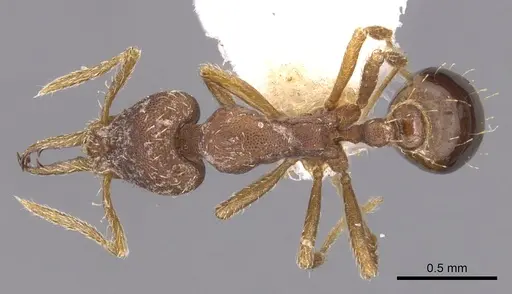
Literatür
Dağılım haritası yükleniyor...Ürünler yükleniyor...