
Strumigenys exunca
- Bilimsel Adı
- Strumigenys exunca
- Oymak (Tribe)
- Attini
- Alt Familya
- Myrmicinae
- Yazar (Tanımlayan)
- Bolton, 2000
- Dağılım
- 0 ülkede bulundu
Giriş
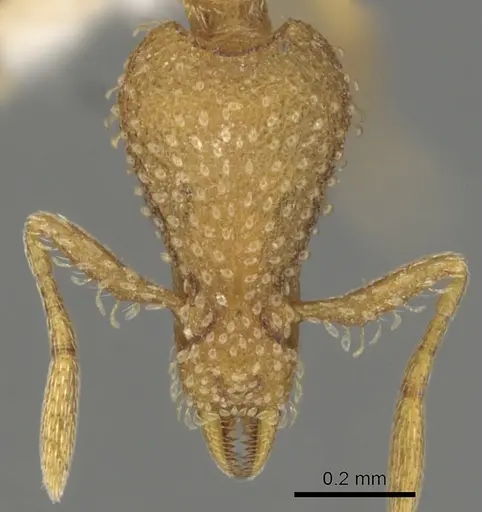
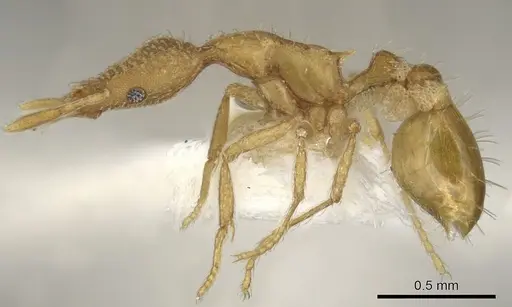
Strumigenys exunca is a tiny predatory ant measuring about 2.3-2.5 mm in total length. It belongs to the subfamily Myrmicinae and the tribe Attini. Workers have a distinctive appearance: the head is covered with conspicuous spoon-shaped hairs, and the sides of the thorax are smooth and shiny. This species is found in West Africa, with records from Cameroon, Ghana, Ivory Coast, Nigeria, and Togo . It lives in tropical rainforests, where it likely hunts in leaf litter and rotting wood. Almost nothing is known about the biology or care of this ant in the wild . All care advice below is inferred from the genus Strumigenys and related species.
Quick Summary
- Difficulty: Expert
- Origin & Habitat: West African rainforests in Cameroon, Ghana, Ivory Coast, Nigeria, and Togo. Lives in leaf litter, under rotting logs, and in decaying wood on the forest floor [1][2].
- Colony Type: Colony structure is unknown. The genus Strumigenys includes both single-queen and multi-queen species, so no reliable inference can be made for this species.
- Size & Growth:
- Queen: Unknown, the queen has not been described.
- Worker: 2.3-2.5 mm total length [1].
- Colony: Unknown, no data exists for this species.
- Growth: Unknown, but most small Strumigenys species grow slowly.
- Development: Unknown, no species-specific data exists. Expect several months at warm temperatures, based on related ants. (No information available.)
- Antkeeping:
- Temperature: Keep at 24-28°C year-round, as this is a tropical species. Avoid temperatures below 22°C or above 32°C.
- Humidity: High humidity is essential. Keep the nest substrate consistently moist but not waterlogged. A water reservoir or regularly misted soil nest works well.
- Diapause: No, this tropical species does not require hibernation.
- Nesting: Use a naturalistic setup with moist soil or peat, or a Y‑tong (AAC) / plaster nest that holds humidity. Chambers should be small and snug. Avoid dry, open nests.
- Behavior: Strumigenys are specialized predators that hunt springtails and other tiny soil arthropods. They are not aggressive toward humans and have a sting that is harmless to people. Their very small size (2.3 mm) means they can squeeze through standard ant mesh, you must use extremely fine mesh or other barriers. Workers forage alone. Colony dynamics are unknown for this species.
- Common Issues: escape is very likely, use mesh with openings under 0.5 mm or a fluon barrier, mold from overfeeding or poor ventilation can kill the colony, they need a constant supply of live prey, they will not survive on sugars alone, wild-caught colonies may carry internal parasites that are hard to detect, slow growth and tiny colony size make them hard to observe and care for
Housing and Nest Setup
Because Strumigenys exunca workers are only 2.3 mm long, you need a nest with very small chambers and tight gaps. Use a naturalistic setup with moist soil or peat as substrate, or a Y‑tong (AAC) / plaster nest that holds humidity. Add a layer of dead leaves or small pieces of rotting wood on the surface, this gives workers a place to hunt and provides cover. The nest chambers should be small (a few centimeters across). All openings must be covered with extremely fine mesh (0.3-0.4 mm openings) or a fluon barrier, standard ant mesh will not hold them. A water reservoir connected to the nest helps keep humidity high without constant misting.
Feeding and Diet
This species is a specialized predator. Its natural prey are springtails (Collembola) and other tiny soil arthropods. In captivity you must provide live prey at least every 2-3 days. Springtails are the best choice, they are easy to culture and match the ants’ natural diet. You can also offer fruit flies (Drosophila), booklice, or very small soil mites. Do not offer sugar water, honey, or seeds, Strumigenys are obligate predators and will not accept carbohydrates. Remove uneaten prey after 24 hours to prevent mold. Feed only as much as the colony can eat quickly.
Temperature and Humidity
Strumigenys exunca is a tropical species from West African rainforests. Keep the temperature at 24-28°C year-round. Use a heat mat on one side of the nest to create a gentle gradient. Never let the temperature drop below 22°C for long periods. Humidity must be high, aim for a substrate that is always moist but not soaking wet. A water reservoir in the nest or regular misting will maintain humidity. Balance this with proper ventilation to stop mold. Avoid stagnant, overly wet conditions.
Behavior and Colony Dynamics
Workers are solitary hunters that patrol the nest area looking for live prey. They use trap‑jaw mandibles (typical of the genus) to capture springtails and other tiny animals. They are not aggressive to humans and have a sting that is harmless. Colony size, queen number, founding method, and development time are all unknown for this species, no biological studies have been published. Keep the colony in a dark, humid setup and disturb it as little as possible. Growth is expected to be very slow.
Acquiring and Establishing Colonies
This species is rare in the antkeeping hobby and has no documented captive breeding. If you obtain a queen, provide a founding setup that mimics a sealed chamber, a small test tube with moist cotton, placed in darkness. Do not disturb for at least a month. Once the first workers appear, start offering tiny live prey. Do not try to combine queens, colony structure is unknown. Wild‑caught colonies may carry parasites, quarantine them separately for several weeks.
Frequently Asked Questions
Can I keep Strumigenys exunca in a test tube?
A test tube works for founding a colony, but once workers appear you will need a larger nest that holds humidity. Use a small test tube with a damp cotton plug at the back. Cover it to keep it dark.
What do Strumigenys exunca ants eat?
They are obligate predators and need live prey. The best food is springtails (Collembola). You can also offer fruit flies, booklice, or very small mites. They will not accept sugar water, honey, or seeds.
How long does it take for the first workers to emerge?
Unknown, there are no data for this species. Based on related Strumigenys, expect several months at 24-28°C. Be patient and do not disturb the founding chamber.
Are Strumigenys exunca good for beginners?
No, this is an expert‑level species. Almost nothing is known about its biology, it needs constant live prey, high humidity, and very fine escape barriers. It is not recommended for anyone new to antkeeping.
How big do Strumigenys exunca colonies get?
Colony size is unknown. The genus Strumigenys includes species with a few dozen to several hundred workers. For S. exunca there is no data.
Do Strumigenys exunca need hibernation?
No, they are a tropical rainforest species and do not require a diapause. Keep them warm year‑round.
Why are my Strumigenys dying?
Common causes: escape (their small size lets them slip through standard mesh), drying out (they need constant high humidity), mold from overfeeding or poor ventilation, lack of live prey (they cannot survive on sugar), or parasites from wild‑caught stock. Check escape barriers, moisture levels, and prey supply first.
When should I move them to a formicarium?
Move them when the test tube or founding chamber becomes crowded, at least 10-20 workers. Use a small, humid nest (Y‑tong or plaster). Make sure the new nest already has the correct humidity before connecting it.
Can I keep multiple queens together?
Not recommended, colony structure is unknown for this species. House each queen separately unless you have specific evidence that they are polygyne.
Report an Issue
The current care sheet is based fully on literature. See inconsistencies, or something that's incorrect? Please , it will be resolved after review from an admin. Contributing to the blogs tab also helps providing information, to make us be able to further improve the caresheets. Thank you for your support!
References

Bu bakım rehberi şu lisans altındadır: CC BY-SA 4.0 .
Topluluk Blogları
CASENT0900078
AntWeb'de Görüntüle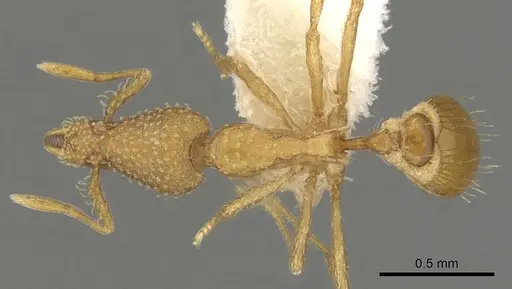
Literatür
Dağılım haritası yükleniyor...Ürünler yükleniyor...