
Strumigenys doryceps
- Bilimsel Adı
- Strumigenys doryceps
- Oymak (Tribe)
- Attini
- Alt Familya
- Myrmicinae
- Yazar (Tanımlayan)
- Bolton, 2000
- Dağılım
- 0 ülkede bulundu
Giriş
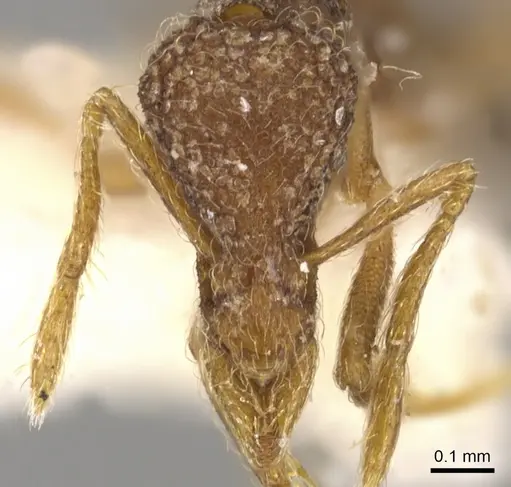
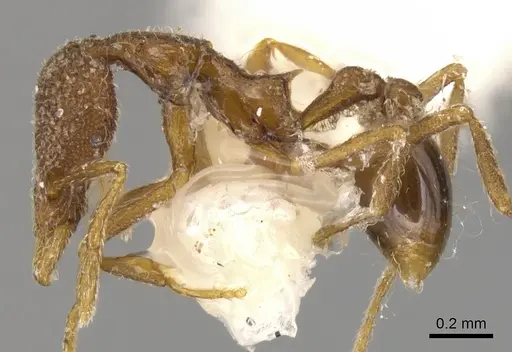
Strumigenys doryceps is an exceptionally tiny ant, measuring about 2.1-2.2 mm in total length . Workers have a distinctive appearance: an elongated head, mandibles that bulge outwards at the base in full-face view, a smooth and shiny postpetiole disc, and thin propodeal spines . This species belongs to the probatrix-group and was originally described from Ecuador, with recent records confirming its presence in Colombia's Bolívar region at 280-520 m elevation . The few known specimens were collected from rainforest leaf litter using Winkler extraction . This species remains extremely poorly known - only a handful of workers have ever been collected. As a trap-jaw ant in the genus Strumigenys, it almost certainly hunts springtails and other micro-arthropods in the leaf litter. Its limited distribution in Neotropical rainforests suggests it requires warm, humid conditions comparable to other dacetine ants.
Quick Summary
- Difficulty: Expert
- Origin & Habitat: Neotropical rainforest of Ecuador and Colombia (Bolívar region) at 280-520 m elevation [2][3]. Collected from leaf litter in rainforest environments.
- Colony Type: Colony structure is unconfirmed, only a few worker specimens have ever been collected. Based on typical Strumigenys patterns, colonies are likely small with single queens.
- Size & Growth:
- Queen: Unknown, queen has never been described [1]
- Worker: ~2.1-2.2 mm total length [1]
- Colony: Unknown, likely under 100 workers based on typical Strumigenys patterns [4]
- Growth: Unknown, likely slow based on genus patterns
- Development: Unknown, estimated 8-12 weeks based on typical Strumigenys development (Development timeline is unconfirmed for this species. Strumigenys generally have slow colony growth with small first broods.)
- Antkeeping:
- Temperature: Keep at 24-28°C, rainforest species requiring warm, stable conditions
- Humidity: High humidity, rainforest leaf litter specialists require consistently moist substrate
- Diapause: Unknown, likely no formal diapause as a tropical species, but activity may slow during dry seasons
- Nesting: Natural nesting in leaf litter and rotting wood. In captivity, a small test tube setup or Y-tong nest with fine chambers works well. Keep nest material consistently moist but not waterlogged.
- Behavior: Behavior is unconfirmed but likely similar to other Strumigenys, slow-moving, cryptic foragers that hunt springtails and other micro-arthropods using their trap-jaw mandibles [4]. Escape prevention is critical due to their extremely small size, they can squeeze through gaps under 1 mm. Generally non-aggressive and shy. Colonies likely remain small and grow slowly.
- Common Issues: escape prevention is critical, they are among the smallest ants and can slip through standard barrier setups., colony failure during founding is likely common given their specialized requirements., slow growth may cause keepers to overfeed or disturb the colony unnecessarily., high humidity requirements make them prone to mold if ventilation is poor., specialized diet (live springtails) may be hard to maintain in captivity.
Housing and Nest Setup
Strumigenys doryceps is an extremely small ant requiring carefully scaled housing. Use a small test tube setup with a tight water reservoir, or a Y-tong (AAC) nest with the finest available chamber sizes. The nest chambers should be small and snug, these ants feel insecure in large, open spaces. Place the nest in a dark area with minimal disturbance, as they are cryptic and light-sensitive. A small outworld area connected to the nest allows for feeding while containing the colony. Escape prevention must be excellent, apply Fluon or similar barriers to all edges, as these tiny ants can slip through gaps that would hold back larger species. A small piece of damp cotton or sphagnum moss in the outworld helps maintain humidity during feeding. [4]
Feeding and Diet
Strumigenys are specialized predators, and S. doryceps almost certainly feeds primarily on springtails and other micro-arthropods found in leaf litter [4]. In captivity, offer live springtails as a primary food source, these are essential. Other small prey such as booklice, grain mites, and tiny isopods may also be accepted. Sugar sources are typically ignored by Strumigenys, so do not rely on honey or sugar water. Feed small prey items every 2-3 days, removing any uneaten prey after 24 hours to prevent mold. The trap-jaw mandibles are specialized for capturing small, fast-moving prey, they ambush by snapping their mandibles shut when trigger hairs are touched.
Temperature and Humidity
As a rainforest species from Ecuador and Colombia, S. doryceps requires warm and humid conditions. Maintain temperatures between 24-28°C, avoiding drops below 22°C. A small heating cable on one side of the nest can create a gentle gradient if room temperature is insufficient. Humidity should be high, the substrate should feel consistently damp but never waterlogged. Use a water tube or small reservoir connected to the nest to maintain moisture over time. Mist the nest area occasionally, but avoid direct spraying on the ants. Good ventilation is essential to prevent mold while maintaining humidity, small holes or mesh on the lid allow air exchange without drying the nest. [2][3]
Colony Growth and Development
S. doryceps colonies are expected to grow slowly, typical of Strumigenys species. The first workers (nanitics) will likely be very small and may take 8-12 weeks to develop from egg to worker at optimal temperature. Colonies probably remain small (under 100 workers) even at maturity, as this is typical for the genus. Do not disturb the colony during founding, queens should be left sealed in a small chamber with no disturbance until the first workers emerge. After workers arrive, feed sparingly with small prey items. Avoid checking the nest too frequently, as these cryptic ants stress easily. Growth can be monitored by the number of prey items consumed rather than by opening the nest. [4]
Behavior and Temperament
Strumigenys doryceps is a cryptic, slow-moving ant that likely spends most of its time hunting in leaf litter and crevices. Workers probably forage individually rather than in groups, using their trap-jaw mandibles to capture small springtails and other micro-arthropods. They are not aggressive and will retreat from threats rather than attack. Colonies are likely timid and may abandon brood if disturbed too frequently. The most notable behavior is their extremely small size and specialized predatory morphology, the mandibles have trigger hairs that cause them to snap shut when prey contacts them [4]. Escape prevention is the primary behavioral concern, these ants can squeeze through gaps smaller than 1 mm.
Frequently Asked Questions
How long does it take for Strumigenys doryceps to produce first workers?
The exact timeline is unconfirmed, but based on typical Strumigenys development patterns, expect 8-12 weeks from egg to first worker at optimal temperature (24-28°C). Growth is slow, and the first workers (nanitics) will be very small.
Can I keep Strumigenys doryceps in a test tube?
Yes, a small test tube setup works well for this species. Use a small tube with a tight water reservoir and keep the cotton damp. The chambers must be small and snug, these tiny ants feel insecure in large spaces. Apply escape barriers like Fluon to all openings.
What do Strumigenys doryceps ants eat?
They are specialized predators on micro-arthropods. Offer live springtails as a primary food source, this is essential. Other small prey like booklice, grain mites, and tiny isopods may be accepted. Sugar sources are typically ignored.
Are Strumigenys doryceps good for beginners?
No. This is an expert-level species due to their extremely small size, specialized dietary requirements (live springtails), high humidity needs, and general rarity in the hobby.
How big do Strumigenys doryceps colonies get?
Colony size is unknown but likely remains small (under 100 workers) based on typical Strumigenys colony sizes. Only a few worker specimens have ever been collected in the wild.
Do Strumigenys doryceps need hibernation?
No formal diapause is documented. As a tropical rainforest species from Ecuador and Colombia, they likely remain active year-round with reduced activity during dry seasons. No cooling period is required.
Why are my Strumigenys doryceps dying?
Common causes include: escape (they are tiny and squeeze through barriers), stress from disturbance (they are cryptic and sensitive), low humidity (they need consistently moist substrate), insufficient live prey (they need springtails), and mold from poor ventilation. Review all habitat parameters and minimize nest inspections.
When should I move Strumigenys doryceps to a formicarium?
Only move to a formicarium once the colony is established with at least 10-15 workers and actively hunting. Many keepers keep Strumigenys in test tubes long-term with success. Foraging is better done in a small outworld connected to the test tube.
Can I keep multiple queens together?
This is unknown, only worker specimens have been documented. Based on typical Strumigenys behavior, pleometrosis (multiple queens founding together) has not been reported for this group. Keeping multiple unrelated queens together is not recommended.
Report an Issue
The current care sheet is based fully on literature. See inconsistencies, or something that's incorrect? Please , it will be resolved after review from an admin. Contributing to the blogs tab also helps providing information, to make us be able to further improve the caresheets. Thank you for your support!
References

Bu bakım rehberi şu lisans altındadır: CC BY-SA 4.0 .
Topluluk Blogları
CASENT0900198
AntWeb'de Görüntüle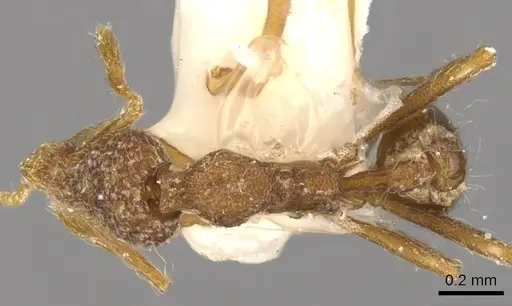
Literatür
Dağılım haritası yükleniyor...Ürünler yükleniyor...