
Solenopsis goeldii
- Bilimsel Adı
- Solenopsis goeldii
- Oymak (Tribe)
- Solenopsidini
- Alt Familya
- Myrmicinae
- Yazar (Tanımlayan)
- Forel, 1912
- Dağılım
- 0 ülkede bulundu
Giriş
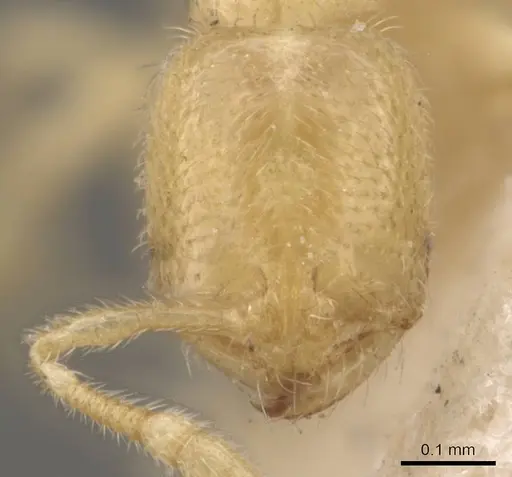
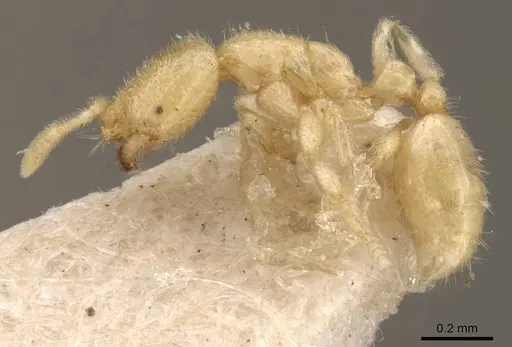
Solenopsis goeldii is an exceptionally rare thief ant from the Solenopsis pygmaea species complex. Workers are tiny at just 1.44 mm, with a distinctive pale yellow color and coarse punctures on their head giving a speckled appearance. The head is rectangular and longer than wide, with well-developed lateral clypeal teeth but no extralateral teeth. Males are larger at 3.12 mm and brown . This species is known only from a few specimens collected in Rio de Janeiro, Brazil over a century ago, and absolutely nothing has been documented about its biology since .
Quick Summary
- Difficulty: Expert
- Origin & Habitat: Known only from Rio de Janeiro, Brazil, a tropical coastal region with warm temperatures and high humidity year-round [2]. No specific natural habitat data exists.
- Colony Type: Unknown, queens have never been collected.
- Size & Growth:
- Antkeeping:
- Temperature: Unknown, based on the tropical climate of Rio de Janeiro, warm conditions (room temperature to ~28°C) are likely, but no precise data exists. Experiment carefully.
- Humidity: Unknown, likely moderate to high given the origin, but no data. Maintain moist but not waterlogged substrate.
- Diapause: Unlikely, as a tropical species it probably does not require true hibernation, but this is speculative.
- Nesting: Unknown, no nesting information exists. Any setup would be experimental.
- Behavior: As a Solenopsis (thief ant group), it is likely predatory on tiny arthropods. At 1.44 mm, it cannot effectively sting humans. Escape prevention is critical, these ants can squeeze through gaps smaller than 1 mm.
- Common Issues: extreme rarity, this species has never been documented in captivity, escape prevention critical due to tiny size, no biological data exists, every care aspect is speculative, queens have never been collected, founding methods unknown, growth rate and colony development are completely unknown
Species Overview and Identification
Solenopsis goeldii is one of the smallest ants, with workers measuring just 1.44 mm total length, about the size of a grain of sand. They are uniformly pale yellow, with a rectangular head that is longer than wide, and coarse punctures on the head giving a speckled look. The lateral clypeal teeth are well developed, but extralateral teeth are absent. Males are 3.12 mm and brown. This species can be confused with Solenopsis westwoodi, which has similar head punctures but is medium dark brown, not pale yellow, and has small bumps where S. goeldii has no extralateral teeth [1].
Distribution and Biogeography
Solenopsis goeldii is known only from the type locality in Rio de Janeiro, Brazil. The original specimens were collected by Göldi and described by Forel in 1912. No additional specimens have been documented since, making it one of the rarest ant species in the world [2]. Rio de Janeiro has a humid subtropical climate with warm temperatures year-round (20-30°C) and high humidity, but the species' specific microhabitat is unknown.
Why This Species Is So Challenging
This cannot be stressed enough: Solenopsis goeldii has essentially no biological data. Queens have never been collected. No one has ever documented nesting behavior, diet, colony size, nuptial flights, or any natural history. The species is known from just three worker specimens and one male collected over a century ago [1]. Every piece of care advice for this species is speculative guesswork based on related Solenopsis or the climate of Rio de Janeiro. There is no established husbandry protocol, no documented success in captivity, and no community knowledge to draw from. This species is expert-only territory, not because it is difficult to keep, but because we genuinely don't know how to keep it alive.
Housing and Nest Setup
Given the complete lack of data, any nest setup is experimental. A small test tube setup with a tightly packed cotton plug would be a reasonable starting point. The water reservoir must be small to avoid flooding. Because nothing is known about their natural nesting, a mini formicarium with very small chambers and narrow connections may work. ESCAPE PREVENTION IS ABSOLUTELY CRITICAL. At 1.44 mm, these ants can escape through standard test tube cotton or any tiny gap in formicarium connections. Use fluon on all rim edges and consider multiple barriers. Even standard barriers may not be enough. [1]
Feeding and Diet
Nothing is known about the diet of Solenopsis goeldii. As a member of the Solenopsis genus (which includes thief ants and fire ants), it is likely predatory on very small arthropods, but this is speculation. If attempting to keep them, offer tiny live prey such as springtails, fruit fly larvae, or micro-arthropods. Sugar water or honey may be accepted but is unconfirmed. All feeding is experimentation. [1]
Temperature and Seasonal Care
No thermal data exists for this species. Based on the tropical climate of Rio de Janeiro, warm temperatures are likely, aim for room temperature to around 28°C. A small heating cable can provide a gradient if needed. Since the species is tropical, it almost certainly does not require a true diapause. Do not force cold hibernation, keep conditions stable year-round, though a slight seasonal slowdown may occur. [1]
Frequently Asked Questions
Is Solenopsis goeldii available in the antkeeping hobby?
No. This species is exceptionally rare, known only from a handful of specimens collected over a century ago in Rio de Janeiro. It has never been documented in the antkeeping hobby, and colonies are essentially unavailable.
How long do Solenopsis goeldii workers live?
Unknown, no research exists. Based on general ant patterns and tiny worker size, they might live several months to a year, but this is speculative.
Can I keep Solenopsis goeldii in a test tube setup?
A test tube would be a reasonable starting point if you obtained a colony. However, escape prevention is critical, standard cotton plugs may not contain them. Use fluon on the rim and consider secondary barriers. The water reservoir should be small to prevent flooding.
What do Solenopsis goeldii eat?
Unknown, nothing is documented. Based on related thief ants, they likely prey on tiny arthropods. You could experiment with springtails or fruit fly larvae. Sugar sources may be accepted but are speculative.
How big do Solenopsis goeldii colonies get?
Unknown, no colony size data exists. Based on the pygmaea complex pattern (very small workers), colonies are likely small, but this is an estimate.
Do Solenopsis goeldii need hibernation?
No, being from tropical Rio de Janeiro, they almost certainly do not require hibernation. Keep them at warm temperatures year-round. Do not attempt to cool them significantly.
Are Solenopsis goeldii good for beginners?
Absolutely not, not because they are difficult, but because we know absolutely nothing about keeping them. This is one of the least-studied ant species on Earth. No care guides exist, and everything would be guesswork.
Why has nobody studied Solenopsis goeldii?
This species is known from only a handful of specimens collected in Rio de Janeiro over a century ago. It appears to be either extremely rare in the wild or very difficult to collect. Without specimens, biologists cannot document its biology.
What is the closest studied relative to Solenopsis goeldii?
Other species in the Solenopsis pygmaea complex are the closest relatives, but most are similarly understudied. The better-known Solenopsis species like fire ants (S. invicta) are in a different species group. General husbandry knowledge from other small Solenopsis could theoretically apply, but no specific data exists.
Report an Issue
The current care sheet is based fully on literature. See inconsistencies, or something that's incorrect? Please , it will be resolved after review from an admin. Contributing to the blogs tab also helps providing information, to make us be able to further improve the caresheets. Thank you for your support!
References

Bu bakım rehberi şu lisans altındadır: CC BY-SA 4.0 .
Topluluk Blogları
CASENT0908834
AntWeb'de Görüntüle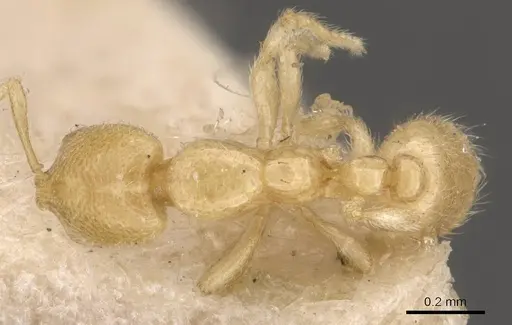
Literatür
Dağılım haritası yükleniyor...Ürünler yükleniyor...