
Simopone bakeri
- Bilimsel Adı
- Simopone bakeri
- Alt Familya
- Dorylinae
- Yazar (Tanımlayan)
- Menozzi, 1926
- Dağılım
- 0 ülkede bulundu
Giriş
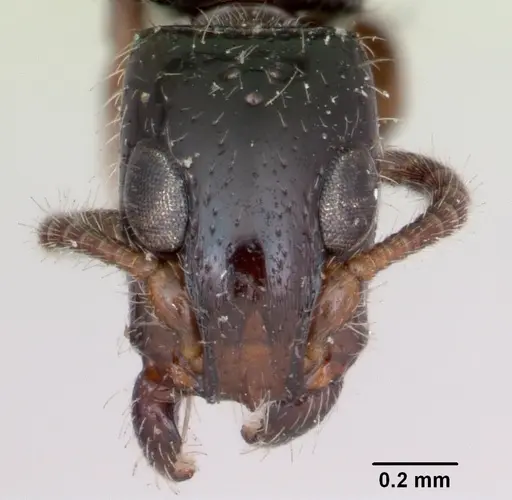
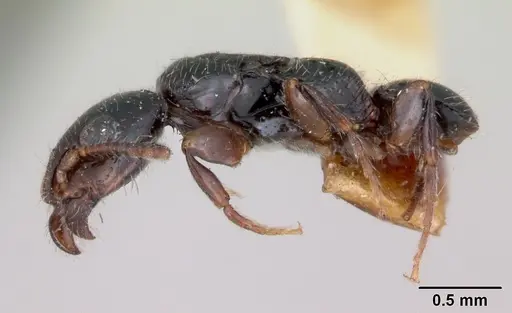
Simopone bakeri is a rare tropical ant species from the Dorylinae subfamily, known only from Singapore and the Philippines . Workers measure about 5.6 mm in total length, making them medium-sized ants with notably large eyes and an unusually abundant body hair compared to related species . The most distinctive feature is a prominent tooth at the center of the front edge of the face (anterior clypeal margin), a character not found in any other Simopone species . These ants belong to the grandidieri species group. Because only a handful of specimens have been collected over the past century, virtually nothing is known about their behavior, colony structure, or captive care .
Quick Summary
- Difficulty: Expert
- Origin & Habitat: Tropical Indo-Malaya region, Singapore and the Philippines. Found in humid lowland tropical forests [1].
- Colony Type: Unknown, colony structure has never been documented.
- Size & Growth:
- Queen: Undescribed, only a damaged dealate queen is known [2][1].
- Worker: ~5.6 mm total length [2].
- Colony: Unknown, no colony data exists.
- Growth: Unknown
- Development: Unknown, no development studies exist. Based on tropical ant patterns, expect 4-8 weeks at warm temperatures, but this is entirely estimated. (No direct data. Timeline is inferred from genus-level patterns.)
- Antkeeping:
- Temperature: Likely needs warm tropical conditions (25-30°C) given its origin, but this is unconfirmed. Use a heating cable to create a gradient if room temperature is below 25°C.
- Humidity: High humidity expected for a tropical forest ant. Keep the nest substrate consistently damp but not waterlogged. Provide a moisture gradient.
- Diapause: Unlikely, as a tropical species, it should not require diapause. Maintain warm conditions year-round.
- Nesting: Unknown natural nesting preferences. Likely nests in soil, rotting wood, or under stones. A naturalistic setup with moist substrate (soil/plaster mix) or a Y-tong nest is a starting point.
- Behavior: Completely unstudied. As a Dorylinae ant, it may be predatory on small invertebrates. Temperament unknown, related Simopone species are not aggressive to humans. Escape risk moderate given its 5.6 mm size, standard barriers should work. Handle with caution as Dorylinae have functional stingers.
- Common Issues: Care requirements are entirely speculative due to zero published biological data., Tropical species may decline if temperatures drop below 25°C for extended periods., Predatory diet requires a reliable live prey source, secure that before acquiring a colony., Extremely rare in the hobby, captive-bred colonies may be impossible to find., Wild-caught specimens may carry parasites or diseases.
Species Identification and Taxonomy
Simopone bakeri was first described by Menozzi in 1926 from Singapore [2]. It belongs to the grandidieri species group within Simopone, part of the Dorylinae subfamily. Its most striking identification feature is a prominent median tooth on the anterior clypeal margin, unique among extralimital Simopone [2][3]. Workers measure about 5.6 mm total length, with notably large eyes and abundant erect body hair that distinguishes them from related species like Simopone chapmani and Simopone gressitti [2]. A single damaged queen specimen exists but has never been formally described [1]. The maxillary palps may have only 4 segments, which would be unique in the genus if confirmed [2].
Distribution and Habitat
Simopone bakeri is known only from Singapore and the Philippines, making it one of the rarest Simopone species [2][1]. The holotype worker was collected in Singapore by C.F. Baker. As a tropical species from equatorial Southeast Asia, it likely inhabits humid lowland forest environments. The precise microhabitat (forest floor, under stones, rotting wood, canopy) remains completely undocumented. Its extreme rarity in collections suggests either low natural colony densities or cryptic behavior [1].
Known Biology
The biology of Simopone bakeri is entirely unknown, this is one of the most poorly documented ant species in existence. No observations on colony size, queen behavior, worker activity patterns, foraging behavior, diet preferences, nuptial flight timing, or any other aspect of their natural history have ever been published [1]. As a Dorylinae member, it may share some characteristics with other dorylines, potentially predatory on small invertebrates, possibly forming larger colonies with cooperative foraging. However, Simopone species tend to be more cryptic than typical army ants. Any care recommendations must be considered highly speculative and based on genus-level patterns rather than species-specific data.
Speculative Care Recommendations
Since no species-specific care data exists, recommendations are inferred from the ant's tropical origin and genus patterns. Provide warm temperatures (25-30°C is a reasonable estimate based on Singapore and Philippines climate). Maintain high humidity by keeping the nest substrate damp but not waterlogged. As likely predators, supply small live prey such as springtails, fruit flies, or small mealworms. A naturalistic setup with multiple chambers and varying moisture levels allows the ants to self-regulate. Start with conservative conditions and adjust based on activity. This species should only be attempted by expert keepers comfortable with speculative care protocols.
Legal and Ethical Considerations
Before acquiring Simopone bakeri, verify its legal status in your jurisdiction. Though not listed as endangered, its extreme rarity makes wild collection ethically questionable. Seek captive-bred colonies from reputable breeders if available. Never release any ant colony into non-native environments, Simopone bakeri originates from Singapore and the Philippines. The Dorylinae subfamily includes species capable of painful stings, so handle with caution even though this species' sting potency is unknown. [1]
Frequently Asked Questions
How do I keep Simopone bakeri ants?
No documented care protocol exists for this species. Based on its tropical origin (Singapore/Philippines), provide warm temperatures (25-30°C), high humidity (keep substrate damp but not waterlogged), and a diet of small live prey. Use a naturalistic setup with moist substrate or a Y-tong nest. This is entirely speculative care, proceed with caution and document observations.
What do Simopone bakeri ants eat?
Diet is unconfirmed, but as a Dorylinae ant, it is likely predatory. Offer small live invertebrates like springtails, fruit flies, small mealworms, or other micro-arthropods. Sugar sources may or may not be accepted, experiment cautiously.
How big do Simopone bakeri colonies get?
Unknown, no colony size data has ever been documented. Related Dorylinae can form colonies ranging from dozens to thousands of workers, but this is entirely speculative for S. bakeri.
Are Simopone bakeri good for beginners?
No. This species is absolutely not recommended for beginners. No biological data exists, making all care speculative. Only expert antkeepers who understand the risks of speculative care should attempt keeping them.
Where does Simopone bakeri come from?
Only known from Singapore and the Philippines in the tropical Indo-Malaya region. The species was described from Singapore in 1926 and only a handful of specimens have ever been collected [2][1].
How long do Simopone bakeri workers live?
Unknown, no lifespan data exists for this species or likely any Simopone species. Worker longevity in related Dorylinae typically ranges from several months to a few years.
Can I keep multiple Simopone bakeri queens together?
Unknown, colony structure has never been documented. Do not attempt combining unrelated queens without extensive research and experience.
Do Simopone bakeri need hibernation?
Unlikely, as a tropical species from equatorial Singapore and the Philippines, it does not experience cold winters. Maintain warm conditions year-round without diapause.
Why is so little known about Simopone bakeri?
The species is known only from a few museum specimens collected decades ago. It appears to be extremely rare or cryptic in the wild, making behavioral observations difficult. Many tropical ant species remain poorly studied due to access limitations and cryptic nesting habits [2][1].
Report an Issue
The current care sheet is based fully on literature. See inconsistencies, or something that's incorrect? Please , it will be resolved after review from an admin. Contributing to the blogs tab also helps providing information, to make us be able to further improve the caresheets. Thank you for your support!
References

Bu bakım rehberi şu lisans altındadır: CC BY-SA 4.0 .
Topluluk Blogları
CASENT0173045
AntWeb'de Görüntüle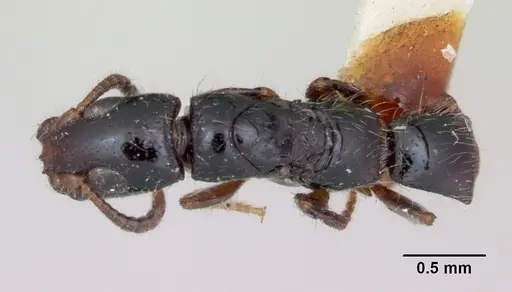
Literatür
Dağılım haritası yükleniyor...Ürünler yükleniyor...