
Rasopone breviscapa
- Bilimsel Adı
- Rasopone breviscapa
- Oymak (Tribe)
- Ponerini
- Alt Familya
- Ponerinae
- Yazar (Tanımlayan)
- MacKay & MacKay, 2010
- Dağılım
- 0 ülkede bulundu
Giriş
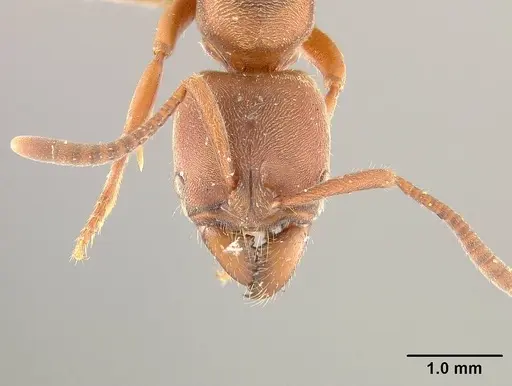
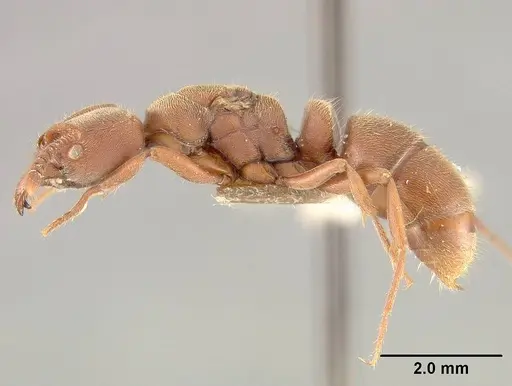
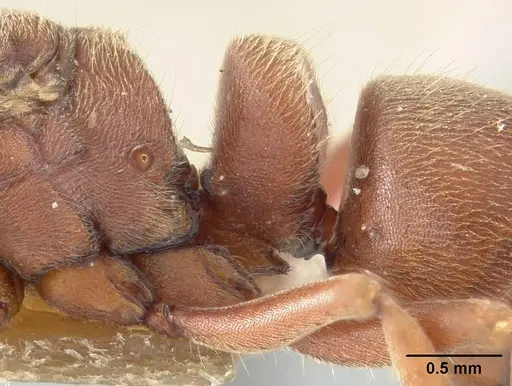
Rasopone breviscapa is one of the largest species in the Rasopone genus, known only from a single dealate queen collected in Bolivia in 1921-1922 . The queen measures approximately 12mm in total length and has a distinctive ferrugineous (rusty red) coloration . Its most diagnostic feature is the unusually short antennal scape, which gives the species its name (breviscapa = 'short stalk' in Latin) . The genus Rasopone belongs to the subfamily Ponerinae, which means these ants have functional stingers. This species can be distinguished from similar large Rasopone species by its truncate (flattened) anterior clypeal margin and striate (grooved) mandibles . Because this ant is known from only a single specimen collected nearly a century ago, virtually nothing is known about its biology, colony structure, or captive care requirements. No workers or males have ever been documented . This makes R. breviscapa an extremely poorly understood species that cannot be recommended for captive keeping until more information becomes available from field research.
Quick Summary
- Difficulty: Expert
- Origin & Habitat: Known only from La Paz, Bolivia (Tumupasa) in the Neotropical region [1][2]. No habitat information exists beyond the collection data.
- Colony Type: Unknown, only the type queen has been documented. No workers or colony structure has ever been observed [1].
- Size & Growth:
- Antkeeping:
- Temperature: Unconfirmed, no temperature data exists for this species. Related Ponerinae ants typically prefer warm, humid conditions, but specific requirements are unknown.
- Humidity: Unconfirmed, no humidity data exists. Based on its Neotropical origin, high humidity is likely preferred.
- Diapause: Unknown, no seasonal data exists for this species.
- Nesting: Unknown, no natural nesting observations exist. Related Rasopone species typically nest in rotting wood or soil in forest habitats.
- Behavior: Unknown, no behavioral observations exist for this species. As a Ponerinae ant, it likely has a functional stinger and may exhibit predatory behavior typical of the subfamily, but this is speculative.
- Common Issues: This species is known from a single specimen collected in 1921, no live colonies exist in captivity, No workers or males have ever been documented, making captive breeding impossible, Virtually nothing is known about their temperature, humidity, or dietary requirements, Obtaining this species would require wild collection in Bolivia, which is neither ethical nor practical, The species may be extinct or extremely rare in the wild
Report an Issue
The current care sheet is based fully on literature. See inconsistencies, or something that's incorrect? Please , it will be resolved after review from an admin. Contributing to the blogs tab also helps providing information, to make us be able to further improve the caresheets. Thank you for your support!
References

Bu bakım rehberi şu lisans altındadır: CC BY-SA 4.0 .
Topluluk Blogları
USNMENT01125079
AntWeb'de Görüntüle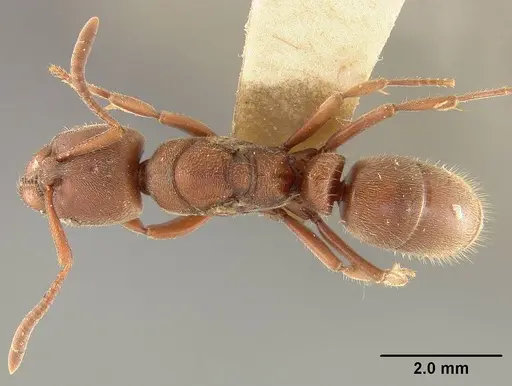
Literatür
Dağılım haritası yükleniyor...Ürünler yükleniyor...