
Pseudolasius karawajewi
- Bilimsel Adı
- Pseudolasius karawajewi
- Oymak (Tribe)
- Lasiini
- Alt Familya
- Formicinae
- Yazar (Tanımlayan)
- Donisthorpe, 1942
- Dağılım
- 0 ülkede bulundu
Giriş
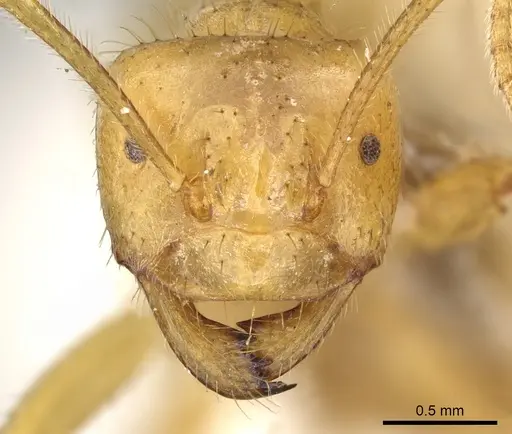
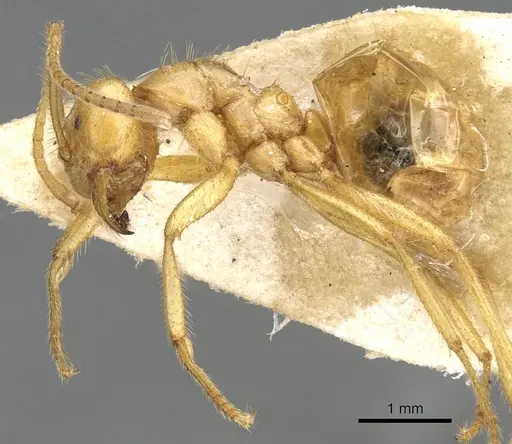
Pseudolasius karawajewi is a small ant species in the subfamily Formicinae, first described by Donisthorpe in 1942 from workers and males collected on Waigeu Island, New Guinea . Size data is not available for workers or queens. The species has been barcoded (sample HP0711) and morphologically matches the syntype . It is known only from New Guinea, specifically from lowland forests at about 200m elevation near Wanang . This species is notable for its relationship with planthoppers. A single observation recorded workers tending nymphs of a Flatidae planthopper at the Wanang site . Like other Pseudolasius species, it likely relies heavily on honeydew from sap-sucking insects.
Quick Summary
- Difficulty: Hard
- Origin & Habitat: New Guinea lowland forests, recorded from Waigeu Island and Wanang at about 200m elevation [2][1]
- Colony Type: Unknown, colony structure has not been documented. Based on genus patterns, it may be monogyne (single queen), but this is unconfirmed.
- Size & Growth:
- Queen: size data unavailable
- Worker: size data unavailable
- Colony: Unknown, no data available
- Growth: Unknown
- Development: Unknown, no data (No development data exists for this species)
- Antkeeping:
- Temperature: Keep at 24-26°C, inferred from its tropical lowland habitat with no specific data [2]. Use a heating cable to create a gradient.
- Humidity: High humidity, keep the nest substrate consistently moist, reflecting its tropical forest origin. No specific percentages are documented.
- Diapause: No, tropical species, no hibernation required. Keep warm year-round.
- Nesting: Likely nests in soil or decaying wood in humid forest settings. In captivity, a moist test tube setup or plaster nest with moisture chambers is suitable. Avoid dry, airy setups.
- Behavior: Docile and non-aggressive. As Formicinae, they lack a functional stinger but may spray mild formic acid. They tend planthoppers for honeydew [2]. Escape risk: unknown due to unclear worker size, but take precautions with tight sealing.
- Common Issues: tropical species may struggle in cool or dry conditions, maintain warmth and humidity, small colony size means they are sensitive to disturbance, handle gently, limited documented care information makes this a species for experienced keepers, wild-caught colonies may carry parasites from New Guinea
Housing and Nest Setup
This tropical ant needs humid, warm conditions. A moist test tube with water reservoir works well for starting a colony. For established colonies, use a plaster nest or a Y-tong formicarium with moisture chambers, avoid acrylic nests as they struggle to hold humidity. Tight-fitting lids are essential because workers are small and may slip through gaps. Keep the nest in a warm spot (24-26°C) [2].
Feeding and Diet
Pseudolasius karawajewi is known to tend Flatidae planthopper nymphs for honeydew [2]. In captivity, offer sugar sources like honey water or sugar solution as a substitute. Protein needs are unclear, offer tiny insects (fruit flies, pinhead crickets) once or twice a week and observe. Remove uneaten food quickly to prevent mold.
Temperature and Seasonal Care
As a tropical lowland species, Pseudolasius karawajewi needs consistent warmth. Keep the nest at 24-26°C year-round with no cooling period [2]. Use a small heating cable on one side of the nest to create a temperature gradient. Avoid drops below 20°C.
Behavior and Colony Dynamics
These ants are docile and not aggressive. They lack a functional stinger but may spray formic acid (mild). Their primary foraging activity is likely gathering honeydew from hemipterans, based on the single observation of trophobiosis [2]. Colony growth and size are unknown, so monitor closely. Workers are small and may be hard to spot.
Frequently Asked Questions
How long does it take for Pseudolasius karawajewi to produce first workers?
Unknown, no development data exists for this species.
What do Pseudolasius karawajewi ants eat?
They likely specialize on honeydew from planthoppers. In captivity, offer sugar water or honey, plus small protein sources like fruit flies.
What temperature do Pseudolasius karawajewi ants need?
Keep them at 24-26°C year-round. They are tropical and need consistent warmth with no hibernation.
Are Pseudolasius karawajewi ants good for beginners?
No, this species is not recommended for beginners. Very little is known about its care, and it requires precise tropical conditions (warmth and high humidity). Experienced keepers only.
How big do Pseudolasius karawajewi colonies get?
Unknown, colony size has not been documented for this species.
Do Pseudolasius karawajewi ants need hibernation?
No, they are tropical and do not need hibernation. Keep warm throughout the year.
Can I keep multiple Pseudolasius karawajewi queens together?
Not recommended, colony structure is unknown, and combining queens has not been tested. Likely single-queen based on genus patterns, but this is unconfirmed.
What humidity do Pseudolasius karawajewi ants need?
High humidity, keep the nest substrate consistently moist. No specific levels are documented, but aim for a damp environment withintern nests.
When should I move Pseudolasius karawajewi to a formicarium?
Wait until the colony outgrows its test tube and shows signs of needing more space, such as brood covering the entire tube. There's no set worker count for this species, judge by crowdedness.
Report an Issue
The current care sheet is based fully on literature. See inconsistencies, or something that's incorrect? Please , it will be resolved after review from an admin. Contributing to the blogs tab also helps providing information, to make us be able to further improve the caresheets. Thank you for your support!
References

Bu bakım rehberi şu lisans altındadır: CC BY-SA 4.0 .
Topluluk Blogları
CASENT0903170
AntWeb'de Görüntüle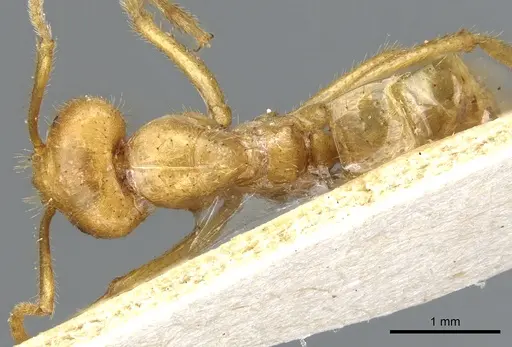
Literatür
Dağılım haritası yükleniyor...Ürünler yükleniyor...