
Proceratium confinium
- Bilimsel Adı
- Proceratium confinium
- Oymak (Tribe)
- Proceratiini
- Alt Familya
- Proceratiinae
- Yazar (Tanımlayan)
- de Andrade, 2003
- Dağılım
- 0 ülkede bulundu
Giriş
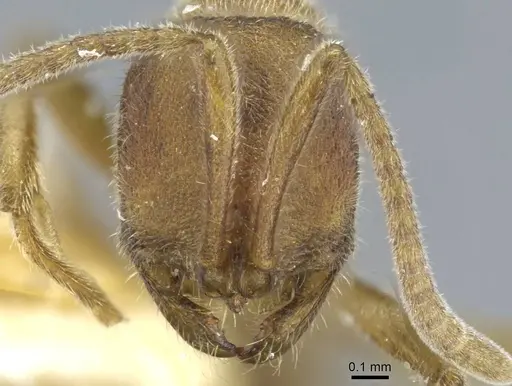
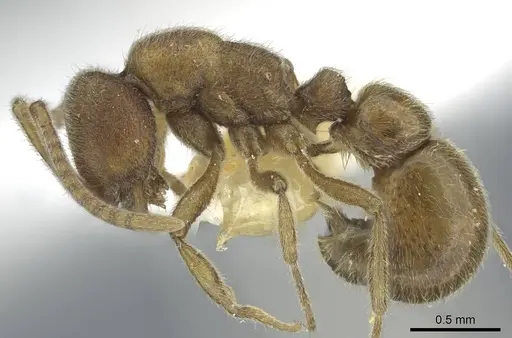
Proceratium confinium is a tiny, pale brown ant measuring just 3.29mm in total length . This species belongs to the Pergandei Clade and is known only from the Swat Valley in Pakistan, collected at 1500m elevation in the Malkandi region . The most distinctive feature is the complete absence of eyes, indicating a fully subterranean lifestyle . Workers have a robust mesosoma, granular sculpture, and long suberect hairs . The species resembles Proceratium californicum but can be distinguished by its strongly protruding antennal sockets . Nothing is known about the biology of this species - its foraging behavior, colony size, queen reproduction, or seasonal activity remain undocumented .
Quick Summary
- Difficulty: Hard
- Origin & Habitat: Pakistan (Swat Valley, Malkandi) at 1500m elevation in the Indomalaya region [2]. The type locality is Surat, Malkandi in the Swat district [2].
- Colony Type: Unconfirmed, colony structure has not been documented. Based on genus patterns, likely single-queen colonies [1].
- Size & Growth:
- Antkeeping:
- Temperature: Unknown for this species. Based on the 1500m elevation in Pakistan, expect preference for moderate temperatures, roughly 18-24°C [1]. Start in the low 20s and observe colony activity.
- Humidity: Unknown. Proceratium species generally prefer humid conditions as they are subterranean. Keep the nest substrate consistently moist but not waterlogged [1].
- Diapause: Unknown, no seasonal data exists for this species [1].
- Nesting: No captive nesting data exists. In the wild, Proceratium species typically nest in rotting wood, under stones, or in deep leaf litter. For captivity, a small test tube setup or Y-tong nest with fine chambers would be appropriate given their tiny size [1].
- Behavior: Completely unstudied in captivity. Based on genus behavior, these are slow-moving, cryptic ants that likely forage underground for small invertebrates. The complete absence of eyes confirms they navigate and hunt in total darkness. They are probably non-aggressive and will flee rather than fight. Escape prevention is critical due to their tiny size, they can easily slip through standard barriers [1].
- Common Issues: escape risk due to tiny size of 3.29mm, unknown diet makes feeding challenging, no information on hibernation requirements, colony growth and development unknown
Appearance and Identification
Proceratium confinium workers are tiny at just 3.29mm total length, with a light brown coloration throughout [1]. The most distinctive physical feature is the complete absence of eyes, indicating complete adaptation to subterranean life [1]. The head is longer than broad with subparallel sides, and the antennal sockets strongly protrude anteriorly, surpassing the anterolateral clypeal margin, a key identification feature that separates it from similar species like P. californicum [1]. The body sculpture is granulopunctate on the head and granulate on the mesosoma and petiole [1].
Distribution and Habitat
This species is known only from the Swat Valley in Pakistan, making it an endemic species with a very restricted range [2]. The type locality is Surat, Malkandi in the Swat district, collected at approximately 1500m elevation [2]. This mountainous region in northern Pakistan has a subtropical highland climate with distinct seasons. The 1500m elevation suggests the species experiences cooler temperatures and likely prefers moist conditions [2].
What We Don't Know
It cannot be overstated how little is known about Proceratium confinium, literally every aspect of its biology is undocumented [1]. We do not know: colony size in the wild, queen size or morphology, founding behavior, nuptial flight timing, worker caste system, diet in the wild, predators, seasonal activity patterns, or any aspect of its behavior [1].
Genus-Level Care Inferences
Since species-specific data is completely absent, any care recommendations must be based on what is known about Proceratium as a genus. Proceratium ants are typically eyeless or have greatly reduced eyes, confirming their subterranean lifestyle [1]. They are slow-moving, cryptic ants that hunt small prey underground. In captivity, related species have been kept in moist test tube setups with minimal light exposure [1].
Frequently Asked Questions
How long do Proceratium confinium ants live?
The lifespan of this species is completely unknown, no research has ever been conducted on its biology [1].
What do Proceratium confinium ants eat?
This is entirely unknown. Based on genus patterns, they likely hunt small underground prey like springtails or mites, but no captive feeding observations have been documented [1].
Can I keep Proceratium confinium in a test tube?
Probably yes, based on genus patterns. Proceratium species are tiny and subterranean, so a small test tube with moist cotton would be appropriate [1]. However, no one has ever kept this specific species in captivity, so there is no established husbandry protocol.
Do Proceratium confinium ants sting?
Unknown for this specific species. Proceratium belongs to the subfamily Proceratiinae, which does have functional stingers, but the stinging behavior of P. confinium has never been documented [1].
How big do Proceratium confinium colonies get?
Completely unknown, no wild colonies have ever been documented [1].
Do Proceratium confinium queens have eyes?
Unknown, the queen caste has never been described for this species. Workers have no eyes at all, so queens might also be eyeless, but this is speculative [1].
What temperature do Proceratium confinium ants need?
Unknown specifically. Based on their 1500m elevation in Pakistan, they likely prefer moderate temperatures around 18-24°C [1]. No captive temperature trials have ever been conducted.
Do Proceratium confinium ants need hibernation?
Unknown. No research exists on their seasonal requirements or cold tolerance [1].
Are Proceratium confinium good for beginners?
No. This species is not recommended for beginners because literally nothing is known about its care. Keeping this species would require pioneering every aspect of husbandry with no guidance available [1].
Where does Proceratium confinium live in the wild?
Only known from the Swat Valley in Pakistan, specifically the Malkandi region at about 1500m elevation [2].
How do Proceratium confinium ants reproduce?
Completely unknown. Nuptial flight timing, mating behavior, colony founding, none of this has ever been documented [1].
Why are Proceratium confinium ants blind?
The complete absence of eyes indicates they live entirely underground in darkness. This is a common adaptation in Proceratium species [1].
Report an Issue
The current care sheet is based fully on literature. See inconsistencies, or something that's incorrect? Please , it will be resolved after review from an admin. Contributing to the blogs tab also helps providing information, to make us be able to further improve the caresheets. Thank you for your support!
References

Bu bakım rehberi şu lisans altındadır: CC BY-SA 4.0 .
Topluluk Blogları
CASENT0911253
AntWeb'de Görüntüle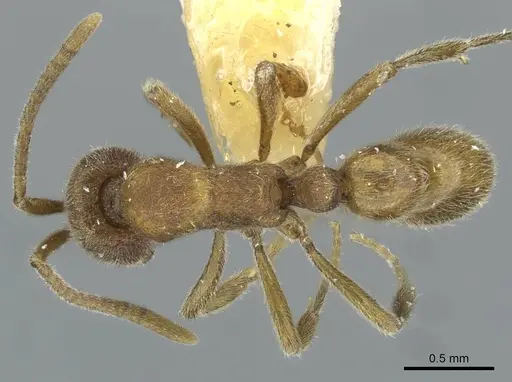
Literatür
Dağılım haritası yükleniyor...Ürünler yükleniyor...