
Polyrhachis luteogaster
- Bilimsel Adı
- Polyrhachis luteogaster
- Alt Cins
- Myrmatopa
- Oymak (Tribe)
- Camponotini
- Alt Familya
- Formicinae
- Yazar (Tanımlayan)
- Kohout, 2012
- Dağılım
- 0 ülkede bulundu
Giriş
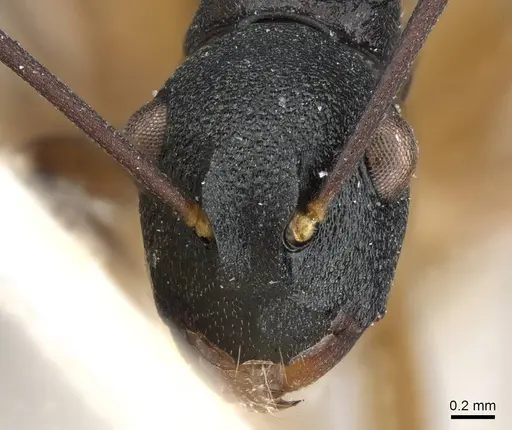
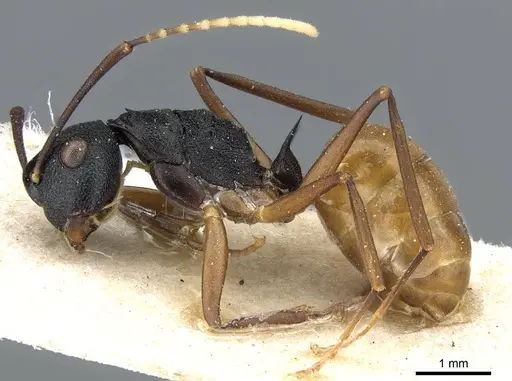
Polyrhachis luteogaster is a spiny ant species from the subgenus Myrmatopa, native to New Guinea. Workers have the characteristic spines on their thorax that define the Polyrhachis genus, with a generally dark coloration and lighter abdominal region suggested by the species name 'luteogaster' (luteus = yellow, gaster = abdomen). Size data for this species is not available, but based on Polyrhachis genus patterns, workers are approximately 4-8 mm and queens 8-12 mm [inferred]. This species was formally described in 2012 as a replacement name for the junior homonym rufiventris, and is most closely related to Polyrhachis antoniae, differing in clypeal structure and sculpturation patterns . In the wild, they are found in lowland tropical forests, with nest abundance highest around 200m elevation and absent from higher elevations .
Quick Summary
- Difficulty: Medium
- Origin & Habitat: New Guinea, specifically the Merauke region. They are lowland tropical forest ants, with documented nest abundance at 200m elevation and none found at higher elevations (900m,1800m) [2][1].
- Colony Type: Colony structure is unconfirmed. Based on Polyrhachis patterns, likely monogyne (single queen), but specific data for Polyrhachis luteogaster is lacking.
- Size & Growth:
- Queen: ~8-12 mm, inferred from Polyrhachis genus
- Worker: ~4-8 mm, inferred from Polyrhachis genus
- Colony: Unknown for this species
- Growth: Moderate, inferred from genus patterns
- Development: 8-12 weeks estimated based on related Formicinae species (Development timeline is not directly studied. Estimates based on typical Formicinae development at tropical temperatures.)
- Antkeeping:
- Temperature: Maintain warm conditions, typically 24-28°C, as inferred from their tropical lowland habitat.
- Humidity: Keep nest substrate consistently moist but not waterlogged, as inferred from tropical forest habitat.
- Diapause: No diapause required, as inferred from tropical lowland habitat.
- Nesting: Arboreal or semi-arboreal nesting [3]. Provide vertical space and climbing structures. Use Y-tong, plaster, or soil nests with moderate humidity. Avoid acrylic nests.
- Behavior: Polyrhachis ants are generally less aggressive than some other genera, with a tendency toward arboreal life. Workers are active foragers. Escape prevention should be moderate, they are not tiny but can climb well. Their spiny morphology provides some defense, but they are not known for painful stings. Defense is by spraying formic acid, as typical for Formicinae.
- Common Issues: Tropical species may struggle in cool, dry environments without heating., Arboreal nature means they need vertical space and climbing structures., Limited availability in the antkeeping hobby makes this a harder species to source., Wild-caught colonies may not adapt well to captive conditions., Lack of species-specific care information means keepers must rely on genus-level guidance.
Natural History and Distribution
Polyrhachis luteogaster is endemic to New Guinea, specifically documented from the Merauke region in the southern part of the island. The species was originally described in 1911 as a variety of Polyrhachis alphea but was renamed in 2012 when it was determined to be a junior primary homonym. The species belongs to the subgenus Myrmatopa, which contains arboreal and semi-arboreal Polyrhachis species [1]. Research on ant community structure across elevation in New Guinea shows this species is restricted to lowland areas, with 39 nests recorded at 200m elevation and zero nests at both 900m and 1800m elevation [2]. This strongly suggests they are adapted to warm, lowland tropical rainforest conditions and may be sensitive to temperature changes associated with higher elevations.
Housing and Nest Setup
Polyrhachis luteogaster is an arboreal or semi-arboreal species [3]. In captivity, they do well in Y-tong style formicaria, or naturalistic setups with cork bark and wooden structures. Provide multiple chambers for the colony to expand into as it grows. Include climbing structures like branches, mesh, or textured surfaces since they naturally traverse vertical spaces. Keep the nest area humid but ensure ventilation prevents mold buildup. The outworld should have space for foraging with easy access to water and sugar sources. Escape prevention should be moderate, they are good climbers but not tiny, so standard barriers work well.
Feeding and Diet
Like other Polyrhachis species, Polyrhachis luteogaster likely has an omnivorous diet typical of Formicinae ants [3]. They probably consume honeydew from aphids and scale insects in the wild, along with small insects and nectar. In captivity, offer sugar water or honey constantly as an energy source. For protein, provide small insects like fruit flies, small crickets, or mealworms. Their tropical origin suggests they may have higher energy requirements, feed protein 2-3 times per week and keep sugar sources available at all times. Observe feeding behavior to adjust quantities based on colony consumption.
Temperature and Seasonal Care
As a lowland tropical species, Polyrhachis luteogaster requires warm conditions year-round [3]. Keep temperatures warm, roughly 24-28°C, as inferred from their habitat. They do not require diapause, as inferred from tropical lowland conditions. Use heating if necessary to maintain warmth, and avoid temperature fluctuations and drafts.
Colony Development and Growth
Specific development data for Polyrhachis luteogaster is not available, so estimates must be based on related Formicinae species [3]. Expect the first workers (nanitics) to emerge approximately 8-12 weeks after the queen lays eggs, assuming optimal tropical temperatures. Initial colony growth will be slow as the queen raises her first brood alone. Once workers emerge, growth typically accelerates as they take over foraging and nest maintenance. Polyrhachis colonies can reach several hundred workers over time, though exact maximum size for this species is unknown. Be patient during the founding phase, this is when colonies are most vulnerable.
Frequently Asked Questions
How long does it take for Polyrhachis luteogaster to produce first workers?
Based on related Formicinae species, expect 8-12 weeks from egg to first worker at optimal tropical temperatures. The exact timeline for this species is unconfirmed, so monitor your colony and maintain warm, stable conditions.
What temperature do Polyrhachis luteogaster ants need?
Keep them at warm conditions, roughly 24-28°C, as inferred from their tropical lowland habitat. This species does not tolerate cool conditions, so use heating if necessary.
Do Polyrhachis luteogaster ants need hibernation?
No, they do not require hibernation. As a tropical lowland species, they need warm conditions year-round. Cool temperatures could stress or kill the colony.
What do Polyrhachis luteogaster ants eat?
Like other Polyrhachis and Formicinae ants, they are omnivorous. Offer sugar water or honey constantly for energy, and provide small insects (fruit flies, small crickets, mealworms) for protein 2-3 times per week.
Are Polyrhachis luteogaster good for beginners?
This species is rated as Medium difficulty. While not the hardest species, the lack of species-specific care information and their tropical temperature requirements make them better suited for keepers with some experience. They are also rarely available in the hobby.
What size nest do Polyrhachis luteogaster need?
They are arboreal/semi-arboreal, so they benefit from vertical space and climbing structures. Y-tong formicaria, or naturalistic setups with cork bark work well. Start with a small nest and expand as the colony grows.
How big do Polyrhachis luteogaster colonies get?
The maximum colony size is unknown for this specific species. Based on typical Polyrhachis patterns, colonies likely reach up to several hundred workers over time. Growth is moderate.
Can I keep multiple Polyrhachis luteogaster queens together?
The colony structure for this species is unconfirmed. Most Polyrhachis are monogyne (single queen), but specific data for Polyrhachis luteogaster is lacking. It is not recommended to combine unrelated foundress queens without documented evidence they can coexist.
Where is Polyrhachis luteogaster found in the wild?
This species is endemic to New Guinea, specifically documented from the Merauke region. They are lowland forest ants found at around 200m elevation and are absent from higher elevations [1][2].
Why are my Polyrhachis luteogaster ants dying?
The most common causes are: temperatures below 24°C (tropical species stressed by cool conditions), low humidity, or disturbance during founding. Ensure warm, stable conditions and minimal disturbance. Wild-caught colonies may also carry parasites or struggle to adapt to captive conditions.
Is Polyrhachis luteogaster available in the antkeeping hobby?
This species is rarely available. It is not commonly kept in the antkeeping hobby due to its limited distribution and the fact that it was only formally recognized as a distinct species in 2012. Finding a colony may require specialized sources.
Report an Issue
The current care sheet is based fully on literature. See inconsistencies, or something that's incorrect? Please , it will be resolved after review from an admin. Contributing to the blogs tab also helps providing information, to make us be able to further improve the caresheets. Thank you for your support!
References

Bu bakım rehberi şu lisans altındadır: CC BY-SA 4.0 .
Topluluk Blogları
CASENT0905567
AntWeb'de Görüntüle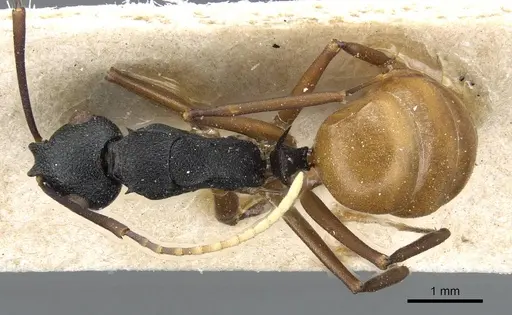
Literatür
Dağılım haritası yükleniyor...Ürünler yükleniyor...