
Polyrhachis longipes
- Bilimsel Adı
- Polyrhachis longipes
- Alt Cins
- Myrmhopla
- Oymak (Tribe)
- Camponotini
- Alt Familya
- Formicinae
- Yazar (Tanımlayan)
- Smith, 1859
- Dağılım
- 0 ülkede bulundu
Giriş
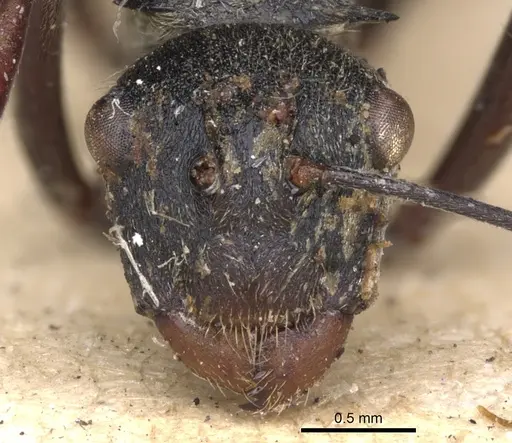
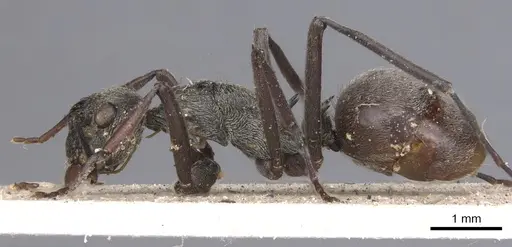
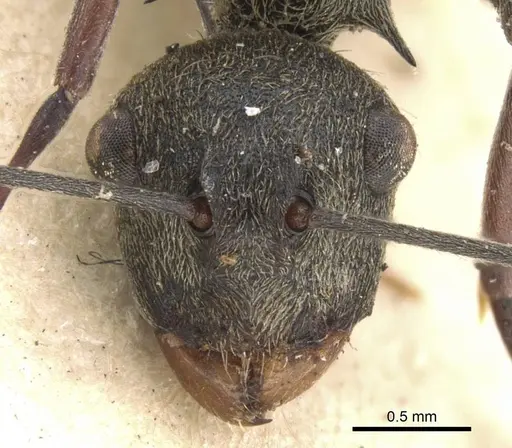
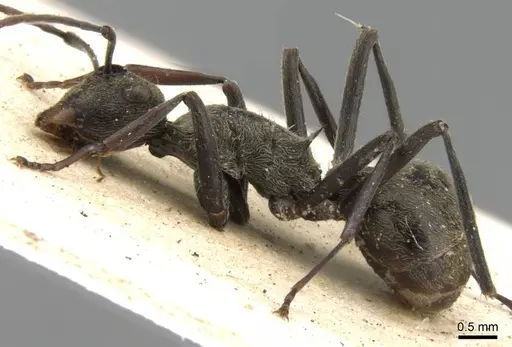
Polyrhachis longipes is a medium-sized ant species in the Formicinae subfamily, characterized by elongated legs and spiny dorsal projections. Workers are typically 6-8 mm in size, though exact body length data is unavailable for this species . It is native to the Australasian and Indomalayan regions, specifically the Aru Islands of Indonesia and New Guinea . The species inhabits tropical forests, often nesting in rotting wood or leaf litter. A notable trait is its defense mechanism: like other Formicinae, it lacks a functional sting but sprays formic acid when threatened, a behavior common to the tribe Camponotini.
Quick Summary
- Difficulty: Medium
- Origin & Habitat: Native to tropical forests in New Guinea and the Aru Islands of Indonesia [2][3]. It typically nests in rotting wood, under bark, or among leaf litter in humid environments.
- Colony Type: Colony structure is unconfirmed. Based on typical Polyrhachis genus patterns, likely single-queen colonies, but no specific data exists for this species.
- Size & Growth:
- Queen: Size data unavailable, no total length measurements provided for this species.
- Worker: Size data unavailable, no total length measurements provided for this species.
- Colony: Up to several hundred workers estimated from typical Polyrhachis colony sizes, but unconfirmed for this species.
- Growth: Moderate, inferred from related Formicinae species.
- Development: Estimated 6-8 weeks at optimal temperature based on genus patterns, but no specific data for this species. (Development time is inferred from related species, actual timing may vary with temperature and conditions.)
- Antkeeping:
- Temperature: Keep nest area at 24-28°C with a gradient for self-regulation. Based on tropical origin, warm and stable conditions are typical [1].
- Humidity: Maintain moderate to high humidity with consistently moist but not waterlogged substrate. Provide a water tube and occasional misting [1].
- Diapause: Unconfirmed. Based on tropical origin, likely no diapause required, keep temperatures stable year-round.
- Nesting: Prefer dark, humid nests like Y-tong (AAC) or plaster with wood cavities. Inferred from genus nesting preferences [1].
- Behavior: Workers are generally calm and non-aggressive toward keepers. They spray formic acid for defense, not stinging. Escape risk is moderate due to size, standard barriers are sufficient. Active foragers that may climb and form trails.
- Common Issues: humidity control is critical, too dry can stall colony growth, too wet can cause mold., temperature drops below 22°C can slow brood development., wild-caught colonies may carry parasites difficult to treat., slow growth may lead to overfeeding and mold problems., nesting preferences are specific, colonies may reject exposed or bright nests.
Housing and Nest Setup
Provide a dark, humid nest such as Y-tong (AAC) or plaster with built-in water reservoirs. Natural setups with rotting wood or cork bark work well. The nest should maintain stable humidity without becoming soggy. Avoid bright or exposed nests, as these ants prefer darkness [1].
Feeding and Nutrition
Offer omnivorous diet: small insects like fruit flies or mealworms for protein, and sugar water or honey for carbohydrates. Remove uneaten prey after 24 hours to prevent mold [1].
Temperature and Seasonal Care
Maintain 24-28°C with a gradient. No diapause required for this tropical species. Avoid cold drafts and air conditioning vents [1].
Colony Founding and Early Development
Founding behavior is unconfirmed. If claustral, queens may seal themselves in with stored fat reserves. Provide quiet, dark conditions during founding. Early growth is slow, patience is needed until workers emerge [1].
Behavior and Handling
Workers are calm but spray formic acid when threatened. They communicate via chemical trails and forage actively. Handle minimally to avoid stress [1].
Frequently Asked Questions
How long does it take for Polyrhachis longipes to produce first workers?
Estimated 6-8 weeks under optimal conditions, based on genus patterns. No specific data for this species [1].
What do Polyrhachis longipes ants eat?
They are omnivorous: offer small insects for protein and sugar water for carbohydrates. Remove uneaten food to prevent mold [1].
What temperature is best for Polyrhachis longipes?
Keep at 24-28°C with a gradient. They are tropical and do not tolerate cold well [1].
Do Polyrhachis longipes need hibernation?
No, as a tropical species, they do not require diapause. Maintain stable temperatures year-round [1].
How big do Polyrhachis longipes colonies get?
Up to several hundred workers estimated, but specific data is unavailable [1].
Can I keep multiple Polyrhachis longipes queens together?
Not recommended, as colony structure is unconfirmed. Start with a single queen to avoid conflict [1].
What humidity level do Polyrhachis longipes need?
Maintain moderate to high humidity with moist substrate. Provide a water tube and monitor for condensation [1].
Is Polyrhachis longipes good for beginners?
Rated Medium difficulty due to humidity and temperature needs. Beginners should gain experience first [1].
When should I move Polyrhachis longipes to a formicarium?
Wait until the colony has at least 30-50 workers and is actively foraging. Move too early can stress the colony [1].
Report an Issue
The current care sheet is based fully on literature. See inconsistencies, or something that's incorrect? Please , it will be resolved after review from an admin. Contributing to the blogs tab also helps providing information, to make us be able to further improve the caresheets. Thank you for your support!
References

Bu bakım rehberi şu lisans altındadır: CC BY-SA 4.0 .
Topluluk Blogları
CASENT0901804
AntWeb'de Görüntüle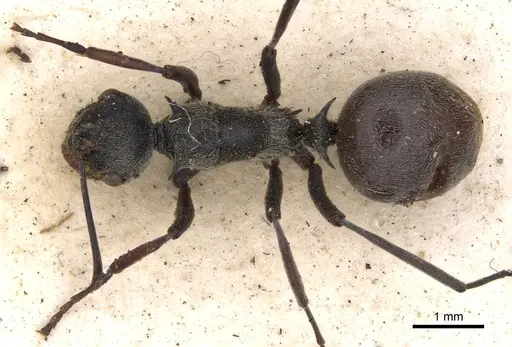
CASENT0906780
AntWeb'de Görüntüle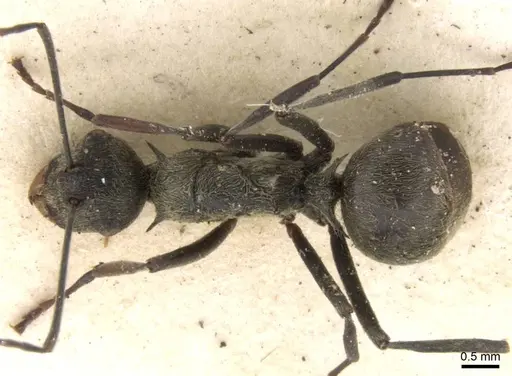
Literatür
Dağılım haritası yükleniyor...Ürünler yükleniyor...