
Polyrhachis greensladei
- Bilimsel Adı
- Polyrhachis greensladei
- Alt Cins
- Myrmhopla
- Oymak (Tribe)
- Camponotini
- Alt Familya
- Formicinae
- Yazar (Tanımlayan)
- Kohout, 1990
- Dağılım
- 0 ülkede bulundu
Giriş
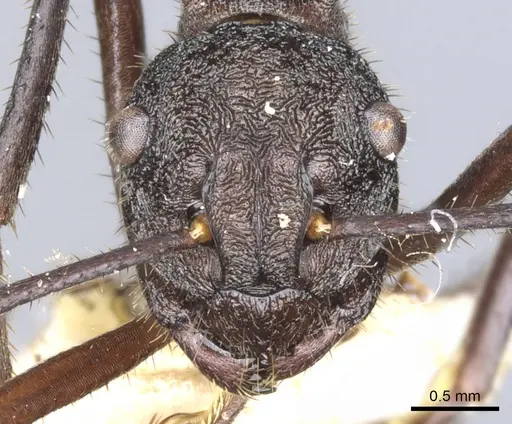
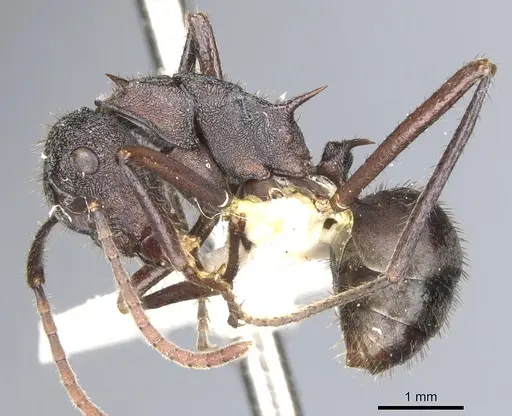
Polyrhachis greensladei is a medium-sized ant native to the Solomon Islands and Papua New Guinea. Workers measure 7.8-8.8mm TL , with dark brown coloration, lighter reddish-brown mandibles, and prominent spines on the pronotum, propodeum, and petiole . This species is endemic to the Solomon Islands, recorded from Guadalcanal and found in lowland to mid-elevation habitats like dense fern thickets .
Quick Summary
- Difficulty: Medium
- Origin & Habitat: Solomon Islands and Papua New Guinea (Bismarck Archipelago). Found in lowland to mid-elevation habitats (800-1000m) in dense fern thickets and forest paths [1][2].
- Colony Type: Colony structure is unconfirmed. No specific data on queen number or social structure for this species [1].
- Size & Growth:
- Queen: 9.17mm TL [1]
- Worker: 7.8-8.8mm TL [1]
- Colony: Unknown, only small samples have been documented [1]
- Growth: Unknown, no development data exists for this species
- Development: Unknown, development has not been studied. Based on tropical location, estimate may be 6-10 weeks, but unconfirmed. (No direct development data exists. Polyrhachis is a tropical genus, so development is likely faster than temperate species.)
- Antkeeping:
- Temperature: Estimated 24-28°C based on tropical habitat. Use a heating cable to create a gradient if room temperature is below this range.
- Humidity: Keep substrate consistently moist but not waterlogged, based on humid fern thicket habitat. Provide a water tube for drinking water.
- Diapause: No, this is a tropical species from near the equator, so hibernation is not required.
- Nesting: Prefers Y-tong (AAC) or plaster nests with vertical spaces, based on genus patterns. Ensure adequate moisture and avoid completely dry setups.
- Behavior: Polyrhachis ants belong to Formicinae, which lack stings and spray formic acid for defense. They are generally less aggressive but can be defensive when threatened. Workers are active foragers and may climb vertical surfaces. Escape prevention is important as workers are nearly 8mm [1].
- Common Issues: tropical species needs warmth, cold temperatures will slow or stop brood development., humidity must be maintained, too dry and brood will desiccate., escape prevention needed, workers are nearly 8mm and capable of climbing smooth surfaces., limited availability, this is a rarely kept species with little captive breeding information., stress from handling, wild-caught colonies may take time to acclimate.
Housing and Nest Setup
Polyrhachis greensladei does well in Y-tong (AAC) nests which provide a dark, humid environment. The nest should have chambers sized for medium-sized ants. A water tube helps maintain humidity. Since this species may have semi-arboreal tendencies, add vertical space or cork bark in the outworld. Use a test tube setup for founding colonies, moving to a larger nest once the colony grows [1].
Feeding and Diet
Polyrhachis ants are omnivorous. Offer sugar water or honey as a constant energy source. For protein, provide small insects like fruit flies or crickets 2-3 times per week. This species was collected in carrion traps, indicating attraction to protein [1]. Remove uneaten prey after 24-48 hours to prevent mold.
Temperature and Humidity Requirements
As a tropical species, keep temperatures estimated at 24-28°C. Use a heating cable on one side of the nest if needed. Humidity should be kept moist but not waterlogged, based on habitat. Mist the nest area occasionally if humidity drops, but ensure good ventilation.
Colony Establishment and Growth
When acquiring a founding queen, place her in a test tube setup with a water reservoir. Leave her alone for 2-3 weeks to allow egg-laying. After workers emerge, gradually introduce the colony to the outworld. Growth rate is unknown, but expect patience as this species has limited captive data [1].
Behavior and Temperament
Polyrhachis ants are less aggressive than some genera. They spray formic acid for defense, not sting. Workers are active foragers and climb well. Escape prevention is key due to their size [1].
Frequently Asked Questions
How long does it take for Polyrhachis greensladei to produce first workers?
Exact development time is unknown. Based on tropical location, estimate 6-10 weeks under optimal temperature, but unconfirmed.
What do Polyrhachis greensladei ants eat?
They are omnivorous. Offer sugar water or honey, and protein like small insects 2-3 times per week. They were collected in carrion traps, showing attraction to protein [1].
What temperature do Polyrhachis greensladei need?
Estimated 24-28°C based on tropical habitat. Use heating if room temperature is below this range.
Do Polyrhachis greensladei need hibernation?
No, this is a tropical species from near the equator, so hibernation is not required.
Are Polyrhachis greensladei good for beginners?
This species is rated Medium difficulty. Limited captive breeding information exists, so beginners may prefer more common species.
How big do Polyrhachis greensladei colonies get?
Colony size is not well documented. Only small samples have been studied [1]. Based on typical Polyrhachis, colonies may reach several hundred workers, but exact maximum is unknown.
Can I keep multiple Polyrhachis greensladei queens together?
Colony structure is unconfirmed. Without specific data, it is not recommended to combine unrelated queens. House them separately.
What size nest do Polyrhachis greensladei need?
Use a nest with chambers for medium-sized ants (workers nearly 8mm). Y-tong nests work well. For founding, a test tube setup is sufficient.
Where is Polyrhachis greensladei found in the wild?
This species is endemic to the Solomon Islands and Papua New Guinea, recorded from Guadalcanal at elevations of 800-1000m in dense fern thickets [1][2].
Report an Issue
The current care sheet is based fully on literature. See inconsistencies, or something that's incorrect? Please , it will be resolved after review from an admin. Contributing to the blogs tab also helps providing information, to make us be able to further improve the caresheets. Thank you for your support!
References

Bu bakım rehberi şu lisans altındadır: CC BY-SA 4.0 .
Topluluk Blogları
CASENT0903353
AntWeb'de Görüntüle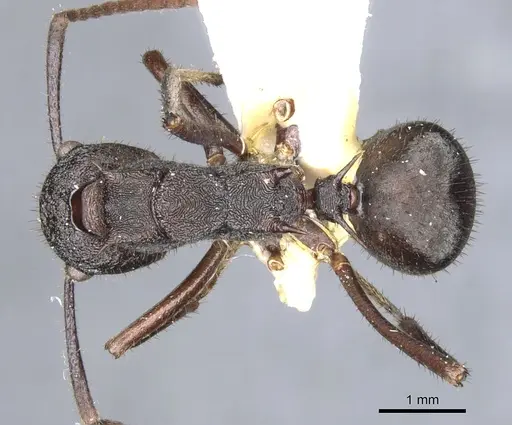
Literatür
Dağılım haritası yükleniyor...Ürünler yükleniyor...