
Polyrhachis danum
- Bilimsel Adı
- Polyrhachis danum
- Alt Cins
- Cyrtomyrma
- Oymak (Tribe)
- Camponotini
- Alt Familya
- Formicinae
- Yazar (Tanımlayan)
- Kohout, 2006
- Dağılım
- 1 ülkede bulundu
Giriş
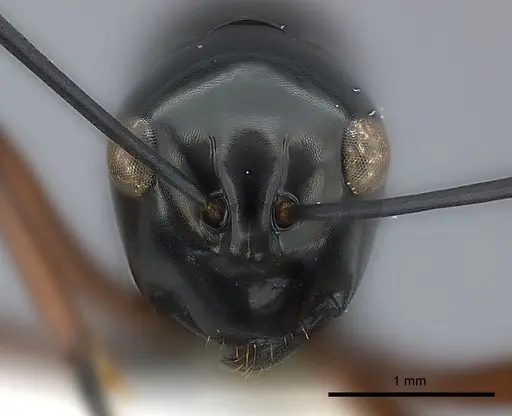
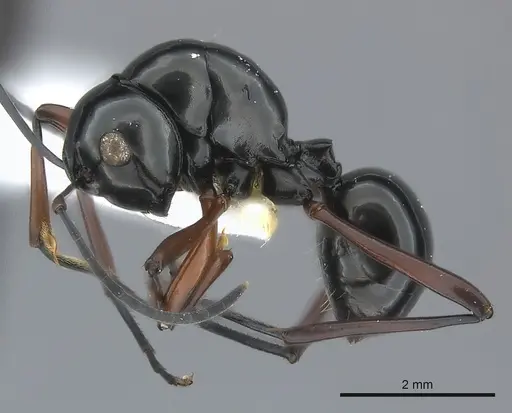
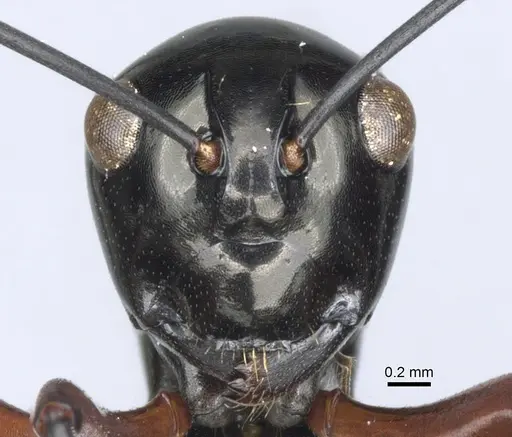
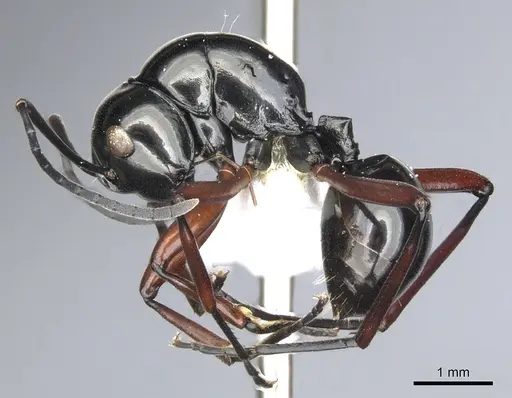
Polyrhachis danum is a medium-sized ant endemic to Borneo and recently recorded in the Philippines. Workers measure 6.60-7.76 mm in total length, while queens are 8.21-8.32 mm . They are bicolored with black head, mesosoma, petiole, and gaster, and bright red legs . The species lacks propodeal spines and has reduced petiolar spines . It is found in lowland rainforest habitats . Nothing is known about their biology, including males and immature stages . This species was previously misidentified but is now recognized as distinct, with unique identification features such as vertical propodeal declivity and reduced spines .
Quick Summary
- Difficulty: Experimental
- Origin & Habitat: Endemic to Borneo (Indonesia, Malaysia) with new records in the Philippines. Found in lowland rainforest at locations like Danum Valley and Maliau Basin [1][2][3].
- Colony Type: Unconfirmed, no published data on queen number or social structure.
- Size & Growth:
- Antkeeping:
- Temperature: Keep warm around 24-28°C, inferred from lowland rainforest origin [1]
- Humidity: Keep nest substrate moist but not waterlogged, with drier areas available, inferred from rainforest habitat
- Diapause: No, tropical species, no diapause required, inferred from geographic range
- Nesting: In nature, likely in rotting wood or under bark. In captivity, use Y-tong, plaster, or soil nests with humidity retention, inferred from related species
- Behavior: Based on Formicine patterns, likely moderate activity and aggression. As a Formicine, they use formic acid spray for defense. Escape risk due to small size (under 8mm), use tight-fitting lids and barriers.
- Common Issues: escape risk due to small size, use tight-fitting lids and barriers to prevent losses, humidity must be maintained to match rainforest conditions, failure can cause colony decline, diet is unconfirmed, improper feeding may lead to malnutrition or colony failure
Appearance and Identification
Polyrhachis danum workers are medium-sized ants measuring 6.60-7.76 mm in total length. They are easily recognized by their bicolored appearance: the head, mesosoma, petiole, and gaster are black, while the legs are bright red or reddish-brown [1]. They belong to the subgenus Cyrtomyrma, characterized by absent propodeal spines and reduced petiolar spines to minute denticles [1]. The propodeal declivity is virtually vertical [1]. Queens are slightly larger at 8.21-8.32 mm and resemble workers except for sexual characters [1]. This species was previously confused with Polyrhachis semiinermis but is now distinct [4].
Natural Distribution and Habitat
Polyrhachis danum is endemic to Borneo and has been recorded in the Philippines. It is found in lowland rainforest habitats, including Danum Valley Conservation Area in Sabah, Malaysia, and Maliau Basin Conservation Area [2][3]. The species is relatively common in suitable rainforest environments [1].
Current State of Knowledge
Almost nothing is known about the biology of Polyrhachis danum. Males and immature stages have never been described, and colony structure, founding behavior, development time, and diet are undocumented [4]. This makes keeping this species experimental, with no established care protocols [4].
Housing and Nesting
In nature, Polyrhachis danum likely nests in rotting wood or under bark in rainforest areas [4]. In captivity, use Y-tong, plaster, or soil nests with good humidity retention. Keep the nest substrate consistently moist but not waterlogged, with some drier areas available, inferred from rainforest habitat [4].
Feeding and Diet
The diet of Polyrhachis danum is completely unstudied. As a Formicine ant, they likely consume honeydew and small insects, but this is inferred from related species [4]. In captivity, offer sugar water or honey and protein sources like small insects, experimenting with various foods [4].
Temperature and Seasonal Care
Being a tropical species from near-equatorial Borneo, Polyrhachis danum does not require hibernation. Keep temperatures around 24-28°C, inferred from lowland rainforest origin [1]. A gentle temperature gradient allows ants to regulate conditions [4].
Frequently Asked Questions
How difficult is Polyrhachis danum to keep?
Difficulty is experimental since no established care protocols exist. Only experienced keepers should attempt this species [4].
How long does it take for Polyrhachis danum to develop from egg to worker?
This is completely unknown, no data exists for this species [4].
Can I keep multiple queens together?
Colony structure is unconfirmed, no data on whether they are monogyne or polygyne. Combining queens is not recommended until more is known [4].
What temperature should I keep Polyrhachis danum at?
Keep them warm at 24-28°C, inferred from their lowland rainforest origin [1].
Do they need a hibernation period?
No, as a tropical species, they do not require diapause, inferred from geographic range [4].
What do Polyrhachis danum eat?
Diet is unconfirmed, based on related species, they likely accept sugar sources and protein, but experimentation is needed [4].
How big do colonies of Polyrhachis danum get?
Maximum colony size is unknown, no published data exists [4].
Is Polyrhachis danum a good species for beginners?
No, this species has no established care protocols and should only be kept by experienced antkeepers [4].
Where can I get Polyrhachis danum?
This species is extremely rare in the antkeeping hobby, endemic to Borneo and the Philippines [2][3].
Report an Issue
The current care sheet is based fully on literature. See inconsistencies, or something that's incorrect? Please , it will be resolved after review from an admin. Contributing to the blogs tab also helps providing information, to make us be able to further improve the caresheets. Thank you for your support!
References

Bu bakım rehberi şu lisans altındadır: CC BY-SA 4.0 .
Topluluk Blogları
CASENT0217423
AntWeb'de Görüntüle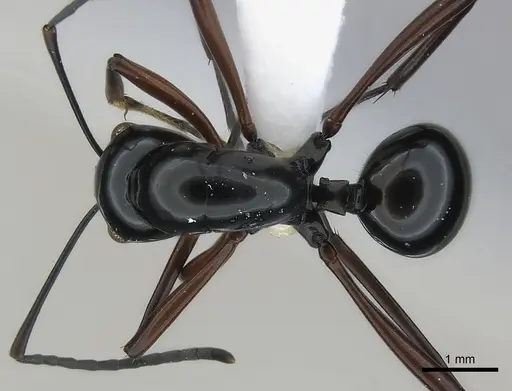
CASENT0903418
AntWeb'de Görüntüle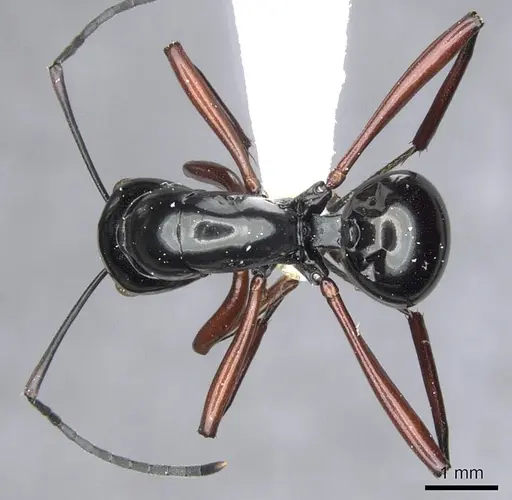
Literatür
Dağılım haritası yükleniyor...Ürünler yükleniyor...