
Polyrhachis aenescens
- Bilimsel Adı
- Polyrhachis aenescens
- Alt Cins
- Myrma
- Oymak (Tribe)
- Camponotini
- Alt Familya
- Formicinae
- Yazar (Tanımlayan)
- Stitz, 1910
- Dağılım
- 0 ülkede bulundu
Giriş
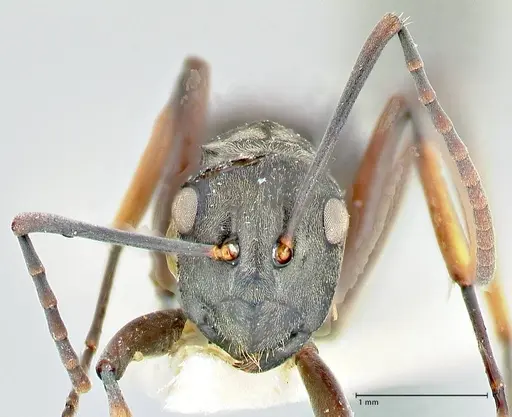
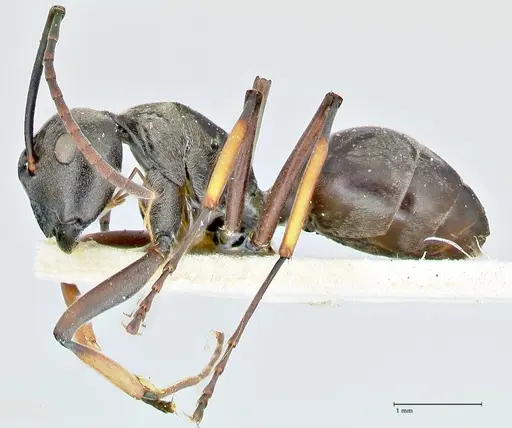
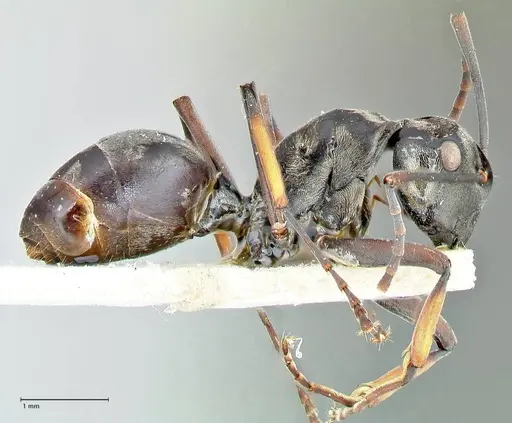
Polyrhachis aenescens is a medium-sized ant from Cameroon in the Afrotropical region . Workers measure approximately 6.2 mm in total length . The body is black with fine golden-green metallic shimmering pubescence . This species is unique within the revoili species group as it lacks erect hairs on the dorsal surfaces of the body and antennal scapes, a feature noted in taxonomic revisions .
Quick Summary
- Difficulty: Medium
- Origin & Habitat: Cameroon in the Afrotropical region [1].
- Colony Type: Unconfirmed, no specific research on colony structure for this species.
- Size & Growth:
- Antkeeping:
- Temperature: Unknown, no specific temperature data. As a tropical species, provide a warm environment around 24-28°C and observe colony behavior.
- Humidity: Unknown, no specific humidity data. Keep nest substrate consistently moist but not waterlogged, with a humidity gradient.
- Diapause: Unknown, likely no diapause as a tropical species, but no data.
- Nesting: Based on genus patterns, likely arboreal nesting in vegetation or hollow stems [1].
- Behavior: Behavior is not well documented. Based on genus patterns, Polyrhachis ants are moderately active foragers with good climbing ability. They are not highly aggressive but will defend their nest. Defense mechanism: lacks a functional sting, bites and sprays formic acid from an acidopore, typical of Formicinae. Escape risk is moderate due to climbing ability.
- Common Issues: limited documented care information makes reliable protocols uncertain., humidity control is critical, tropical species prone to mold if stagnant., temperature management important, need consistent warmth., escape risk exists due to active foraging and climbing., growth rate unknown, may lead to overfeeding or impatience.
Nest Preferences and Housing
Polyrhachis aenescens is likely arboreal or semi-arboreal, nesting in vegetation or hollow stems in the wild [1]. In captivity, provide a nest that accommodates this preference, such as Y-tong (AAC) or plaster nests with small chambers. Add natural materials like cork bark or twigs to the outworld for exploration. Ensure humidity retention while allowing ventilation to prevent mold.
Feeding and Diet
The specific diet of P. aenescens is unknown. Based on typical Polyrhachis patterns, these ants are omnivorous, feeding on honeydew, nectar, and small insects. In captivity, offer sugar water or honey as a constant energy source, and protein like small crickets or mealworms 2-3 times per week. Remove uneaten prey after 24-48 hours.
Behavior and Defense
This species is not well-documented, but Polyrhachis ants are generally active foragers with good climbing ability. They defend their nest by biting and spraying formic acid from an acidopore, as typical of Formicinae. Ensure escape prevention with barriers like fluon, as they are agile climbers.
Frequently Asked Questions
How long does it take for Polyrhachis aenescens to produce first workers?
The exact egg-to-worker timeline is unknown for this species. No scientific data documents development time.
What do Polyrhachis aenescens ants eat?
The specific diet is unknown, but Polyrhachis species are typically omnivorous. Offer sugar water and protein sources like small insects.
Can I keep Polyrhachis aenescens in a test tube?
Test tubes can work for founding colonies, but given their likely arboreal nature, a Y-tong or plaster nest is better long-term.
Are Polyrhachis aenescens good for beginners?
This species is not ideal for beginners due to limited care information. Experienced keepers comfortable with tropical species may manage.
Do Polyrhachis aenescens need hibernation?
As a tropical species, likely no hibernation is required, but no specific data exists.
How big do Polyrhachis aenescens colonies get?
The maximum colony size is unknown, no scientific data documents colony size for this species.
What makes Polyrhachis aenescens different from other Polyrhachis?
It lacks erect hairs on the dorsal body and antennal scapes, unique within the revoili species group [1].
Why are my Polyrhachis aenescens dying?
Common causes include incorrect humidity, temperature issues, stress, poor nutrition, or disease. Review care conditions first.
When should I move Polyrhachis aenescens to a formicarium?
Move them when the test tube becomes crowded or water is depleted. Use a Y-tong or plaster nest and transition gradually.
Report an Issue
The current care sheet is based fully on literature. See inconsistencies, or something that's incorrect? Please , it will be resolved after review from an admin. Contributing to the blogs tab also helps providing information, to make us be able to further improve the caresheets. Thank you for your support!
References

Bu bakım rehberi şu lisans altındadır: CC BY-SA 4.0 .
Topluluk Blogları
FOCOL2574
AntWeb'de Görüntüle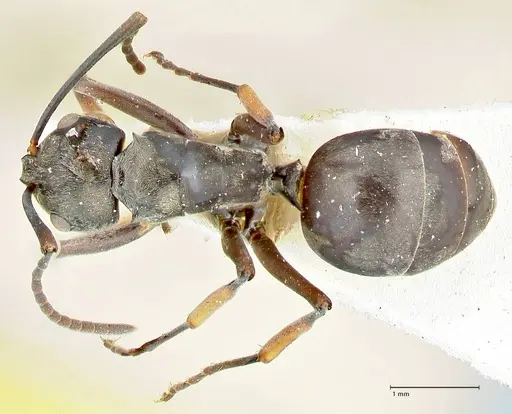
Literatür
Dağılım haritası yükleniyor...Ürünler yükleniyor...