
Pheidole pidax
- Bilimsel Adı
- Pheidole pidax
- Oymak (Tribe)
- Attini
- Alt Familya
- Myrmicinae
- Yazar (Tanımlayan)
- Wilson, 2003
- Dağılım
- 0 ülkede bulundu
Giriş
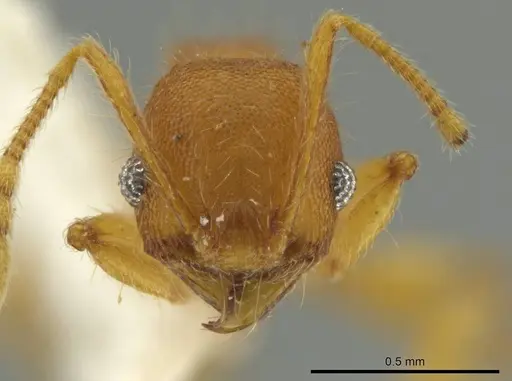
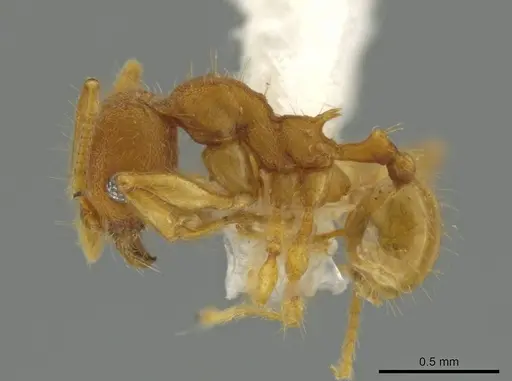
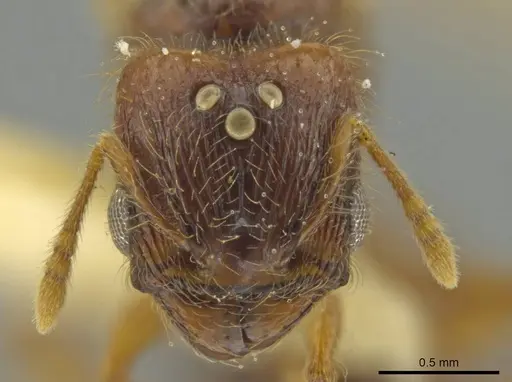
Pheidole pidax is a small ant species native to Colombia, known only from the montane rainforests of Valle del Cauca at around 1300m elevation . It was described by E.O. Wilson in 2003 and belongs to the genus Pheidole, which is known for major and minor worker castes. Major workers have enlarged heads with distinctive frontal lobes, and the species is named for the spray-like pattern of carinulae on the major's head, meaning 'fountain' in Greek . This species has a very limited distribution and is only known from the type locality, making it poorly documented in scientific literature .
Quick Summary
- Difficulty: Medium
- Origin & Habitat: Native to Colombia, Valle del Cauca region, at 1300m elevation in montane rainforest [1][2].
- Colony Type: Unconfirmed, context does not specify queen number or social structure.
- Size & Growth:
- Queen: size data unavailable
- Worker: size data unavailable
- Colony: Unknown for this species
- Growth: Moderate, based on typical Pheidole development patterns [3]
- Development: Estimated 6-8 weeks at optimal temperature based on typical Pheidole genus development [3] (Development time is inferred from related Pheidole species, specific data for Pheidole pidax is not available.)
- Antkeeping:
- Temperature: Keep around 22-26°C. This species comes from montane rainforest in Colombia, so they prefer warm but not hot conditions [1].
- Humidity: Keep the nest substrate consistently moist but not waterlogged, reflecting their montane rainforest habitat [1].
- Diapause: No, as a tropical species from Colombia, they do not require diapause [1].
- Nesting: In nature, they likely nest in soil or rotting wood. In captivity, standard test tubes work for founding, and Y-tong or plaster nests for larger colonies [3].
- Behavior: Pheidole pidax has a peaceful temperament. Workers are active foragers, and majors are specialized for seed processing. Escape risk is moderate due to small size, ensure barriers are in place. They can sting, but it is not medically significant.
- Common Issues: limited distribution data makes precise care uncertain, start with genus-typical conditions and adjust based on colony behavior., small workers may escape through standard test tube cotton if not properly sealed., as a rarely kept species, feeding protocols may need experimentation., montane origin means they may not tolerate high temperatures, keep away from direct heat sources., wild-caught colonies may have undetected parasites or diseases.
Housing and Nesting
Start Pheidole pidax in standard test tube setups with a water reservoir and cotton barrier. Keep the tube dark and undisturbed during founding. Once the colony has established with a few workers, move them to a formicarium. Y-tong (AAC) or plaster nests work well for humidity control and appropriate chamber sizes. Avoid overly large chambers as these ants prefer tighter spaces. Use barrier methods like Fluon on test tube rims to prevent escapes [3].
Feeding and Diet
Pheidole species are typically granivorous and omnivorous. Feed a mix of seeds like millet and protein sources like small insects. Sugar water or honey can be offered occasionally. Start with a standard Pheidole diet and observe what workers accept best. Remove uneaten food to prevent mold [3].
Temperature and Seasonal Care
Keep temperatures around 22-26°C, avoiding above 30°C to prevent stress. Room temperature within this range is suitable. Use heating cables cautiously if needed, creating a gradient. Humidity should be moderate to high, with moist substrate. No diapause is required for this tropical species [1].
Colony Development
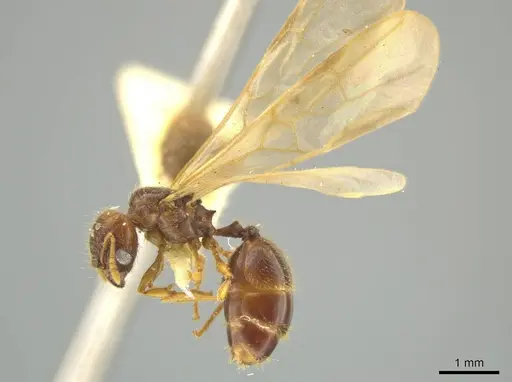
Pheidole pidax has major and minor worker castes. Winged queens were collected on 28 July in the type locality, suggesting nuptial flights during the rainy season. Development from egg to worker is estimated at 6-8 weeks at optimal temperature [3][2].
Behavior and Temperament
This species has a peaceful temperament. Workers are active foragers, and majors handle seed processing and defense. Escape risk is moderate due to small size. They can sting, but it is not medically significant [3].
Frequently Asked Questions
How long does it take for Pheidole pidax to raise first workers?
Estimated 6-8 weeks from egg to first worker at optimal temperature (22-26°C), based on typical Pheidole development patterns [3].
What do Pheidole pidax ants eat?
They are omnivorous, feed seeds like millet and small insects like fruit flies. Start with a varied diet and observe colony acceptance [3].
Can I keep multiple Pheidole pidax queens together?
Context does not specify, but Pheidole species are typically monogyne. Combining unrelated queens is not recommended and may result in fighting.
What temperature is best for Pheidole pidax?
Keep them at 22-26°C, based on their montane rainforest origin [1].
Are Pheidole pidax good for beginners?
This species is rated Medium difficulty due to limited documentation. Beginners may need to experiment with care [3].
How big do Pheidole pidax colonies get?
Colony size is unknown for this specific species.
When do Pheidole pidax nuptial flights occur?
Winged queens were collected on 28 July in Colombia, suggesting flights during the rainy season [2].
Do Pheidole pidax need hibernation?
No, as a tropical species, they do not require diapause [1].
What type of nest should I use for Pheidole pidax?
Standard test tubes for founding, and Y-tong or plaster nests for established colonies [3].
Why are my Pheidole pidax workers dying?
Common causes include temperature stress, improper humidity, mold from uneaten food, or disturbance during founding. Review conditions to match their montane habitat.
Report an Issue
The current care sheet is based fully on literature. See inconsistencies, or something that's incorrect? Please , it will be resolved after review from an admin. Contributing to the blogs tab also helps providing information, to make us be able to further improve the caresheets. Thank you for your support!
References

Bu bakım rehberi şu lisans altındadır: CC BY-SA 4.0 .
Topluluk Blogları
CASENT0645854
AntWeb'de Görüntüle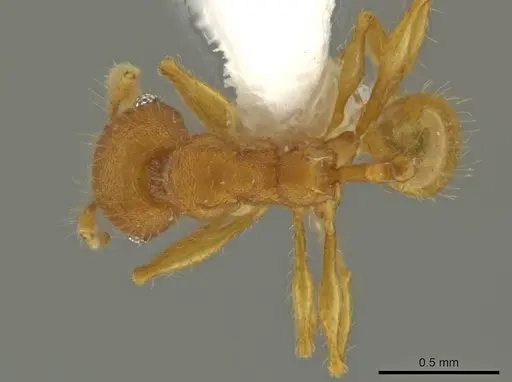
JTLC000016494
AntWeb'de Görüntüle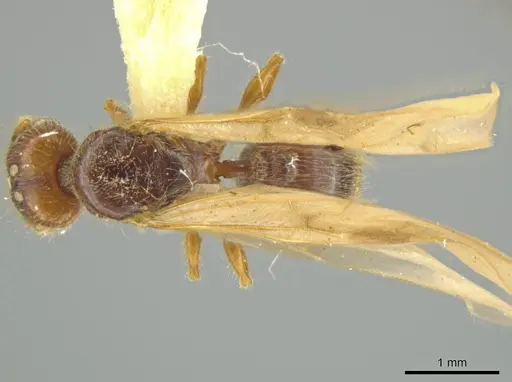
Literatür
Dağılım haritası yükleniyor...Ürünler yükleniyor...