
Perissomyrmex guizhouensis
- Bilimsel Adı
- Perissomyrmex guizhouensis
- Oymak (Tribe)
- Crematogastrini
- Alt Familya
- Myrmicinae
- Yazar (Tanımlayan)
- Zhou & Huang, 2006
- Dağılım
- 0 ülkede bulundu
Giriş
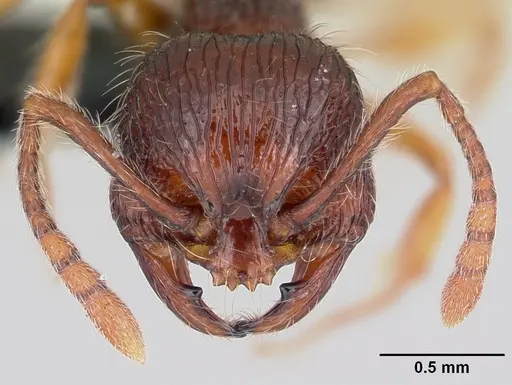
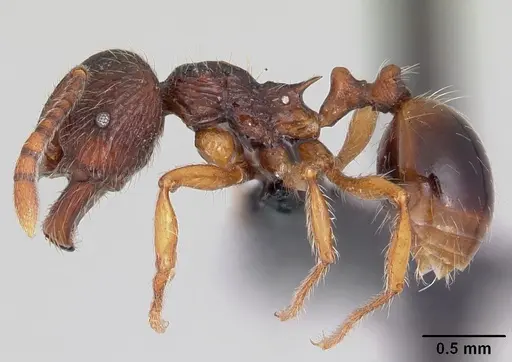
Perissomyrmex guizhouensis is a tiny myrmicine ant from the mountains of Guizhou Province, China. Workers measure about 3.9 to 4.0 mm in total length, with a reddish-brown color and lighter antennae and legs . This species has 9-segmented antennae, which is unusual for Myrmicinae, and major workers differ from minors by having larger eyes, distinct ocelli, and a concave back of the head . It was described in 2006 from specimens collected in primeval forest leaf litter at 1980 m elevation on Fanjing Mountain .
Quick Summary
- Difficulty: Expert
- Origin & Habitat: Fanjing Mountain Natural Reserve, Guizhou Province, China at 1980 m elevation, found in primeval forest floor leaf litter in the Palaearctic region [1][2].
- Colony Type: Unconfirmed, colony structure has not been documented. Based on typical Myrmicinae patterns, likely single-queen colonies, but this is unconfirmed.
- Size & Growth:
- Queen: Size data unavailable, queen caste has not been described [1]
- Worker: Up to 4.0 mm total length for both minor and major workers [1]
- Colony: Unknown, no colony size data available
- Growth: Unknown
- Development: Unknown, no development data exists for this species. Based on inference from similar small Myrmicinae, estimate 6-10 weeks at optimal temperature, but this is unconfirmed. (No direct measurements available. Estimate based on genus-level inference from small temperate Myrmicinae.)
- Antkeeping:
- Temperature: Unconfirmed, no thermal data exists. Based on the high-elevation habitat (1980 m), likely prefers cooler temperatures around 18-22°C [1]. Start with a gentle gradient and observe colony activity.
- Humidity: Based on forest floor litter habitat, keep the nest substrate consistently moist but not waterlogged, with some drier areas available [1].
- Diapause: Unknown, no seasonal data available. The high-elevation temperate origin suggests they likely experience winter dormancy, but specific requirements are unconfirmed.
- Nesting: Natural habitat is forest floor leaf litter. In captivity, use a naturalistic setup with moist substrate or a Y-tong/plaster nest with good moisture retention. Chambers should be scaled for small workers [1].
- Behavior: Not documented in scientific literature. Based on typical Myrmicinae patterns, they are likely generalist foragers that scavenge and may tend aphids for honeydew. Their small size and forest floor habitat suggest they are secretive and not aggressive. Escape prevention is critical due to their tiny size, they can squeeze through small gaps.
- Common Issues: escape prevention is critical due to tiny size, use fine mesh and tight-fitting barriers, no biological data exists, keepers must experiment with temperature, humidity, and feeding, slow growth and lack of documented care means colonies often fail without clear cause, high-elevation origin suggests they may not tolerate warm conditions, avoid overheating, wild-caught colonies may have parasites or diseases with no documented treatment
Discovery and Taxonomy
Perissomyrmex guizhouensis was described in 2006 by Zhou and Huang from specimens collected in the Fanjing Mountain Natural Reserve in Guizhou Province, China. The type series was collected from leaf litter samples in primeval forest at approximately 1980 meters elevation [1]. This ant belongs to the tribe Crematogastrini within the subfamily Myrmicinae. The genus Perissomyrmex is characterized by having only 9 antennal segments, with the apical three segments enlarged to form a club [1].
Identification and Morphology
Workers of Perissomyrmex guizhouensis are small, measuring up to 4.0 mm in total length. The head is about as broad as it is long, slightly widened toward the front. The anterior clypeal border has four teeth, the central pair slightly larger than the outer pair, plus an additional tooth on each anterolateral corner [1]. The antennae have 9 segments with a 3-segmented club. The scape extends past the occipital corner by about one-sixth of its length. The propodeum bears divergent spines directed backward. The petiole is about twice as long as broad. Color is reddish-brown with lighter antennae scapes and legs, and a darker gaster. Major workers differ by having distinct ocelli, larger eyes, a broadly concave occipital margin, and shorter antennal scapes [1].
Natural Habitat
This species is known only from the Fanjing Mountain Natural Reserve in Guizhou Province, China, at an elevation of around 1980 meters. The type specimens were collected from leaf litter in primeval forest [1][2]. This high-elevation location suggests a temperate to subtropical mountain climate with cool, moist conditions. The forest floor litter habitat indicates this species prefers damp, shaded environments and is likely adapted to cooler temperatures than tropical ants.
Keeping Perissomyrmex guizhouensis in Captivity
This is one of the least-documented ant species in the antkeeping hobby. No established care protocols exist because the species has rarely been kept in captivity. Based on the natural habitat clues, high-elevation forest floor litter, you should keep temperatures on the cool side around 18-22°C, maintain consistently moist but not waterlogged substrate, and provide a naturalistic setup that mimics the forest floor environment [1]. Feed a general Myrmicinae diet: protein sources like small insects and sugar sources like honey water or sugar water. Because nothing is known about their founding behavior, acquiring an established colony rather than attempting to found one from a lone queen is strongly recommended. This species is best suited for experienced antkeepers who enjoy experimenting with poorly-documented species.
Unknown Aspects and Research Opportunities
Nearly every aspect of Perissomyrmex guizhouensis biology remains undocumented. We do not know: colony structure, founding behavior, nuptial flight timing, development time from egg to worker, queen size, exact temperature and humidity preferences, diet specifics, or any behavioral traits. This represents both a challenge and an opportunity for antkeepers. Careful observations of any captive colonies could contribute valuable knowledge to the scientific community. If you successfully maintain this species, documenting your observations on colony development, behavior, and care requirements would be valuable.
Frequently Asked Questions
How big do Perissomyrmex guizhouensis workers get?
Workers are very small, measuring up to 4.0 mm in total length for both minor and major workers [1].
What do Perissomyrmex guizhouensis ants eat?
Diet is unconfirmed, no feeding observations exist. Based on typical Myrmicinae biology, they likely accept small protein sources like small insects and sugar sources like honeydew from aphids, honey, or sugar water. Start with small live prey and sugar water and observe acceptance.
What temperature do Perissomyrmex guizhouensis need?
Temperature requirements are unconfirmed. Based on their high-elevation (1980 m) mountain habitat in Guizhou Province, they likely prefer cooler temperatures around 18-22°C [1]. Adjust based on colony behavior and avoid warm conditions.
Are Perissomyrmex guizhouensis good for beginners?
No, this species is not recommended for beginners. It is extremely poorly documented with no established care protocols. Nearly every aspect of their biology is unknown. Only experienced antkeepers who enjoy experimenting should attempt this species.
How long does it take for Perissomyrmex guizhouensis to develop from egg to worker?
Unknown, no development data exists for this species. Based on inference from similar small Myrmicinae in temperate regions, estimate 6-10 weeks at optimal temperature, but this is a rough guess.
Do Perissomyrmex guizhouensis queens need to forage during founding?
Unknown, founding behavior has not been documented. Most Myrmicinae are claustral, but this is unconfirmed for this species.
Can I keep multiple Perissomyrmex guizhouensis queens together?
Unknown, colony structure has not been studied. No data exists on whether they are single-queen or multi-queen colonies. Combining unrelated queens is not recommended without documented evidence of success.
Do Perissomyrmex guizhouensis ants sting?
Unknown, no documentation exists on whether they possess a functional stinger or its effects. Most small Myrmicinae have stingers but are too small to penetrate human skin effectively.
What kind of nest should I use for Perissomyrmex guizhouensis?
Based on their forest floor litter habitat, a naturalistic setup with moist substrate or a Y-tong/plaster nest with good moisture retention would likely work well. The small worker size means chambers should be appropriately scaled [1].
Where is Perissomyrmex guizhouensis found in the wild?
Only known from Fanjing Mountain Natural Reserve in Guizhou Province, China, at approximately 1980 meters elevation. Collected from primeval forest floor leaf litter [1][2].
Do Perissomyrmex guizhouensis need hibernation?
Unknown, no seasonal data exists. The high-elevation temperate origin suggests they likely experience winter dormancy, but specific diapause requirements are unconfirmed.
Why is Perissomyrmex guizhouensis so rare in the antkeeping hobby?
This species was only described in 2006 and has a very limited natural distribution in the mountains of Guizhou Province, China. It has rarely been collected for the hobby, and with no established care protocols, few keepers have attempted to maintain it. The lack of any biological data makes successful captive maintenance extremely challenging [1].
Report an Issue
The current care sheet is based fully on literature. See inconsistencies, or something that's incorrect? Please , it will be resolved after review from an admin. Contributing to the blogs tab also helps providing information, to make us be able to further improve the caresheets. Thank you for your support!
References

Bu bakım rehberi şu lisans altındadır: CC BY-SA 4.0 .
Topluluk Blogları
CASENT0103100
AntWeb'de Görüntüle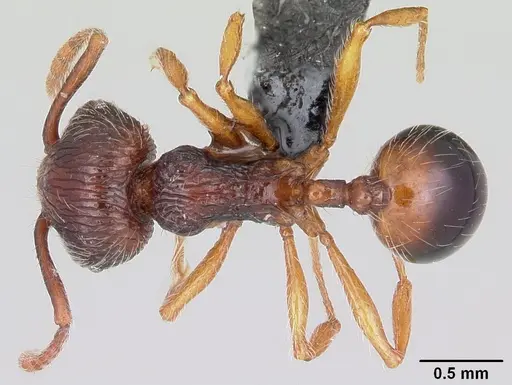
Literatür
Dağılım haritası yükleniyor...Ürünler yükleniyor...