
Parasyscia indica
- Bilimsel Adı
- Parasyscia indica
- Alt Familya
- Dorylinae
- Yazar (Tanımlayan)
- Brown, 1975
- Dağılım
- 0 ülkede bulundu
Giriş
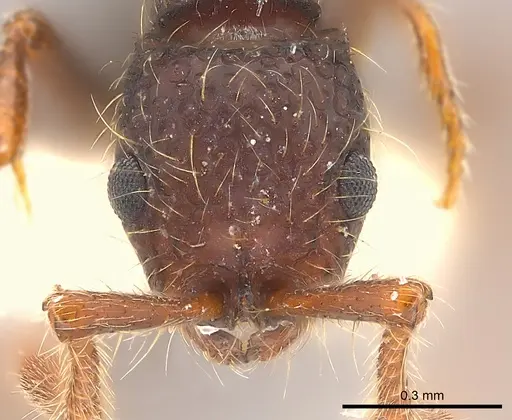
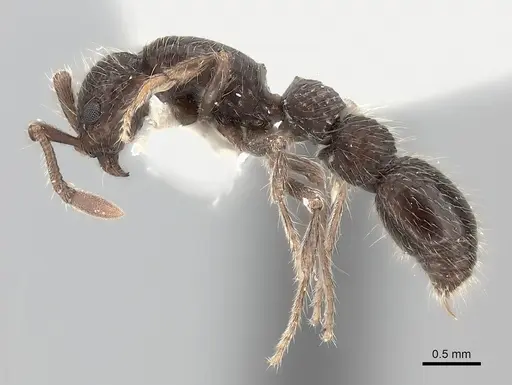
Parasyscia indica is a small predatory ant in the subfamily Dorylinae. Workers measure 4.3-5.5mm in total length and have a mahogany-brown color with a bluish iridescent sheen . The species is endemic to India, found only in the Western Ghats of Kerala at 450-950m elevation . Colonies nest under stones in moist, shaded areas near stream beds . This species is a specialized predator that raids Pheidole ant colonies. Workers hunt along odor trails and carry back brood and adult ants . The colony includes ergatoid queens, which are wingless replacement reproductives .
Quick Summary
- Difficulty: Medium
- Origin & Habitat: Endemic to the Western Ghats of Kerala, India, in tropical rainforest at 450-950m elevation, under stones near stream beds [2][1].
- Colony Type: Single-queen colonies with ergatoid replacement reproductives [1].
- Size & Growth:
- Queen: 5.6-5.7mm (ergatoid queens) [1]
- Worker: 4.3-5.5mm [1]
- Colony: Unknown, no documented colony size in research
- Growth: Unknown
- Development: Unknown, no direct studies. Based on typical Dorylinae patterns, expect 4-8 weeks at tropical temperatures, but this is an estimate. (No published data on development time.)
- Antkeeping:
- Temperature: Keep at 24-28°C. This species comes from tropical Kerala [2][1].
- Humidity: Keep substrate consistently moist but not waterlogged, as they live in moist soil [1].
- Diapause: Unknown, as a tropical species, they likely do not require diapause [1].
- Nesting: Natural nesting under stones in moist soil. In captivity, use a naturalistic setup with moist substrate and hiding structures [1].
- Behavior: Workers are predatory and hunt along odor trails. They are not aggressive toward keepers but will defend the colony. Escape risk is moderate due to small size [1].
- Common Issues: Predatory feeding requirements can be challenging, they need a constant supply of live prey [1]., Colonies may fail if prey is not provided regularly [1]., Small size makes escape prevention critical, use fine mesh and tight-fitting lids [1]., Humidity management is important, too dry and colonies desiccate, too wet and mold becomes an issue [1]., No captive breeding data means keepers are pioneering husbandry for this species.
Housing and Nest Setup
Parasyscia indica does best in a naturalistic setup that mimics its natural habitat under stones in moist soil. Use a substrate-based formicarium with 2-3 inches of moist soil and place flat stones on the surface for nesting. Alternatively, a Y-tong or plaster nest with narrow chambers can work if humidity is maintained. Keep the nest area dark, as these ants prefer shaded sites. Escape prevention is critical, use tight-fitting lids and apply barriers like Fluon to the enclosure rim [1].
Feeding and Diet
This is a specialized predatory ant that hunts other ant species, especially Pheidole. In captivity, provide live prey regularly, offer small live insects like fruit flies or pinhead crickets, and ideally small ant colonies for natural hunting. They do not typically accept sugar or dead prey. Feed every 2-3 days with prey items equal to the size of a few workers, and remove uneaten prey to prevent mold [1].
Temperature and Seasonal Care
As a tropical species from Kerala, keep temperatures at 24-28°C year-round. Use a heating cable on one side of the nest to create a gradient for self-regulation. There is no diapause requirement, but activity may reduce in cooler periods [1].
Behavior and Colony Dynamics
Workers hunt along odor trails to raid Pheidole colonies, carrying back brood and adult ants. The colony structure includes ergatoid queens that can replace a lost queen. Workers are moderately defensive but not aggressive toward keepers. Their small size (under 6mm) means escape risk is moderate, so ensure tight enclosures [1].
Frequently Asked Questions
How long does it take for Parasyscia indica to raise first workers?
The egg-to-worker development time is unknown for this species [1]. Based on typical Dorylinae patterns, expect 4-8 weeks at tropical temperatures, but this is an estimate.
Can I keep multiple Parasyscia indica queens together?
Not recommended. This species has ergatoid replacement queens, but combining unrelated foundress queens is not documented and would likely result in aggression [1].
What do Parasyscia indica ants eat?
They are obligate predators that need live prey, such as small insects or other ant colonies [1].
Are Parasyscia indica good for beginners?
This species is rated medium difficulty due to the need for regular live prey, making it less ideal for complete beginners [1].
How big do Parasyscia indica colonies get?
The maximum colony size is unknown, no research has documented colony sizes [1].
Do Parasyscia indica need hibernation?
No, as a tropical species, they do not require hibernation and should be kept warm year-round [1].
Why are my Parasyscia indica dying?
Common causes include lack of live prey, improper humidity, temperatures outside 24-28°C, or escapes due to small size [1].
When should I move Parasyscia indica to a formicarium?
Start in a simple setup until the colony is established, then move to a larger naturalistic setup with dark, humid nesting areas [1].
Report an Issue
The current care sheet is based fully on literature. See inconsistencies, or something that's incorrect? Please , it will be resolved after review from an admin. Contributing to the blogs tab also helps providing information, to make us be able to further improve the caresheets. Thank you for your support!
References

Bu bakım rehberi şu lisans altındadır: CC BY-SA 4.0 .
Topluluk Blogları
CASENT0217387
AntWeb'de Görüntüle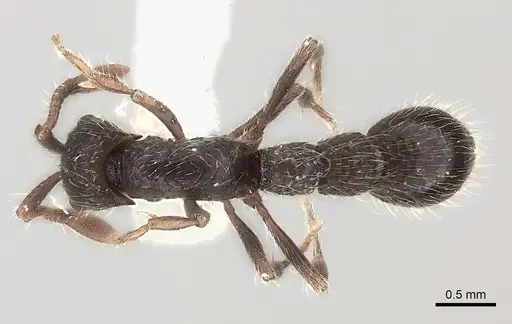
Literatür
Dağılım haritası yükleniyor...Ürünler yükleniyor...