
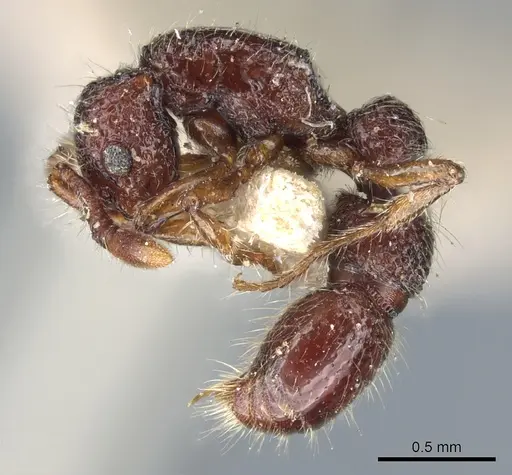
Parasyscia dohertyi
- Bilimsel Adı
- Parasyscia dohertyi
- Alt Familya
- Dorylinae
- Yazar (Tanımlayan)
- Emery, 1902
- Dağılım
- 1 ülkede bulundu
Giriş
Parasyscia dohertyi is a predatory ant in the subfamily Dorylinae, formerly known as Cerapachys dohertyi. This species is part of the Old World Sphinctomyrmex/Eusphinctus clade within army ant relatives . It is found across Southeast Asia, including Borneo, Indonesia, Malaysia, Singapore, Thailand, and Vietnam . As a Dorylinae ant, it hunts other small invertebrates, but specific hunting behaviors are not well documented.
Quick Summary
- Difficulty: Hard
- Origin & Habitat: Tropical Southeast Asia, including Borneo, Indonesia (Kalimantan, Sumatra), Malaysia, Singapore, Thailand, and Vietnam. Inhabits forest environments in the Indomalaya region [2][3].
- Colony Type: Based on Dorylinae patterns, likely monogyne (single queen), but specific data for this species is unconfirmed.
- Size & Growth:
- Queen: Size data unavailable, no total length measurements in available literature
- Worker: Size data unavailable, no total length measurements in available literature
- Colony: Unknown, no documented colony sizes
- Growth: Unknown
- Development: Estimated 6-8 weeks based on typical Dorylinae development patterns at tropical temperatures (Development timeline is inferred from related Dorylinae species, no specific study exists for this species)
- Antkeeping:
- Temperature: Keep warm and stable, roughly 24-28°C, based on tropical forest origin. A gentle gradient allows workers to self-regulate.
- Humidity: Keep the nest substrate consistently moist but not waterlogged, as this species inhabits humid forest environments.
- Diapause: No diapause likely required due to tropical distribution. A brief cool period may benefit colony health in temperate climates.
- Nesting: Use a naturalistic setup with moist substrate or a Y-tong/plaster nest. They likely prefer dark, humid nest chambers typical of Dorylinae species.
- Behavior: Behavior is not well documented. Based on Dorylinae patterns, they are predatory on small invertebrates and may exhibit raiding behaviors, but are generally less aggressive than true army ants. Their small size suggests secretive nesting, and escape prevention should be moderate due to their size.
- Common Issues: limited biological data makes proper care challenging, much is inferred from genus patterns, colony size in captivity is unknown, making growth expectations uncertain, predatory diet requirements may be difficult to meet with appropriate live prey, humidity control is critical, too dry causes colony decline, wild-caught colonies may carry parasites that are poorly understood
Distribution and Natural Habitat
Parasyscia dohertyi is found throughout the Indomalaya region, with documented records from Borneo, Indonesia (Sumatra), Malaysia, Singapore, Thailand, and Vietnam [2][3]. The species was originally described from Pulo Laut, Kalimantan [2]. It inhabits tropical forest environments, typically nesting in soil, rotting wood, or under stones in shaded areas [2].
Taxonomy and Classification
Parasyscia dohertyi was originally described as Parasyscia dohertyi by Emery in 1902 and transferred to Parasyscia by Borowiec in 2016 [2]. It belongs to the subfamily Dorylinae and is part of the Old World Sphinctomyrmex/Eusphinctus clade [1]. The species was previously known as Parasyscia dohertyi, a synonym established by Wilson in 1959 [2].
Predatory Behavior and Diet
As a Dorylinae ant, Parasyscia dohertyi is predatory on small invertebrates like insects and springtails. In captivity, offer small live prey such as fruit flies or pinhead crickets, sized appropriately for the ants. Sugar sources are not a major part of their diet, but they may occasionally accept honeydew [2].
Housing and Nesting
Use a Y-tong or plaster nest with moist substrate to mimic their natural humid forest habitat. Provide an outworld for foraging with easy food access. Escape prevention is important due to their small size, but they are not strong climbers [2].
Temperature and Seasonal Care
Maintain temperatures around 24-28°C, consistent with their tropical origin. A slight gradient allows self-regulation. Diapause is not required, but a brief cool period in winter may benefit colonies in temperate climates [2].
Frequently Asked Questions
How long does it take for Parasyscia dohertyi to produce first workers?
The exact timeline is unknown, but based on typical Dorylinae patterns, expect 6-8 weeks from egg to worker at optimal temperatures. This is an estimate with no specific study for this species.
What do Parasyscia dohertyi ants eat?
They are predatory and eat small live prey like fruit flies, pinhead crickets, and other micro-arthropods. Prey should be appropriately sized for the ants.
Are Parasyscia dohertyi good for beginners?
This species is not recommended for beginners due to limited care information and uncertain requirements.
Do Parasyscia dohertyi ants sting?
Dorylinae ants have stingers, but their small size means stings are unlikely to affect humans significantly.
How big do Parasyscia dohertyi colonies get?
Colony size is undocumented. Based on genus patterns, colonies are likely small, but no maximum size is known.
Do Parasyscia dohertyi need hibernation?
No, hibernation is not required due to their tropical origin. A brief cool period may be beneficial but is not necessary.
Can I keep multiple Parasyscia dohertyi queens together?
Colony structure is unconfirmed. Combining unrelated queens is not recommended as it could cause aggression.
What temperature is best for Parasyscia dohertyi?
Keep them at 24-28°C with a slight gradient for self-regulation, based on their tropical habitat.
Where is Parasyscia dohertyi found?
This species is found across Southeast Asia: Borneo, Indonesia, Malaysia, Singapore, Thailand, and Vietnam [2].
Is Parasyscia dohertyi an army ant?
It belongs to Dorylinae, the subfamily of army ants, but is part of the army ant relatives rather than true army ants [1].
Report an Issue
The current care sheet is based fully on literature. See inconsistencies, or something that's incorrect? Please , it will be resolved after review from an admin. Contributing to the blogs tab also helps providing information, to make us be able to further improve the caresheets. Thank you for your support!
References

Bu bakım rehberi şu lisans altındadır: CC BY-SA 4.0 .
Topluluk Blogları
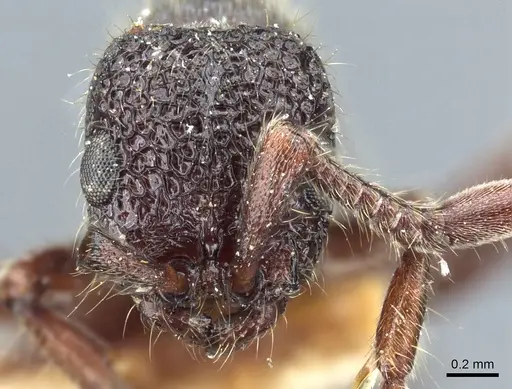
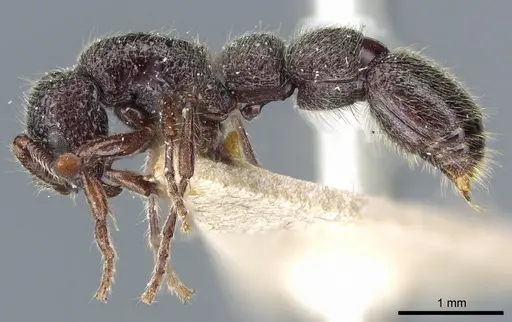
CASENT0130472
AntWeb'de Görüntüle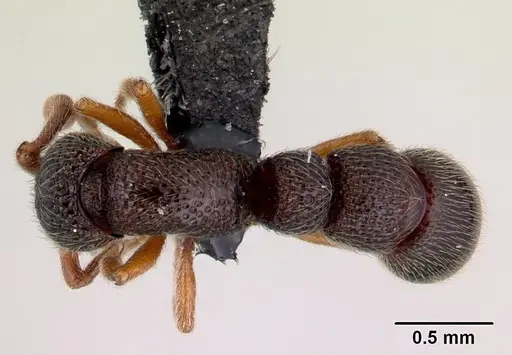
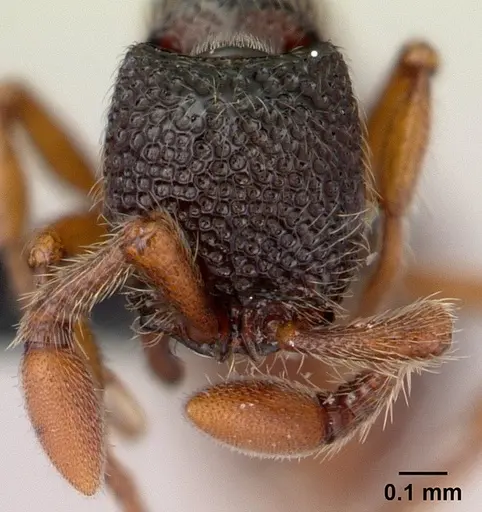
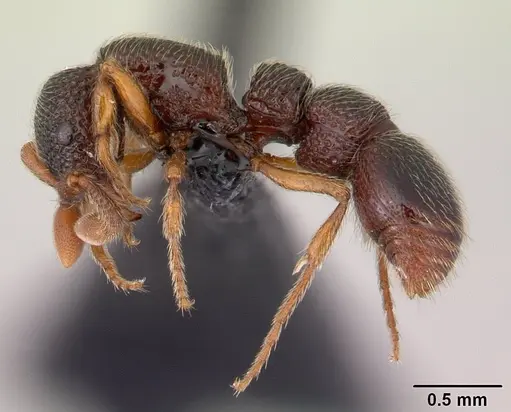
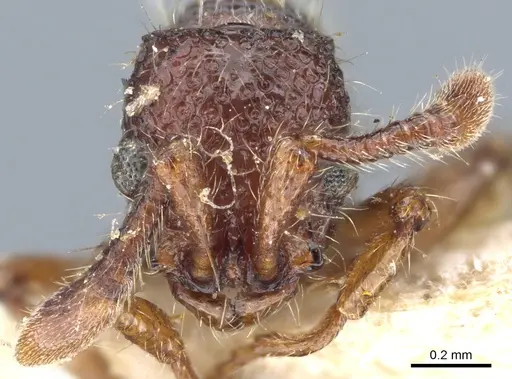
CASENT0903775
AntWeb'de Görüntüle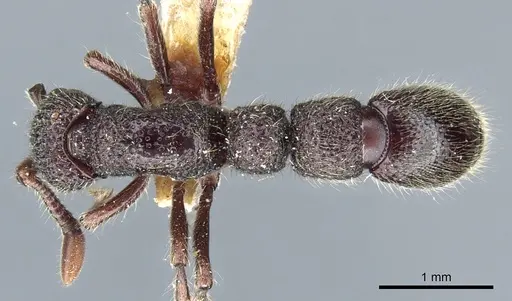
CASENT0903776
AntWeb'de Görüntüle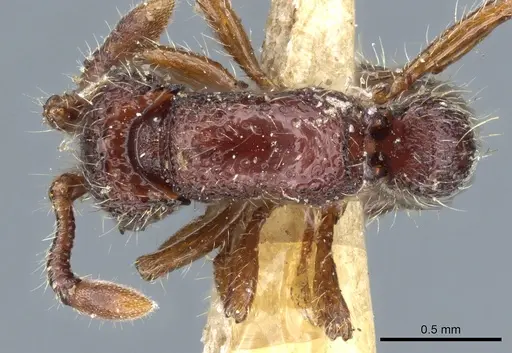
Literatür
Dağılım haritası yükleniyor...Ürünler yükleniyor...