
Nesomyrmex micheleae
- Bilimsel Adı
- Nesomyrmex micheleae
- Oymak (Tribe)
- Crematogastrini
- Alt Familya
- Myrmicinae
- Yazar (Tanımlayan)
- Sharaf, 2020
- Dağılım
- 0 ülkede bulundu
Giriş
Nesomyrmex micheleae is a tiny ant species described in 2020 from the Dhofar Governorate in southern Oman. Workers measure 3.12-3.25 mm in total length . They have a bicolored appearance: head black-brown, mesosoma, petiole, and postpetiole brown, and gaster golden yellow . This species belongs to the Nesomyrmex angulatus group and can be identified by the nearly hexagonal petiolar node and irregular rugulose sculpture on the head . This species is known only from three workers collected in 2017,making it one of the rarest ants in the Arabian Peninsula. The workers were foraging on a large tree in Ayn Sahalnoot, an area with monsoonal climate and semi-evergreen grassland . It is likely endemic to Dhofar and may be cryptic due to its arboreal habits .
Quick Summary
- Difficulty: Expert
- Origin & Habitat: Dhofar Governorate, Oman, a biodiverse region with monsoonal climate, semi-evergreen grassland, and perennial shrubs [1][3]
- Colony Type: Unknown, colony structure has not been documented. Only three workers have been collected, all foraging alone [1].
- Size & Growth:
- Queen: Unknown, no queen has been described [1]
- Worker: 3.12-3.25 mm total length [1]
- Colony: Unknown, likely small based on rarity [1]
- Growth: Unknown
- Development: Estimated 4-8 weeks based on similar Myrmicinae species, but no data exists for this species [1] (Development timeline is inferred from related species due to lack of captive data.)
- Antkeeping:
- Temperature: Estimated 24-28°C based on average annual temperature of 25.8°C in Dhofar [3]. Provide a heat gradient for self-regulation.
- Humidity: 94 mm annually) [3].
- Diapause: Unknown, no data on overwintering behavior [1]
- Nesting: Arboreal foragers in the wild [1]. In captivity, use Y-tong, plaster, or 3D-printed nests with climbing structures and tight chambers scaled to their tiny size.
- Behavior: Temperament unknown, but likely non-aggressive. As a member of subfamily Myrmicinae, tribe Crematogastrini, they likely have a smear defense mechanism with a modified stinger. Their tiny size makes escape risk high, fine mesh barriers are essential.
- Common Issues: lack of captive data may lead to improper care and colony death., tiny size means escapes are likely without fine mesh barriers., difficulty obtaining colonies due to extreme rarity., unknown dietary requirements may affect colony health., arboreal habits require different setup than ground-nesting ants.
Discovery and Rarity
Nesomyrmex micheleae was described in 2020,with only three worker specimens collected in November 2017 from a single location in Dhofar, Oman [1]. Despite extensive sampling, no additional specimens have been found, suggesting it may be cryptic or highly localized [1][2]. The species is named in honor of Michele Esposito of the California Academy of Sciences [1].
Identification and Appearance
Workers are tiny, measuring 3.12-3.25 mm in total length [1]. They are bicolored with a black-brown head, brown mesosoma, petiole, and postpetiole, and a golden yellow gaster [1][2]. Key features include a nearly hexagonal petiolar node, irregular rugulose sculpture on the head, and short erect setae [1].
Natural History and Habitat
The Dhofar Governorate has a unique monsoonal climate with annual rainfall over 94 mm and average temperature of 25.8°C [3]. The species was collected by beating foliage on a large tree at 151 m elevation, indicating arboreal foraging habits [1]. Nothing is known about nesting or diet in the wild.
Keeping This Species
This species has never been kept in captivity, so all care is experimental. For temperature, aim for 24-28°C with a heat gradient [3]. Humidity should be maintained with a moist substrate but allow dry areas [3]. Use Y-tong, plaster, or 3D-printed nests with climbing structures. Escape prevention is critical due to tiny size. Feeding is unconfirmed, but offer small live prey and sugar water as a starting point.
Frequently Asked Questions
Can I keep Nesomyrmex micheleae as a pet ant?
This species is essentially unavailable to antkeepers. Only three workers have ever been collected, and no captive husbandry data exists [1].
How big do Nesomyrmex micheleae colonies get?
Unknown. Based on extreme rarity, colonies are likely small [1].
What do Nesomyrmex micheleae ants eat?
Unconfirmed. No feeding observations have been documented [1].
Do Nesomyrmex micheleae ants sting?
As a Myrmicinae, they likely have a stinger, but it is too small to penetrate human skin effectively. No specific data exists for this species.
What temperature do Nesomyrmex micheleae need?
Estimated 24-28°C based on their native habitat in Dhofar, where average annual temperature is 25.8°C [3].
Are Nesomyrmex micheleae good for beginners?
No. This species is expert-level due to lack of captive data and extreme rarity [1].
Where does Nesomyrmex micheleae live in the wild?
Only known from Dhofar Governorate, Oman, specifically from a large tree in Ayn Sahalnoot [1][3].
How long does it take for Nesomyrmex micheleae to develop from egg to worker?
Unknown, no development data exists. An estimate based on similar species is 4-8 weeks, but this is speculative [1].
Do Nesomyrmex micheleae need hibernation?
Unknown, no data on overwintering behavior [1].
What makes Nesomyrmex micheleae special?
It is one of the rarest ants in the world, with only three specimens collected from a single tree in Oman [1].
Report an Issue
The current care sheet is based fully on literature. See inconsistencies, or something that's incorrect? Please , it will be resolved after review from an admin. Contributing to the blogs tab also helps providing information, to make us be able to further improve the caresheets. Thank you for your support!
References

Bu bakım rehberi şu lisans altındadır: CC BY-SA 4.0 .
Topluluk Blogları
CASENT0922872
AntWeb'de Görüntüle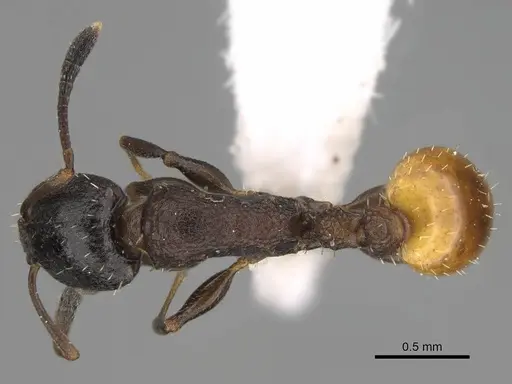
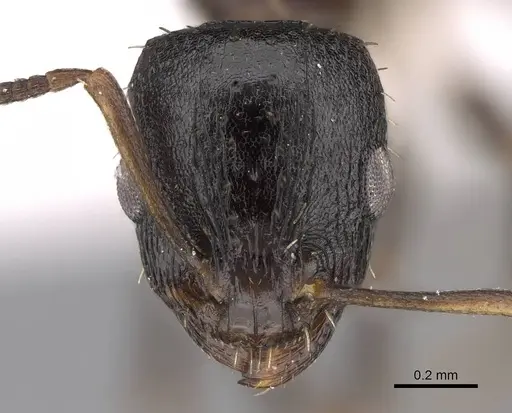
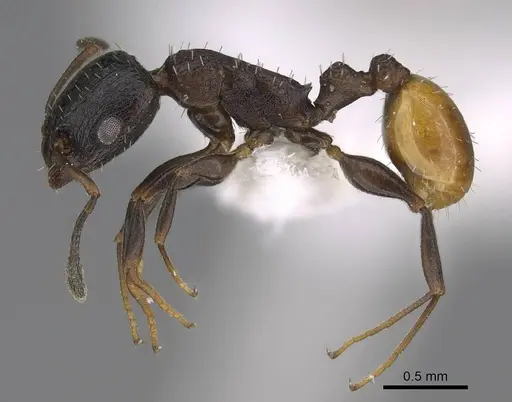
Literatür
Dağılım haritası yükleniyor...Ürünler yükleniyor...