
Neivamyrmex carinifrons
- Bilimsel Adı
- Neivamyrmex carinifrons
- Alt Familya
- Dorylinae
- Yazar (Tanımlayan)
- Borgmeier, 1953
- Dağılım
- 0 ülkede bulundu
Giriş
Neivamyrmex carinifrons is an extremely rare army ant species known only from a single male specimen collected in Botafogo, Rio de Janeiro, Brazil, in 1940. As a member of the Dorylinae subfamily, this species belongs to the genus Neivamyrmex, which contains New World army ants known for their nomadic, predatory lifestyle. The entire scientific knowledge consists of the original description and a few taxonomic references - no workers, queens, or any other caste has ever been documented. Despite extensive ant collecting in the region, no additional specimens have been reported since the original collection in 1940,suggesting either extreme rarity, a very localized distribution, or possible extinction.
Quick Summary
- Difficulty: Expert
- Origin & Habitat: Known only from Botafogo, Rio de Janeiro, Brazil, an urban area in a tropical coastal city [1]. No natural habitat data exists for this species.
- Colony Type: Unknown, only the male caste has been described. Based on typical Neivamyrmex patterns, colonies likely contain a single queen with thousands of workers, but this is unconfirmed for this specific species.
- Size & Growth:
- Queen: Size data unavailable, queen has never been described [1]
- Worker: Size data unavailable, workers have never been described [1]
- Colony: Unknown, colony size has not been documented [1]
- Growth: Unknown
- Development: Unknown, no development data exists for this species (No development data exists. Related Neivamyrmex species may develop in several weeks at tropical temperatures, but this is unconfirmed for N. carinifrons.)
- Antkeeping:
- Temperature: Unconfirmed, Neivamyrmex species are typically found in tropical and subtropical regions, so warm conditions would likely be appropriate based on genus patterns [2]
- Humidity: Unconfirmed, army ants generally prefer humid conditions similar to their tropical forest floor habitats, but no specific data exists for this species [2]
- Diapause: Unknown, Neivamyrmex species in Brazil may not require strong diapause given the tropical climate, but this is unconfirmed [2]
- Nesting: Unconfirmed, army ants are nomadic and do not maintain permanent nests. In captivity, they typically require large foraging areas with frequent relocations. No specific nesting preference has been documented for this species [2]
- Behavior: No species-specific behavioral data exists. Based on typical Neivamyrmex patterns, N. carinifrons would likely exhibit typical army ant behavior: aggressive predatory raids on other ant colonies and soil-dwelling invertebrates, nomadic colony movement, and potential raiding behavior. Escape prevention should be prioritized, army ants are known to squeeze through small gaps. Stinging behavior is possible as army ants have functional stingers, though the sting intensity for this species is unknown [2].
- Common Issues: no captive husbandry information exists, this species has never been kept in captivity, colony acquisition is essentially impossible as no workers or queens have ever been collected or cultured, the single known specimen is from 1940,suggesting this may be an extremely rare or localized species, army ant husbandry is inherently difficult due to their nomadic nature and large colony sizes, without workers or queens, species-specific care requirements cannot be determined
Species Overview and Identification
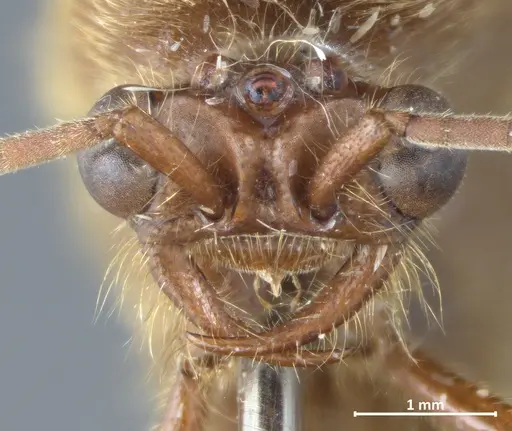
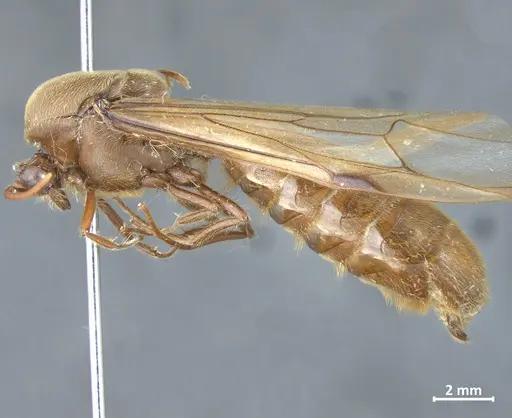
Neivamyrmex carinifrons was described by Borgmeier in 1953 based on a single male specimen collected from Botafogo, Rio de Janeiro, Brazil on July 12,1940. The type specimen is deposited in the Museu de Zoologia da Universidade de São Paulo (MZSP). The species name 'carinifrons' refers to the carinate (keeled) front of the head, a distinguishing morphological feature. Only the male caste has ever been described, no workers, queens, or any other caste has been documented in scientific literature despite extensive ant collecting in the region. This extreme rarity of specimens suggests either a very localized distribution, seasonal emergence of males only, or possible extinction. The genus Neivamyrmex contains approximately 150 species of army ants distributed throughout the Americas, with the highest diversity in tropical regions. [1]
Taxonomic History and Type Specimen
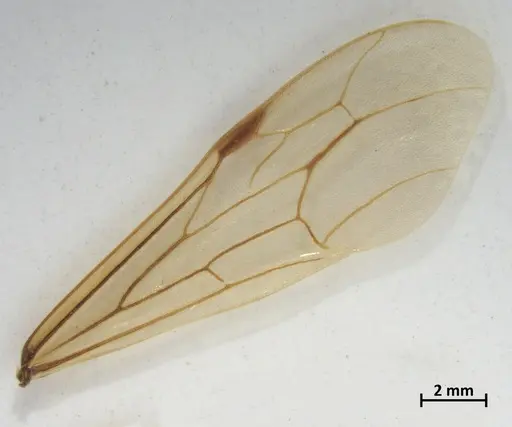
The holotype male of Neivamyrmex carinifrons is in poor condition, being disarticulated with separate parts preserved: head, metasoma, wings, genitalia, left front leg (L1), and right middle leg (L5) [1]. The specimen was collected by T. Borgmeier, a prominent myrmecologist who extensively studied New World ants. Borgmeier later provided a redescription in 1955,and the species has been included in several taxonomic keys by Watkins (1976) and catalogued by Kempf (1972) and Bolton (1995). Despite being formally described over 70 years ago, no additional specimens have been reported in any subsequent ant surveys or collections, making this one of the most poorly known army ant species in the world.
Genus-Level Biology and Inferred Care
Since species-specific biological data does not exist for N. carinifrons, care recommendations must be inferred from general Neivamyrmex genus biology. Army ants in this genus are obligate predators that conduct raiding swarms to capture prey, primarily other ant colonies and soil-dwelling invertebrates. Colonies are typically large with thousands of workers and nomadic, moving their bivouac site every few days. Queens are claustral, sealing themselves in a chamber to raise the first brood on stored fat reserves. Males are typically produced seasonally and are attracted to light. If this species were to be kept, it would require a large foraging area, constant access to prey (live insects), high humidity, and warm temperatures. However, these are speculative recommendations based on genus patterns, not species-confirmed requirements. [2]
Current Knowledge Gaps
The most striking aspect of Neivamyrmex carinifrons is how little we know about it. The entire scientific literature consists of the original description, a redescription, and a handful of taxonomic citations. We have no information on worker morphology, queen morphology, colony size, nesting preferences, diet, behavior, reproductive biology, or any aspect of its natural history. A 2022 study on army ant male seasonality mentioned this species, but provided no new biological data. This represents a significant gap in our understanding of Neotropical ant biodiversity. The fact that no additional specimens have been collected in over 80 years from one of the most heavily studied ant regions (Rio de Janeiro) raises questions about whether this species still exists or has a highly restricted distribution. [2]
Legal and Ethical Considerations
Neivamyrmex carinifrons is not listed in CITES appendices, but its native range in Brazil is subject to Brazilian environmental laws. Any collection or export would require appropriate permits. The extreme rarity of this species in the wild raises conservation concerns, if it still exists, populations would likely be very small and localized. For antkeepers, this means that even if acquisition were possible, ethical considerations about removing individuals from potentially tiny wild populations should be carefully weighed. Additionally, as a non-described species in culture, there are no established captive breeding lines, making sustained husbandry impossible without wild collection. [2]
Frequently Asked Questions
Can I keep Neivamyrmex carinifrons as a pet ant?
No, this species has never been kept in captivity and no workers or queens have ever been collected. The entire known population consists of a single male specimen described in 1940. Without any described workers or queens, it is essentially impossible to acquire or maintain this species.
What do Neivamyrmex carinifrons ants eat?
Unknown for this specific species. Based on typical Neivamyrmex army ant patterns, they are predatory and raid other ant colonies and soil invertebrates. However, no species-specific feeding observations exist.
How big do Neivamyrmex carinifrons colonies get?
Unknown, colony size has never been documented. Typical Neivamyrmex species form colonies with thousands of workers, but this is unconfirmed for N. carinifrons.
What temperature should I keep Neivamyrmex carinifrons at?
Unconfirmed, no species-specific temperature data exists. However, since this species comes from Rio de Janeiro, Brazil (tropical climate), warm conditions would be appropriate based on genus patterns.
Where is Neivamyrmex carinifrons found?
Only known from a single male collected in Botafogo, Rio de Janeiro, Brazil in 1940. No other specimens have ever been recorded despite extensive ant collecting in the region.
Are Neivamyrmex carinifrons good for beginners?
No, this species is not recommended for any keeper. It has never been kept in captivity, no workers or queens exist in culture, and almost nothing is known about its care requirements. Additionally, it may be extinct or extremely rare in the wild.
How long does it take for Neivamyrmex carinifrons to develop from egg to worker?
Unknown, no development data exists for this species. Typical Neivamyrmex species may develop in several weeks at tropical temperatures, but this is unconfirmed for N. carinifrons.
Do Neivamyrmex carinifrons need hibernation?
Unknown, no diapause data exists. Given the tropical origin (Rio de Janeiro), strong hibernation is unlikely needed, but this is unconfirmed.
Can I keep multiple Neivamyrmex carinifrons queens together?
Unknown, colony structure has never been documented. Most Neivamyrmex species are monogyne (single queen), but this is unconfirmed for N. carinifrons. Additionally, no queens have ever been described for this species.
What is the queen size of Neivamyrmex carinifrons?
Unknown, the queen caste has never been described or documented. Only the male is known to science.
Is Neivamyrmex carinifrons endangered?
Not officially assessed, the species is not listed by IUCN. However, the fact that no specimens have been collected in over 80 years from a well-studied area raises concerns about its conservation status.
Report an Issue
The current care sheet is based fully on literature. See inconsistencies, or something that's incorrect? Please , it will be resolved after review from an admin. Contributing to the blogs tab also helps providing information, to make us be able to further improve the caresheets. Thank you for your support!
References

Bu bakım rehberi şu lisans altındadır: CC BY-SA 4.0 .
Topluluk Blogları
DZUP550155
AntWeb'de Görüntüle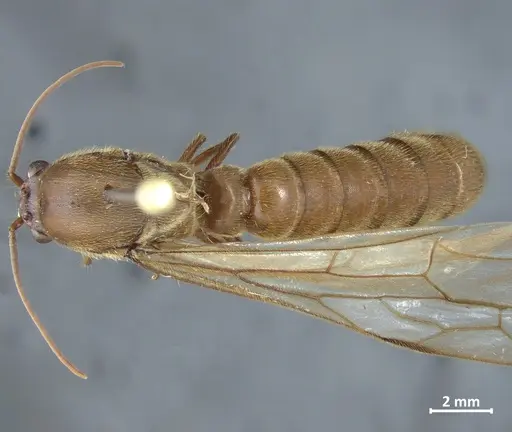
Literatür
Dağılım haritası yükleniyor...Ürünler yükleniyor...