
Myrmecina nitidiuscula
- Bilimsel Adı
- Myrmecina nitidiuscula
- Oymak (Tribe)
- Crematogastrini
- Alt Familya
- Myrmicinae
- Yazar (Tanımlayan)
- Satria & Yamane, 2019
- Dağılım
- 0 ülkede bulundu
Giriş
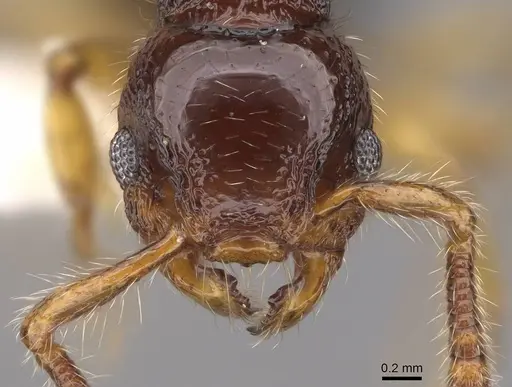
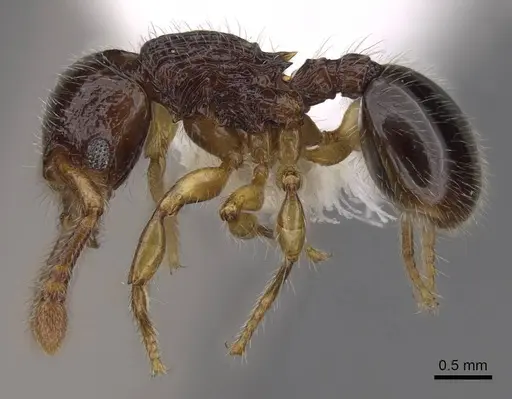
Myrmecina nitidiuscula is a newly described tiny ant species from Sumatra, Indonesia, belonging to the Myrmecina macrops complex . Workers are among the smallest ants you'll encounter - size data is limited, but they are roughly 2-3mm total length based on genus patterns . They have a distinctive appearance with a smooth, shiny head, a triangular propodeal spine with a very broad base, and unusually broad mid- and hind-tibiae . Their coloration is striking: a reddish-brown mesosoma contrasts with a blackish-brown head and gaster that has an orange tip, while the legs are yellowish brown . This species was discovered in leaf litter in secondary forest habitats in northern Sumatra . What makes this species interesting is its recent discovery and limited distribution - it's only known from Sumatra, making it a relatively uncommon find in the antkeeping hobby. As a member of the macrops complex, it represents a group of small, cryptic leaf-litter ants that are often overlooked but fascinating to observe .
Quick Summary
- Difficulty: Medium
- Origin & Habitat: Native to Sumatra, Indonesia. Found in leaf litter in secondary forest habitats at elevations ranging from 850m to over 1100m [1]. This is a tropical rainforest environment with high humidity and warm temperatures year-round.
- Colony Type: Colony structure is unconfirmed. Based on related Myrmecina species, likely single-queen colonies, though this has not been directly documented for this species.
- Size & Growth:
- Queen: ~2-3mm total length, inferred from Myrmecina genus patterns [1]
- Worker: ~2-3mm total length, inferred from Myrmecina genus patterns [1]
- Colony: Unknown, no colony size data exists for this species. Based on related small Myrmecina species, colonies likely remain small.
- Growth: Unknown, estimated as moderate based on genus patterns
- Development: 6-10 weeks estimated based on related Myrmecina species (Development timeline has not been directly studied. Estimates based on genus-level data for similar small Myrmicinae ants at tropical temperatures (24-28°C).)
- Antkeeping:
- Temperature: Keep at 24-28°C, this matches their tropical Sumatra origin. A gentle temperature gradient allows them to regulate. Room temperature may suffice if your home stays in the low-to-mid 20s Celsius.
- Humidity: High humidity is essential, think damp rainforest floor. Keep the nest substrate consistently moist but not waterlogged. Leaf litter species like this need humidity levels around 70-85%. Provide a water reservoir in your setup.
- Diapause: Unlikely, as a tropical species from near the equator, they probably do not require a winter dormancy period. However, slight seasonal slowing may occur during cooler months.
- Nesting: In captivity, they do well in naturalistic setups with moist substrate or in test tube setups with access to a humid forager space. They are leaf-litter foragers, so a setup with a thin layer of soil/leaf litter allows natural foraging behavior. Y-tong nests with small chambers also work well.
- Behavior: These are very small, cryptic ants that spend most of their time in the leaf litter layer. They are not aggressive and unlikely to sting, their tiny size makes them harmless to humans. Workers forage individually rather than in visible trails. Because of their minute size, escape prevention is critical, they can squeeze through remarkably small gaps. They are shy and will avoid disturbance. Activity level is moderate, you'll see workers moving about the foraging area, especially at night.
- Common Issues: tiny size means escapes are likely without fine mesh barriers and tight-fitting lids, high humidity requirements can lead to mold problems if ventilation is poor, slow colony growth may cause keepers to overfeed, leading to mold and colony loss, limited availability as a newly described species, may be difficult to acquire, no established captive breeding lines means wild-caught colonies may struggle with captivity
Housing and Setup
Because of their tiny size, Myrmecina nitidiuscula requires careful housing. A test tube setup works well for founding colonies, use a small test tube with a cotton ball providing water reservoir, placed in a larger container that maintains humidity. For established colonies, a naturalistic setup with a thin layer of moist substrate (a mix of soil and sand) topped with leaf litter mimics their natural leaf-litter habitat. You can also use a Y-tong nest with very small chambers scaled to their minute size. Whatever setup you choose, ensure excellent escape prevention, these ants are tiny enough to squeeze through gaps you wouldn't expect. Use fine mesh on any ventilation holes and ensure all connections are sealed. [1]
Feeding and Diet
In the wild, Myrmecina species are generalist foragers that collect small insects, honeydew, and other organic matter from the leaf litter layer. In captivity, offer small protein sources like fruit flies, pinhead crickets (killed or very small), and small mealworm pieces. They will likely accept sugar water or honey as well, though this should be offered in very small amounts on a tiny piece of cotton or sponge to prevent drowning. Feed small amounts every few days and remove any uneaten food within 24 hours to prevent mold. Because they are so small, even tiny prey items represent a substantial meal for them.
Temperature and Humidity
Being from tropical Sumatra, these ants need warm and humid conditions. Maintain temperatures between 24-28°C, this can be achieved with a heating cable on one side of the setup if your room is cooler. A temperature gradient allows the ants to choose their preferred spot. Humidity should be high, around 70-85%. Keep the substrate consistently moist but not standing with water. A water reservoir in the setup helps maintain humidity. Avoid placing the setup in direct sunlight or near air conditioning vents that could cause temperature swings. As a tropical species, they likely do not require any diapause or winter cooling period. [1]
Colony Development
This is a newly described species (2019), so detailed colony development data does not exist. Based on related Myrmecina species and their small size, expect relatively slow colony growth. The first workers (nanitics) will be very small and may take several weeks to appear after the queen lays eggs. Colonies will likely remain small, probably under 100 workers even at maturity. Be patient with these ants, their tiny size means each worker represents less colony strength than in larger species. Avoid disturbing the founding chamber during the initial weeks as this can cause the queen to abandon or eat her brood. [1]
Behavior and Observation
Myrmecina nitidiuscula is a cryptic, shy species that forages in the leaf litter layer. Workers are solitary foragers and won't form obvious trails like some ants do. They are not defensive and pose no threat to keepers, their tiny size means they cannot sting effectively, and they will flee rather than confront threats. You may observe them most actively during evening and night hours. Their smooth, shiny appearance makes them distinctive under magnification. Watching these tiny ants navigate their environment reveals the hidden complexity of forest floor ecosystems, they are constantly hunting small prey and foraging for honeydew among the leaf litter. [1]
Frequently Asked Questions
How long does it take for Myrmecina nitidiuscula to produce first workers?
The exact timeline is unconfirmed, but based on related Myrmecina species, expect 6-10 weeks from egg to worker at optimal temperatures (24-28°C). Being a tiny species, development may take longer than for larger ants.
Can I keep Myrmecina nitidiuscula in a test tube?
Yes, test tubes work well for this species. Use a small test tube with a water reservoir (cotton ball), and place it in a larger container to maintain humidity. Ensure the connection points are sealed, these tiny ants can escape through very small gaps.
What do Myrmecina nitidiuscula ants eat?
They are generalists that likely accept small insects (fruit flies, tiny crickets), honey, and sugar water. Offer small amounts of protein every few days and remove uneaten food promptly.
Do Myrmecina nitidiuscula ants sting?
Their tiny size means they cannot effectively sting humans. They are completely harmless and will flee from disturbance rather than defend.
Are Myrmecina nitidiuscula good for beginners?
They are moderate difficulty due to their tiny size and high humidity requirements. They require more careful setup than larger, more resilient species, but their peaceful nature makes them interesting to observe.
How big do Myrmecina nitidiuscula colonies get?
Colony size is unconfirmed, but based on related species, they likely reach under 100 workers. This is a small colony size compared to many common ant species.
Do Myrmecina nitidiuscula need hibernation?
No, as a tropical species from near the equator, they do not require a winter dormancy period. Maintain warm temperatures year-round.
Why are my Myrmecina nitidiuscula escaping?
Their tiny size allows them to squeeze through remarkably small gaps. Check all ventilation holes, lid seals, and connection points. Use fine mesh (at least 0.5mm) and seal any cracks with fluon or petroleum jelly.
When should I move my colony to a formicarium?
Wait until the colony has at least 20-30 workers and the test tube space is becoming cramped. For this small species, a naturalistic setup with moist substrate often works better than a traditional formicarium.
Can I keep multiple queens together?
This has not been documented for this species. Based on related Myrmecina, single-queen colonies are likely. Combining unrelated queens is not recommended without evidence they can coexist.
Report an Issue
The current care sheet is based fully on literature. See inconsistencies, or something that's incorrect? Please , it will be resolved after review from an admin. Contributing to the blogs tab also helps providing information, to make us be able to further improve the caresheets. Thank you for your support!
References

Bu bakım rehberi şu lisans altındadır: CC BY-SA 4.0 .
Topluluk Blogları
CASENT0922978
AntWeb'de Görüntüle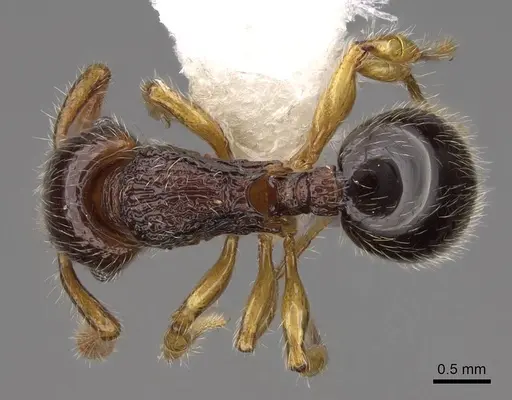
Literatür
Dağılım haritası yükleniyor...Ürünler yükleniyor...