
Mycetophylax daguerrei
- Bilimsel Adı
- Mycetophylax daguerrei
- Oymak (Tribe)
- Attini
- Alt Familya
- Myrmicinae
- Yazar (Tanımlayan)
- Santschi, 1933
- Dağılım
- 0 ülkede bulundu
Giriş
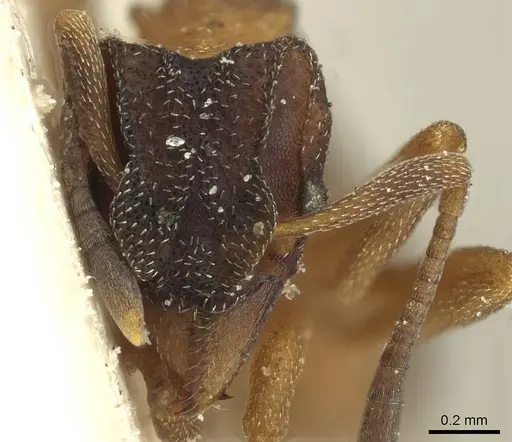
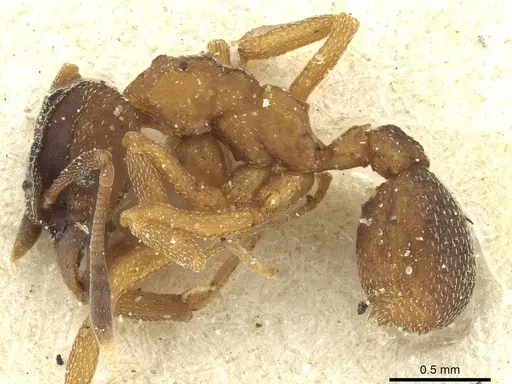
Mycetophylax daguerrei is a tiny fungus-growing ant belonging to the tribe Attini. Workers measure approximately 3.4mm in total length and have a medium brown coloration with darker infuscation on the head, postpetiole, and gaster. They feature distinctive morphological traits including long scapes that extend beyond the occipital corners, slender hind femora, and a finely reticulate-punctate body surface covered with whitish decumbent hairs. This species was originally described as Cyphomyrmex daguerrei by Santschi in 1933 and was later transferred to the genus Mycetophylax in 2017. The species is known from Argentina and southern Brazil, making it one of the more southern Attini species . As a fungus-growing ant, this species cultivates fungus for food - a behavior shared with leafcutter ants. However, unlike the highly derived Atta and Acromyrmex species, smaller Attini like Mycetophylax typically cultivate fungus on small substrate fragments rather than cutting fresh leaves. The biology of this specific species remains essentially undocumented - AntWiki notes that nothing is known about the biology of this species .
Quick Summary
- Difficulty: Expert
- Origin & Habitat: Native to the Neotropical region, specifically Argentina (Buenos Aires province) and southern Brazil (Rio Grande do Sul). Found in the understory of Pinus elliottii forests, including post-fire environments [2].
- Colony Type: Colony structure is unconfirmed. As an Attini species, related species typically have single-queen colonies, but this has not been documented for M. daguerrei specifically.
- Size & Growth:
- Queen: Undescribed, queen measurements not available in literature
- Worker: 3.4mm total length [1]
- Colony: Unknown, no colony size data available
- Growth: Unknown, no development data exists for this species
- Development: Unconfirmed, no direct development data exists for this species. (Development timeline has not been studied.)
- Antkeeping:
- Temperature: Keep at warm tropical conditions, aim for 24-28°C based on the species' Neotropical origin. Use a heating cable on one side of the nest to create a gentle gradient. Related Attini species from similar latitudes require stable warm temperatures [2].
- Humidity: Maintain moderate to high humidity, fungus-growing ants need conditions that support their fungal culture. Keep nest substrate consistently moist but not waterlogged. The substrate should feel damp to the touch with some slightly drier areas for the ants to regulate moisture themselves.
- Diapause: Unknown, no data on overwintering requirements. Given the southern Brazil/Argentina range, the species may experience cooler winters, but specific requirements are unconfirmed.
- Nesting: In nature, Attini species typically nest in soil or rotting wood. For captivity, a Y-tong (AAC) nest or plaster nest works well. Provide a chamber filled with moist substrate (soil mix with some organic material) where the ants can establish their fungus garden. The nest should have narrow chambers scaled to their small size.
- Behavior: This species is poorly documented in captivity. As a fungus-growing ant, they will establish a fungal culture that serves as their primary food source. They are likely docile and non-aggressive, typical of smaller Attini. Their tiny size (3.4mm) means escape prevention must be excellent, use fine mesh and tight-fitting barriers. Foraging activity is likely crepuscular or nocturnal. Workers likely use chemical trails rather than tandem running to recruit nestmates to food sources.
- Common Issues: no biological data exists, AntWiki notes that nothing is known about the biology of this species [3]., fungus cultivation is complex, maintaining healthy fungal culture requires specific conditions and substrate that may be difficult to replicate, escape risk due to tiny size, workers are only 3.4mm and can squeeze through standard barriers, no established captive breeding protocols, wild-caught colonies may have high mortality, temperature and humidity requirements are inferred, not confirmed, trial and error may be necessary
Fungus Farming: The Key to Their Care
Mycetophylax daguerrei belongs to the tribe Attini, fungus-growing ants that cultivate symbiotic fungi as their primary food source. Unlike leafcutter ants (Atta, Acromyrmex) that cut fresh foliage to feed their fungus, smaller Attini like this species typically collect and incorporate small organic fragments (dead leaves, plant material, insect fragments) into their fungal garden. This makes their care fundamentally different from most ant species, you are essentially keeping two organisms: the ants and their fungus.
In captivity, you will need to provide suitable substrate for fungus cultivation. A mixture of moist soil with finely shredded organic material (dried leaves, cardboard, or plant matter) works as a starter substrate. The ants will establish and maintain the fungal culture themselves. The fungus appears as a white, cottony growth that the ants tend carefully. This fungus is the ants' sole food source, they do not typically hunt or scavenge like other ants. Never allow the fungal culture to dry out or become waterlogged.
The complete lack of biological data for this specific species means keeper experimentation will be essential. Start with conditions that work for related small Attini and adjust based on colony behavior. [2]
Housing and Nest Setup
Given this species' small size and fungus-farming requirements, a Y-tong (AAC) nest or plaster formicarium works best. The nest should have small, tight chambers scaled to the 3.4mm worker size. Provide a moisture reservoir or regular misting to maintain humidity, the fungal culture needs consistent damp conditions.
The outworld should contain a small dish of water for humidity and a feeding area for organic substrate. Unlike typical ants, these ants need access to plant material to feed their fungus. Offer small amounts of dried leaf fragments, shredded paper, or organic matter periodically.
Escape prevention is critical, these tiny ants can squeeze through standard barriers. Use fine mesh on all openings and consider applying fluon to the rim of the nest. Check for gaps around water tubes and feeding dishes. [1]
Feeding and Nutrition
This is perhaps the most challenging aspect of keeping M. daguerrei. As fungus farmers, they derive nutrition exclusively from their fungal culture, they do not eat sugar, honey, or typical ant protein sources. The ants feed their fungus organic material, and the fungus produces special structures that the ants consume.
In captivity, provide small amounts of organic substrate: finely shredded dried leaves, grass clippings, small pieces of cardboard, or other plant material. This mimics what they would collect in nature. Remove any uneaten plant material after a few days to prevent mold.
The fungal garden is sensitive to contamination, avoid introducing mold or pathogens. Use clean, dried organic material and replace it regularly.
Temperature and Seasonal Care
As a Neotropical species from Argentina and southern Brazil, M. daguerrei requires warm conditions. Keep the nest at 24-28°C, with a slight gradient allowing the ants to choose their preferred temperature. A heating cable on one side of the nest can provide this gradient.
The species has been recorded in Santa Maria, Brazil (December 2008, November 2009) and Argentina, suggesting it tolerates seasonal variation. However, no specific data exists on overwintering requirements. A reasonable approach is to reduce temperatures during winter months, simulating their natural seasonal cycle. Monitor colony activity, if they remain active, maintain stable warmth year-round.
Avoid temperature drops below 15°C or sudden temperature changes, as the fungus culture is sensitive to cold and disruption. [2]
Acquiring This Species
Mycetophylax daguerrei is extremely rare in the antkeeping hobby. There are no established captive breeding protocols, and colonies are not commercially available. The only way to obtain this species would be through wild collection in its native range (Argentina or southern Brazil), which requires appropriate collecting permits.
If you do acquire wild-caught specimens, expect high mortality during the transition to captivity. Fungus-farming ants are notoriously difficult to establish in captivity, and the lack of any biological data makes this species particularly challenging. Consider starting with more documented Attini species before attempting this species.
Never release this species outside its native range, it is not established in captivity and could become invasive if introduced to new environments. [1][2]
Frequently Asked Questions
How do I keep Mycetophylax daguerrei ants?
This is an expert-level species due to lack of biological data. You will need a Y-tong or plaster nest with small chambers, warm temperatures (24-28°C), and high humidity. Most critically, you must provide organic substrate for the ants to cultivate their fungal food source. Expect significant trial and error.
What do Mycetophylax daguerrei eat?
As fungus-growing ants, they do not eat typical ant foods. They cultivate fungus gardens and feed the fungus organic material (dried leaves, plant matter, cardboard). The ants consume special fungal structures. They do not eat sugar, honey, or protein prey.
How long does it take for Mycetophylax daguerrei to develop from egg to worker?
This is unconfirmed, no development data exists for this species.
Can I keep multiple queens of Mycetophylax daguerrei together?
Unknown, colony structure has not been documented for this species. Related Attini are typically single-queen, but polygyny has not been studied in M. daguerrei. Do not attempt combining unrelated queens without documented success.
Is Mycetophylax daguerrei a good species for beginners?
No, this species is not recommended for beginners. There is essentially no biological data available, making care speculative. The fungus-farming requirement adds significant complexity. Start with more documented species like Lasius, Camponotus, or even other Attini with established care protocols.
How big do Mycetophylax daguerrei colonies get?
Unknown, no colony size data exists for this species. Based on related small Attini, colonies likely reach dozens to a few hundred workers, not the massive colonies seen in leafcutter ants.
Do Mycetophylax daguerrei need hibernation?
Unknown, no overwintering data exists. Given the southern Brazil/Argentina range, a reduced temperature period may be beneficial, but this is unconfirmed.
Where does Mycetophylax daguerrei live?
This species is native to the Neotropical region, specifically Argentina (Buenos Aires province) and southern Brazil (Rio Grande do Sul). It has been found in Pinus forest understory, including post-fire environments.
Why is there no care information for Mycetophylax daguerrei?
This species is one of the least studied Attini ants. Scientific literature focuses on basic taxonomy (description, distribution), not biology. AntWiki explicitly notes that nothing is known about the biology of this species. This makes them an expert-only species for keepers willing to experiment.
Report an Issue
The current care sheet is based fully on literature. See inconsistencies, or something that's incorrect? Please , it will be resolved after review from an admin. Contributing to the blogs tab also helps providing information, to make us be able to further improve the caresheets. Thank you for your support!
References

Bu bakım rehberi şu lisans altındadır: CC BY-SA 4.0 .
Topluluk Blogları
CASENT0912500
AntWeb'de Görüntüle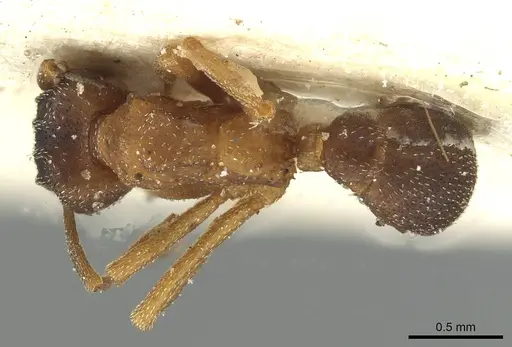
Literatür
Dağılım haritası yükleniyor...Ürünler yükleniyor...