
Monomorium subdenticorne
- Bilimsel Adı
- Monomorium subdenticorne
- Oymak (Tribe)
- Solenopsidini
- Alt Familya
- Myrmicinae
- Yazar (Tanımlayan)
- Collingwood & Agosti, 1996
- Dağılım
- 0 ülkede bulundu
Giriş
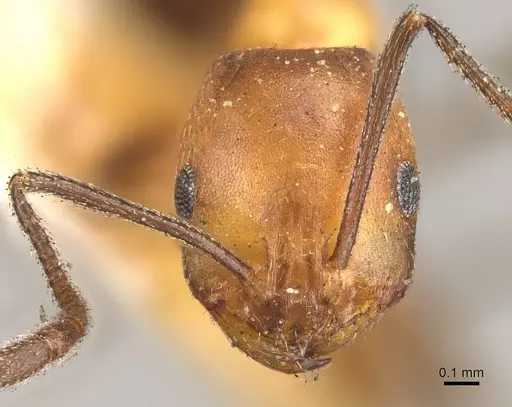
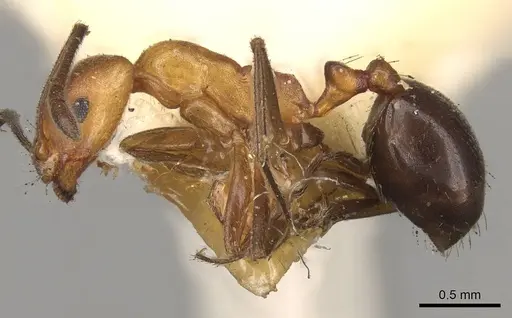
Monomorium subdenticorne is a small Myrmicinae ant native to the Arabian Peninsula, specifically found in Yemen and Saudi Arabia's Asir Province. Workers measure about 3.6mm in total length, with a pale brownish-red head, alitrunk, and nodes contrasting against a dark gaster. The species gets its name from the distinctive dentiform (tooth-like) propodeal bosses on its rear section - a key identification feature that separates it from similar species like Monomorium nitidiventre. The head is relatively broad with distinctly curved sides and occipital corners, and the body has dense reticulopunctate sculpture giving it a duller appearance compared to related species . This species was first collected from Yemen in 1991 and later found in Saudi Arabia's high-elevation Asir region (around 2,179m), indicating it can adapt to varied altitudes within its range. One collection was made near a river in a valley, suggesting a preference for areas with access to water . As a member of the Salomonis species group within Monomorium, this ant represents the diversity of small, ground-nesting ants found across the Afrotropical and Arabian regions.
Quick Summary
- Difficulty: Unknown, no captive husbandry data available
- Origin & Habitat: Yemen and Saudi Arabia (Asir Province). Found at high elevation (~2,179m) in one collection near a river in a valley [1][2].
- Colony Type: Unconfirmed colony structure. Most Monomorium species are monogyne (single-queen colonies), but this specific species has not been studied [1].
- Size & Growth:
- Antkeeping:
- Temperature: Likely prefers warm conditions based on Arabian origin, but specific requirements are unconfirmed. Start around 26°C and observe colony activity.
- Humidity: Likely prefers moderate conditions given valley/river collection data. Keep nest substrate lightly moist, not waterlogged.
- Diapause: Unknown, Arabian species may have reduced activity periods rather than true hibernation.
- Nesting: Natural nesting behavior unconfirmed. Most Monomorium nest in soil or under stones. A test tube setup or Y-tong nest with moist substrate would be a reasonable starting point.
- Behavior: Behavior is unstudied in captivity. Based on genus patterns, these are likely ground-nesting ants that forage for small insects and honeydew. They are small ants with a sting capability, unlikely to pose any danger to keepers. Escape prevention is important due to their small size (3.6mm workers can fit through very small gaps).
- Common Issues: no captive husbandry data exists, all care recommendations are estimates, small size means escape prevention must be excellent, use fine mesh barriers, high elevation origin suggests they may prefer cooler conditions than typical tropical ants, limited availability in the antkeeping hobby means experienced keepers are few
Identification and Distinguishing Features
Monomorium subdenticorne workers reach about 3.6mm in total length, making them small but visible ants. The most distinctive feature is the propodeum (the section behind the mesonotum) which has two blunt, tooth-like bosses that angle upward, this is where the species name 'subdenticorne' comes from (meaning 'somewhat horned'). The head is broad with distinctly curved sides and visible occipital corners at the back. The body coloration is distinctive: the head, alitrunk (middle section), and nodes are pale brownish-red, while the gaster (abdomen) is noticeably darker. The body surface has dense reticulopunctate sculpture giving it a dull, textured appearance rather than being shiny. This species can be distinguished from the similar Monomorium nitidiventre by its dentiform propodeum and duller color, and from Monomorium subdentatum by its lighter color and broader head [1].
Natural Distribution and Habitat
This species was originally described from Yemen and has more recently been collected from Saudi Arabia's Asir Province at Ahad Refedah (coordinates 18.134°N,43.001°E) at an elevation of 2,179 meters. The collection data indicates a preference for valley habitats near rivers, suggesting they thrive in areas with access to moisture. The high elevation of the Saudi Arabia collection is notable, at nearly 2,200m, this suggests the species can tolerate cooler temperatures than typical lowland tropical ants. The species is considered part of the Afrotropical fauna that extends into the Arabian Peninsula [1][2].
Taxonomy and Relationships
Monomorium subdenticorne belongs to the Salomonis species group within the genus Monomorium, which is part of the tribe Solenopsidini in the subfamily Myrmicinae. The genus Monomorium contains many small ants commonly known as 'miniature ants' or 'pyramid ants' in some regions. This species was described in 1996 by Collingwood and Agosti based on specimens collected in Yemen. The type material was collected from multiple locations in Yemen including Al-Mahwit, Taiz-Mafhaq, Wadi Bani, and Mabar between 1991 and 1993. The species remains poorly studied with limited published biological data [1][2].
Keeping Monomorium subdenticorne - Care Recommendations
Since no captive husbandry data exists for this specific species, all recommendations are estimates based on typical Monomorium care and the species' collection data. For housing, a test tube setup works well for founding colonies, transitioning to a Y-tong or plaster nest as the colony grows. Temperature should be warm (around 26°C) but the high-elevation collection suggests they may tolerate slightly cooler conditions, consider a gradient allowing workers to choose their preferred temperature. Humidity should be moderate, the valley/river collection data suggests they prefer areas with some moisture, so keep substrate lightly moist. Feeding should include small protein sources (fruit flies, small crickets, mealworm pieces) and sugar water or honey as an energy source. Due to their small size (3.6mm), excellent escape prevention with fine mesh barriers is essential. Colony size is unknown but likely modest based on related species.
Growth and Development Expectations
No specific development timeline data exists for Monomorium subdenticorne. Based on typical Monomorium genus patterns, founding may be claustral where the queen seals herself in a chamber and raises the first brood alone on stored fat reserves. The first workers (nanitics) should emerge in several weeks under warm conditions. Initial colony growth will be slow as the queen can only lay a limited number of eggs while tending the first brood alone. Once the first workers emerge, colony growth typically accelerates as more foragers can bring back food. Maximum colony size is unknown but likely in the hundreds rather than thousands based on typical Monomorium colony sizes.
Frequently Asked Questions
How long does it take for Monomorium subdenticorne to produce first workers?
This is unconfirmed for this specific species. Development time likely follows typical Monomorium patterns at warm temperatures (around 26°C), but exact timing is unknown.
What do Monomorium subdenticorne ants eat?
Diet is unconfirmed for this species, but based on typical Monomorium feeding behavior, they likely accept small protein sources (fruit flies, small insects, mealworm pieces) and sugar sources (honey water, sugar water). Offer protein regularly and keep sugar water available constantly.
What temperature do Monomorium subdenticorne ants need?
Specific requirements are unconfirmed. Based on their Arabian/Yemeni origin and high-elevation collection (2,179m in Saudi Arabia), they likely prefer warm but not extreme temperatures. Start around 26°C and provide a temperature gradient so workers can self-regulate. They may tolerate slightly cooler conditions than typical tropical ants [1].
How big do Monomorium subdenticorne colonies get?
Maximum colony size is unknown. Based on typical Monomorium species, colonies likely reach several hundred workers. The high-elevation origin and valley habitat may indicate slower growth rates than lowland tropical species.
Can I keep multiple Monomorium subdenticorne queens together?
Colony structure is unconfirmed for this species. Most Monomorium are monogyne (single-queen), but polygyny has been documented in some related species. Without specific data, it is not recommended to combine unrelated queens as fighting is likely.
What type of nest should I use for Monomorium subdenticorne?
Natural nesting behavior is unconfirmed. Based on typical Monomorium preferences, a test tube setup works well for founding colonies. For established colonies, a Y-tong or plaster nest with moist substrate is appropriate. Their small size means chambers and passages should be appropriately scaled.
Do Monomorium subdenticorne ants need hibernation?
Diapause requirements are unknown. The high-elevation origin (2,179m in Saudi Arabia) suggests they may experience seasonal temperature variations. Consider providing a cool period during winter months, but this is an estimate rather than a confirmed requirement [1].
Why is my Monomorium subdenticorne colony dying?
Without captive husbandry data, specific failure causes are unknown. However, common issues for poorly-studied species include: temperature stress (too hot or too cold), humidity problems (too dry or waterlogged), insufficient protein leading to starvation, and escape due to small size. Ensure excellent escape prevention and provide varied foods to identify what your colony accepts.
Is Monomorium subdenticorne a good species for beginners?
This species is not recommended for beginners. No captive husbandry data exists, meaning all care is based on estimates from related species. The species is also rarely available in the antkeeping hobby. Keepers interested in this species should have experience with other Monomorium or small Myrmicinae species first.
Report an Issue
The current care sheet is based fully on literature. See inconsistencies, or something that's incorrect? Please , it will be resolved after review from an admin. Contributing to the blogs tab also helps providing information, to make us be able to further improve the caresheets. Thank you for your support!
References

Bu bakım rehberi şu lisans altındadır: CC BY-SA 4.0 .
Topluluk Blogları
CASENT0914318
AntWeb'de Görüntüle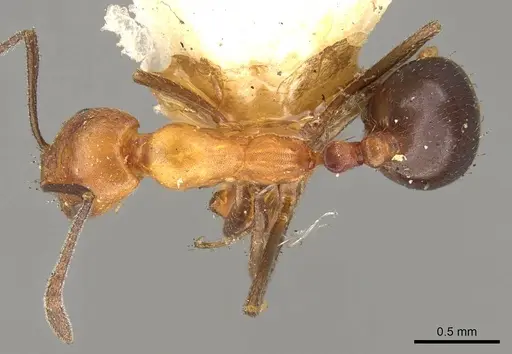
Literatür
Dağılım haritası yükleniyor...Ürünler yükleniyor...