
Monomorium dirie
- Bilimsel Adı
- Monomorium dirie
- Oymak (Tribe)
- Solenopsidini
- Alt Familya
- Myrmicinae
- Yazar (Tanımlayan)
- Collingwood & Agosti, 1996
- Dağılım
- 0 ülkede bulundu
Giriş
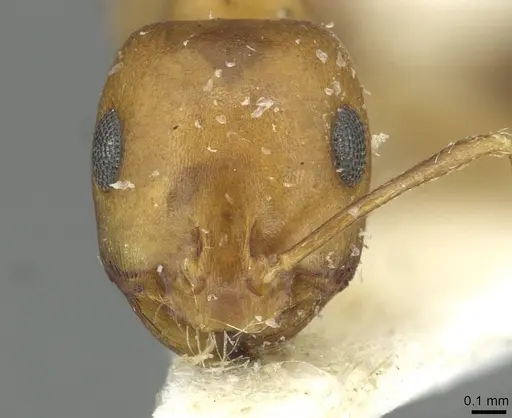
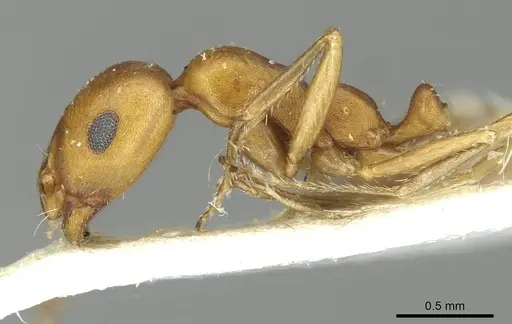
Monomorium dirie is a small desert ant species endemic to Oman, belonging to the Salomonis species group. Workers are tiny ants that were formally described in 1996 from specimens collected in the Wahiba Sands region of southeastern Oman. The species can be distinguished from the closely related M. areniphilum by its entirely bare ventral head surface and flatter alitrunk profile with a more shallow mesopropodeal furrow. These ants inhabit arid desert environments where they nest in sandy substrates .
Quick Summary
- Difficulty: Medium
- Origin & Habitat: Endemic to Oman, found specifically in the Wahiba Sands, Wadi Diri, and Minitirib regions in the southeastern part of the country [1][2]. This is a desert environment with sandy soils and extremely hot, dry conditions.
- Colony Type: Colony structure is unconfirmed for this species.
- Size & Growth:
- Queen: Size data unavailable, no queen specimens have been described in the scientific literature
- Worker: Size data unavailable, only head measurements are documented (head width 0.82mm, head length 0.95mm) which represent head size only, not total body length
- Colony: Size data unavailable, no colony size data is available
- Growth: Unknown, no development data available for this species
- Development: Unknown, no direct measurements available for this species (Development timeline is unconfirmed.)
- Antkeeping:
- Temperature: Keep at 26-30°C, mimicking the hot desert environment of Oman. A heating cable on one side of the nest can help maintain these temperatures.
- Humidity: Keep relatively dry, these are desert ants adapted to arid conditions. Provide a small water source but avoid high humidity. The nest substrate should be mostly dry with minimal moisture.
- Diapause: Likely minimal or no diapause required, Oman has a hot climate year-round with minimal seasonal temperature variation.
- Nesting: Based on their desert habitat and collection data from sandy areas, they likely prefer dry, sandy substrates. A Y-tong nest with sand-filled chambers works well. Avoid overly moist or humid nest conditions.
- Behavior: Behavior is not well documented. Monomorium ants belong to the subfamily Myrmicinae and tribe Solenopsidini, which have a sting mechanism using piperidine alkaloids for defense. Workers are very small, so escape prevention is important. They are generalist foragers.
- Common Issues: desert species are sensitive to excess moisture, keep nesting area dry to prevent mold and colony loss, small worker size means escape prevention must be excellent, use fine mesh and tight-fitting lids, limited data means care is based on related species, monitor colony behavior and adjust conditions, no documented colony size or development data makes growth expectations uncertain, heat requirements may conflict with room temperature in cooler climates, supplemental heating likely needed
Natural History and Distribution
Monomorium dirie is endemic to Oman, meaning it is found nowhere else on Earth naturally. The species was described in 1996 by Collingwood and Agosti based on worker specimens collected from three locations in southeastern Oman: Wadi Diri (the type locality, collected in May 1984), Wahiba Sands (collected December 1985), and Minitirib (collected March 1986) [1][2]. The Wahiba Sands, also known as the Sharqiya Sands, is a vast area of sand dunes in eastern Oman, creating an extreme desert environment with high temperatures and very low rainfall. This habitat type suggests the species is well-adapted to arid, sandy conditions and likely nests directly in the sand or under stones in sandy areas.
Identification and Distinguishing Features
Workers of Monomorium dirie are small. The species falls within the general description of the closely related M. areniphilum but can be distinguished by two key features: the ventral surface of the head is entirely bare of hairs (unlike M. areniphilum which has hairs there), and the alitrunk profile is flatter with a more shallow mesopropodeal furrow [2]. The posterior margin of the head is concave or linear when viewed from the front. These are subtle identification features that require examination under a microscope.
Housing and Nesting
Based on the species' desert origin from sandy habitats in Oman, provide a dry nesting environment. A Y-tong nest with sand-filled chambers works well, or a naturalistic setup with a sandy substrate. Keep the nest substantially drier than most tropical ant species, these are adapted to arid conditions and will likely suffer if kept too moist. The nest should have a small water chamber or cotton ball for drinking water, but the actual nesting chambers should remain dry. Room temperature alone may be insufficient, use a heating cable on one side of the nest to maintain temperatures around 26-30°C. Ensure excellent escape prevention since workers are very small.
Feeding and Diet
The specific diet of M. dirie has not been documented, but Monomorium species are typically generalist foragers that consume both sugary substances (honeydew from aphids, nectar) and protein sources (small insects). Based on related desert Monomorium species, they likely accept sugar water or honey, and small protein items like fruit flies, pinhead crickets, or other tiny arthropods. Feed a varied diet and remove uneaten food promptly to prevent mold in the dry nest environment.
Temperature and Seasonal Care
As a desert species from Oman, M. dirie requires warm conditions. Maintain nest temperatures between 26-30°C, with a slight gradient allowing workers to self-regulate. A heating cable placed on top of the nest works well. Regarding diapause, Oman has a hot climate year-round with minimal winter frost, so the species likely does not require a true hibernation period. However, slight seasonal cooling during winter months to around 18-22°C may be appropriate and natural for the ants.
Frequently Asked Questions
How long does it take for Monomorium dirie to produce first workers?
The egg-to-worker development timeline is unconfirmed for this species as no scientific study has documented it.
What temperature is best for keeping Monomorium dirie?
Keep nest temperatures between 26-30°C to mimic their hot desert habitat in Oman. Use a heating cable on one side of the nest to create a gentle gradient.
Do Monomorium dirie ants need hibernation?
Hibernation is likely not required. Oman maintains hot temperatures year-round with minimal seasonal variation. A slight cooling during winter months (to around 18-22°C) may be appropriate, but a true diapause or hibernation period is probably unnecessary for this desert species.
How big do Monomorium dirie colonies get?
Colony size is unknown, no scientific data exists on maximum colony size for this species.
What do Monomorium dirie ants eat?
Specific diet is unconfirmed, but Monomorium species are generalists. Offer sugar water or honey as a constant energy source, plus small protein items like fruit flies, small crickets, or other tiny arthropods 2-3 times per week. Remove uneaten food promptly to prevent mold.
Are Monomorium dirie good for beginners?
This species is rated as Medium difficulty. While not the most challenging ant species, the limited available care information and specific temperature/humidity requirements (hot and dry) make it better suited for keepers with some experience. The small worker size also requires excellent escape prevention.
Can I keep multiple Monomorium dirie queens together?
Colony structure is unconfirmed for this species. Combining unrelated queens is not recommended as it has not been documented and could result in aggression.
What type of nest should I use for Monomorium dirie?
Use a dry nest setup, a Y-tong nest with sand-filled chambers works well. Avoid overly humid or moist conditions. These are desert ants adapted to arid environments, so keep the nesting area substantially drier than tropical species.
Why is my Monomorium dirie colony dying?
The most common issues are likely excess moisture (these are desert ants that prefer dry conditions), insufficient heat (they need 26-30°C), or escape of the tiny workers. Ensure the nest is dry, temperatures are adequate, and escape prevention is excellent.
Report an Issue
The current care sheet is based fully on literature. See inconsistencies, or something that's incorrect? Please , it will be resolved after review from an admin. Contributing to the blogs tab also helps providing information, to make us be able to further improve the caresheets. Thank you for your support!
References

Bu bakım rehberi şu lisans altındadır: CC BY-SA 4.0 .
Topluluk Blogları
CASENT0913571
AntWeb'de Görüntüle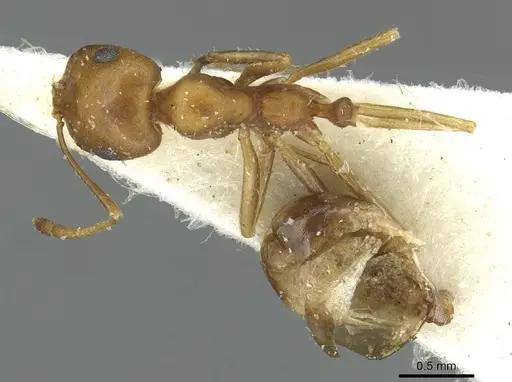
Literatür
Dağılım haritası yükleniyor...Ürünler yükleniyor...