
Messor ceresis
- Bilimsel Adı
- Messor ceresis
- Oymak (Tribe)
- Stenammini
- Alt Familya
- Myrmicinae
- Yazar (Tanımlayan)
- Santschi, 1934
- Dağılım
- 0 ülkede bulundu
Giriş
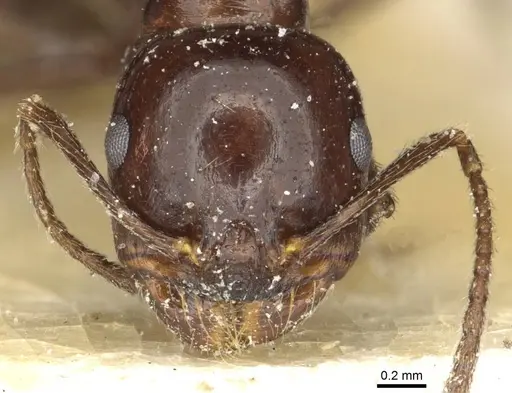
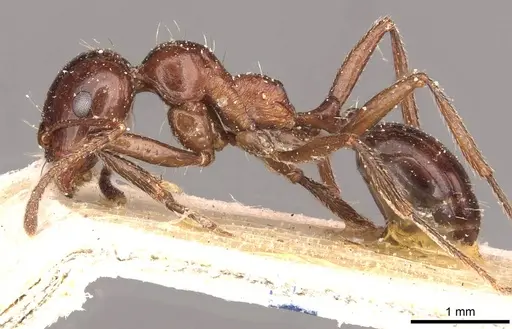
Messor ceresis is a small harvester ant native to the Middle East, found in Lebanon, Iran, and Saudi Arabia . Workers measure 6.8-7 mm in total body length and have a distinctive red head and alitrunk contrasting with a darker gaster. They have coarse sculpture, a strongly developed psammophore for carrying seeds, and an angled propodeum . This species resembles Messor minor but can be distinguished by its coarser sculpture and slightly larger eyes . As a harvester ant, Messor ceresis collects and stores seeds, a behavior that makes them interesting to observe. They inhabit parkland ground in moderate rainfall areas , suggesting a preference for open habitats with some vegetation.
Quick Summary
- Difficulty: Medium
- Origin & Habitat: Native to the Middle East, found in Lebanon (type locality), Iran, and Saudi Arabia. They live in parkland ground in moderate rainfall areas [3][2].
- Colony Type: Based on Messor genus patterns, likely monogyne (single queen colonies), but not directly confirmed for this species.
- Size & Growth:
- Queen: Size data unavailable, no total length measurements for queens in the research context.
- Worker: 6.8-7 mm total length [1]
- Colony: Unconfirmed, no specific data available on colony size.
- Growth: Moderate, inferred from Messor genus patterns.
- Development: Estimated 6-8 weeks at optimal temperature, inferred from typical Messor species behavior [4]. (Development time may vary with temperature, no specific data available.)
- Antkeeping:
- Temperature: Keep at 22-26°C, inferred from their distribution in warm Mediterranean and arid regions. A temperature gradient is beneficial.
- Humidity: Keep nest substrate dry to slightly moist, they inhabit moderate rainfall areas but are adapted to drier conditions [3]. Avoid waterlogged setups.
- Diapause: Unknown, no specific data available, but based on distribution in temperate regions, winter diapause may be required.
- Nesting: Inferred from habitat: they nest in soil in open areas. In captivity, use dry setups like test tubes for founding or plaster nests for established colonies.
- Behavior: Workers are monomorphic (similar in size) [4] and non-aggressive, focusing on seed foraging. They are moderate escape risks due to their size, so standard prevention is needed.
- Common Issues: dry conditions are essential, too much humidity can harm colonies [3], seed storage behavior requires a reliable seed food source, slow founding phase, queens may take months to raise first workers, patience is needed, diapause requirements are unconfirmed, experimentation may be necessary
Nest Preferences and Housing
In the wild, Messor ceresis nests in soil in open parkland areas with moderate vegetation [3]. They prefer dry to moderately humid conditions. For captive care, start colonies in a test tube setup with a water reservoir. Once established, move to a dry nest like plaster or naturalistic setups. Avoid acrylic nests that retain moisture. The psammophore is adapted for seed carrying, so provide seed-sized materials [1].
Feeding and Diet
As harvester ants, Messor ceresis primarily eats seeds. Offer small seeds like grass seed or millet. They also need protein from insects like fruit flies or mealworms occasionally. Seeds should be the main food, with protein offered 1-2 times per week. Remove uneaten seeds to prevent mold [4].
Temperature and Seasonal Care
Keep temperatures at 22-26°C, with a gradient for workers to choose. No specific diapause data exists, but based on distribution, a winter rest at 10-15°C for 2-3 months may be beneficial. Reduce feeding during this period [2][3].
Behavior and Colony Dynamics
Messor ceresis is a monomorphic harvester ant focused on seed collection [4]. Colonies are likely monogyne but unconfirmed. Workers are non-aggressive but will defend the nest. Escape risk is moderate due to size [1].
Frequently Asked Questions
How long does it take for Messor ceresis to raise first workers?
Estimated 6-8 weeks at optimal temperature, inferred from Messor genus patterns [4]. Founding can be slow, so patience is needed.
What do Messor ceresis ants eat?
They are primarily seed-eaters, offering small seeds like grass seed or millet. Protein from insects should be provided occasionally [4].
Do Messor ceresis ants need hibernation?
Unknown, no specific data, but based on distribution, winter diapause at 10-15°C for 2-3 months may be required [2].
What humidity do Messor ceresis ants need?
Keep them relatively dry, the nest substrate should be dry to slightly moist, avoiding waterlogged conditions [3].
Are Messor ceresis good for beginners?
Medium difficulty, challenges include providing dry conditions and patience during founding. Not recommended for absolute beginners.
How big do Messor ceresis colonies get?
Colony size is unconfirmed, no specific data available.
Can I keep multiple Messor ceresis queens together?
Not recommended, social structure is unconfirmed, but Messor species are typically monogyne. Combining queens may lead to conflict.
What temperature is ideal for Messor ceresis?
Keep at 22-26°C with a gradient, inferred from their warm habitat [4].
Do Messor ceresis ants sting?
Messor species have stingers but are not aggressive, they focus on seed collection [4].
When should I move Messor ceresis to a formicarium?
Keep in a test tube setup until the colony is established, then move to a dry nest like plaster. Avoid acrylic nests that retain moisture.
Report an Issue
The current care sheet is based fully on literature. See inconsistencies, or something that's incorrect? Please , it will be resolved after review from an admin. Contributing to the blogs tab also helps providing information, to make us be able to further improve the caresheets. Thank you for your support!
References

Bu bakım rehberi şu lisans altındadır: CC BY-SA 4.0 .
Topluluk Blogları
CASENT0913172
AntWeb'de Görüntüle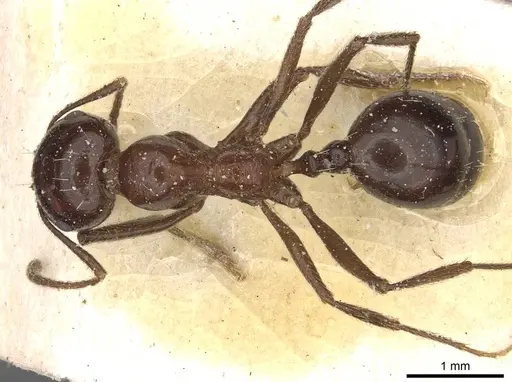
Literatür
Dağılım haritası yükleniyor...Ürünler yükleniyor...