
Loboponera obeliscata
- Bilimsel Adı
- Loboponera obeliscata
- Oymak (Tribe)
- Ponerini
- Alt Familya
- Ponerinae
- Yazar (Tanımlayan)
- Bolton & Brown, 2002
- Dağılım
- 0 ülkede bulundu
Giriş
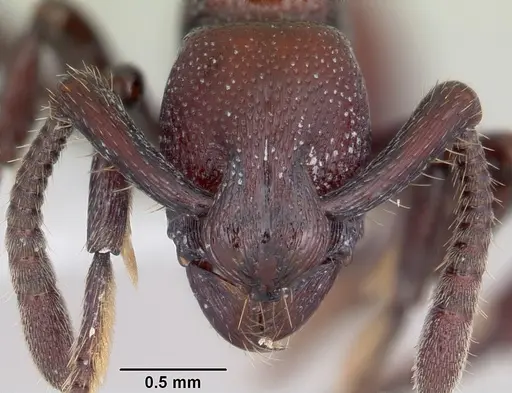
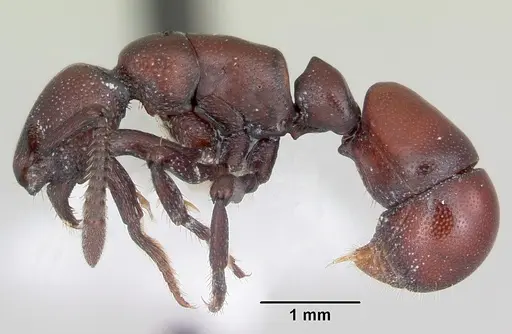
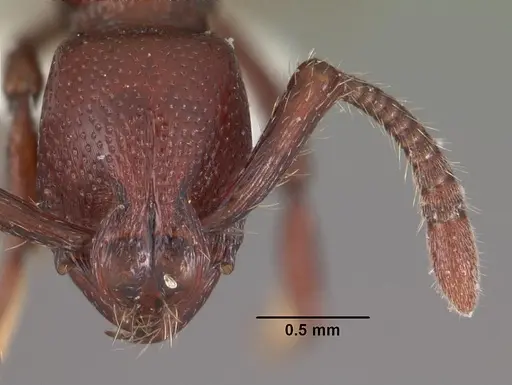
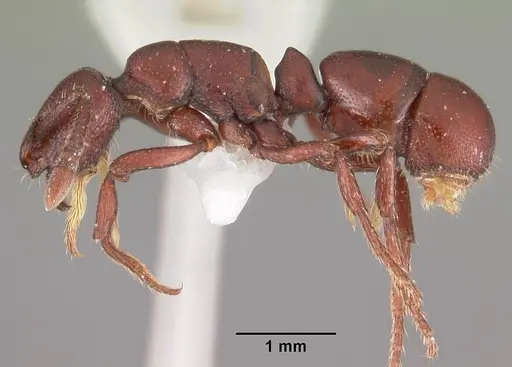
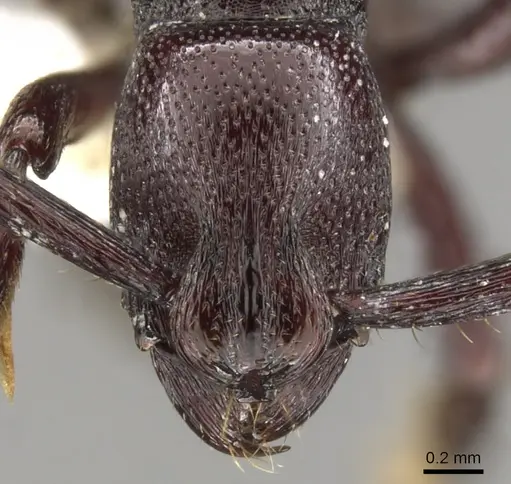
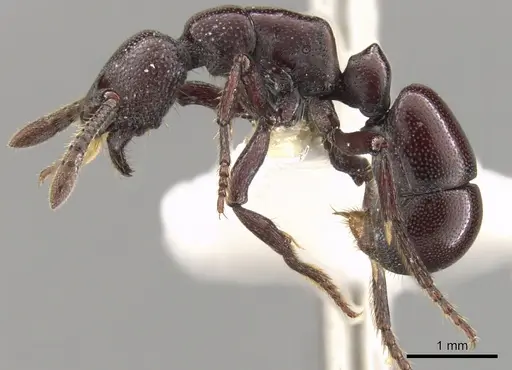
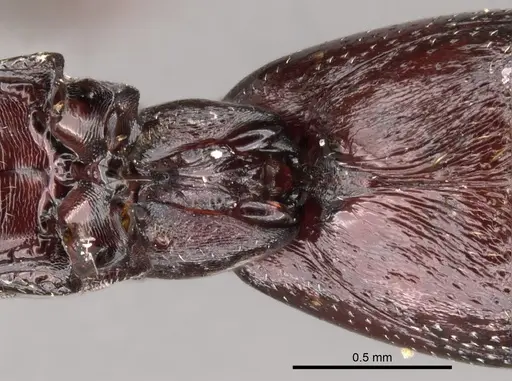
Loboponera obeliscata is a small Ponerinae ant native to West African rainforests in Ghana, Ivory Coast, and Gabon . Workers measure about 5.6-5.7mm in total length and have a distinctive high, subpyramidal petiole node that sets them apart from relatives . Their eyes are tiny and hard to spot, barely larger than the surrounding punctures, and their scapes reach the back of the head when laid back . This species belongs to the obeliscata group and is closely related to Loboponera politula. Morphological phylogenetic analyses confirm its placement within the Ponerinae . As a Ponerinae ant, it likely has a functional sting (see Defense section below). Beyond these details, almost nothing is known about its biology in the wild, making it a mysterious species for ant enthusiasts.
Quick Summary
- Difficulty: Unknown, no captive breeding data available
- Origin & Habitat: West African rainforests in Ghana, Ivory Coast, and Gabon [1]
- Colony Type: Unknown, colony structure has not been documented
- Size & Growth:
- Queen: Unknown, queen caste not yet described [1]
- Worker: 5.6-5.7mm total length [1]
- Colony: Unknown, no colony size data available
- Growth: Unknown
- Development: Unknown, no development data exists for this species (Based on typical Ponerinae development patterns, expect 2-4 months at warm temperatures, but this is an estimate only)
- Antkeeping:
- Temperature: No species-specific data exists. Based on general Ponerinae preferences, target 24-28°C with a gentle gradient. Use a heating cable on one side of the nest to create a warm zone.
- Humidity: Maintain high humidity to mimic West African rainforest conditions. Keep the nest substrate consistently moist but not waterlogged. For many tropical Ponerinae,70-85% humidity is a typical target. Provide a water reservoir in a test tube setup and mist the outworld regularly.
- Diapause: Unknown, given their West African origin, they likely do not require a true hibernation period, but may reduce activity during cooler months
- Nesting: Likely nests in rotting wood or soil in forest habitats (based on genus patterns). For captivity, a test tube setup works well for founding colonies. Once established, a Y-tong (AAC) or plaster nest with good moisture retention is suitable. Provide a small outworld for foraging.
- Behavior: As a Ponerinae ant, this species likely possesses a functional sting for subduing prey. It probably hunts small invertebrates. Their small eyes suggest they rely heavily on chemical cues rather than vision. Escape risk is moderate, at 5-6mm they are not tiny, but still need secure seals to prevent escape.
- Common Issues: no captive breeding data exists, this is an experimental species for experienced keepers, lack of biological information means care is based on genus-level inference rather than species-specific research, slow colony growth typical of Ponerinae may frustrate beginners, wild-caught colonies may have parasites or adaptation problems that cause captive failure
Housing and Nest Setup
Since no species-specific data exists, recommendations are based on general Ponerinae care. For a newly caught queen or small colony, a test tube setup is standard: water reservoir at one end, stopped with cotton to create a humid chamber. This maintains consistent moisture without flooding. Once the colony reaches about 10-20 workers, consider moving them to a small formicarium. Y-tong (AAC) nests work well for many Ponerinae as they provide darkness, humidity control, and easy observation. A plaster or soil nest can also work if kept appropriately moist. The outworld should be simple, a small foraging area where you can offer prey items. Ensure all connections are secure, as 5-6mm ants can squeeze through small gaps.
Feeding and Diet
Loboponera obeliscata is likely predatory, hunting small invertebrates in the wild (as is typical for Ponerinae). In captivity, offer small live prey such as fruit flies, pinhead crickets, small mealworms, and other appropriately-sized arthropods. Prey should be no larger than the ant's head. Since preferences are unknown, offer a variety of small prey to determine what they accept. Some Ponerinae take sugar water, others ignore it, offer a drop occasionally but don't rely on it as a primary food source. Feed every 2-3 days and remove uneaten prey after 24 hours to prevent mold.
Temperature and Humidity
Maintain warm, humid conditions to approximate their West African rainforest origin (inferred from general Ponerinae preferences). Target 24-28°C, with a gradient from a heating cable placed on part of the nest. For humidity, aim for 70-85% in the nest chamber. Achieve this via the water reservoir in test tube setups or by misting the nest regularly. The outworld can be drier. Monitor condensation, too much means overly wet, a completely dry nest means insufficient humidity. Adjust based on colony behavior: clustering near moisture sources suggests they need more humidity.
Colony Development and Growth
No development data exists for this species, so this advice is drawn from Ponerinae patterns. Expect the first workers (nanitics) to emerge 2-4 months after founding, depending on temperature and feeding. Initial broods are often small. Growth rate will likely be slow, perhaps a few workers per month once established. Patience is essential. Do not disturb the founding chamber excessively. If the queen looks healthy and produces brood, things are probably on track. Document your observations, as any captive breeding data contributes valuable knowledge.
Handling and Observation
Loboponera obeliscata workers are moderate in size (5.6-5.7mm) and can be observed without special magnification. They likely have a functional sting, but given their size, any sting to humans would be mild, compare to a minor mosquito bite. When observing the colony, avoid excessive disturbance, especially during founding. Ponerinae queens can be sensitive to vibrations. Move the nest gently and minimize light exposure. Their tiny eyes suggest they may be more sensitive to light than visual hunters, so use red film or observe in a dim room.
Frequently Asked Questions
How long does it take for Loboponera obeliscata to produce first workers?
The exact timeline is unknown, no captive breeding data exists. Based on typical Ponerinae development, expect 2-4 months from egg to worker at warm temperatures (24-28°C). This is an estimate.
What do Loboponera obeliscata ants eat?
As a Ponerinae ant, they are likely predatory on small invertebrates. Offer small live prey such as fruit flies, pinhead crickets, small mealworms, and other tiny arthropods. Sugar acceptance is uncertain, some Ponerinae will take honey water, others ignore it. Offer variety and observe preferences.
Are Loboponera obeliscata ants good for beginners?
No. This species is not recommended for beginners. There is essentially no biological or captive care data available, nothing is known about their biology in the wild. They are an experimental species best suited for experienced antkeepers who can adapt care based on related Ponerinae knowledge and careful observation.
What temperature do Loboponera obeliscata ants need?
No species-specific data exists. Based on general Ponerinae preferences, keep them warm, target 24-28°C with a gradient. Use a heating cable on part of the nest.
How big do Loboponera obeliscata colonies get?
Colony size is unknown, no documented data. Based on related Ponerinae, colonies are likely small to moderate, possibly reaching a few hundred workers at most.
Do Loboponera obeliscata ants need hibernation?
Probably not. Given their West African origin, they likely do not require a true hibernation period. They may reduce activity during cooler months, but full diapause is not necessary.
Can I keep multiple Loboponera obeliscata queens together?
This is unknown. No data exists on their colony founding behavior. Unless you have specific information about pleometrosis (multiple queen founding), it is not recommended to combine unrelated queens.
What is the best nest type for Loboponera obeliscata?
Start with a test tube setup for founding colonies. Once established with 10+ workers, a Y-tong (AAC) or plaster nest with moisture retention works well. The key is maintaining high humidity while providing darkness in the nest chamber.
Where is Loboponera obeliscata found in the wild?
This species is native to West African rainforests, specifically documented from Ghana, Ivory Coast, and Gabon [1]. They are part of the Afrotropical ant fauna.
Why is there so little information about this ant?
Loboponera obeliscata was only described in 2002 and remains one of the less-studied ant species. The genus Loboponera itself is not well-represented in research, and no one has yet documented the biology of this species in the wild [1]. This makes them both challenging and potentially valuable for hobbyists who can contribute original observations.
Is Loboponera obeliscata aggressive?
Ponerinae ants are typically more defensive than some other subfamilies due to their predatory nature and functional stings. However, this species is small and likely not aggressive toward humans. They may be defensive toward intruders in their nest territory. Captive behavior has not been documented.
Report an Issue
The current care sheet is based fully on literature. See inconsistencies, or something that's incorrect? Please , it will be resolved after review from an admin. Contributing to the blogs tab also helps providing information, to make us be able to further improve the caresheets. Thank you for your support!
References

Bu bakım rehberi şu lisans altındadır: CC BY-SA 4.0 .
Topluluk Blogları
ANTWEB1008545
AntWeb'de Görüntüle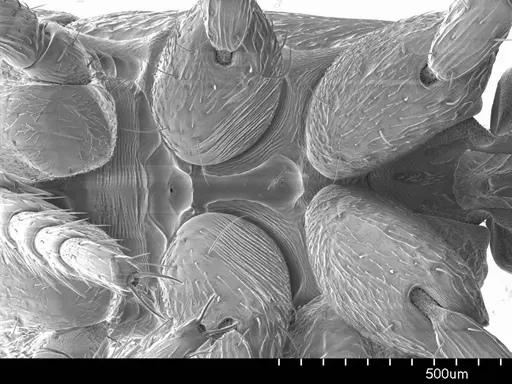
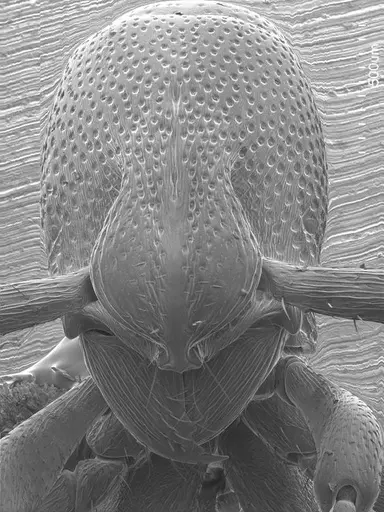
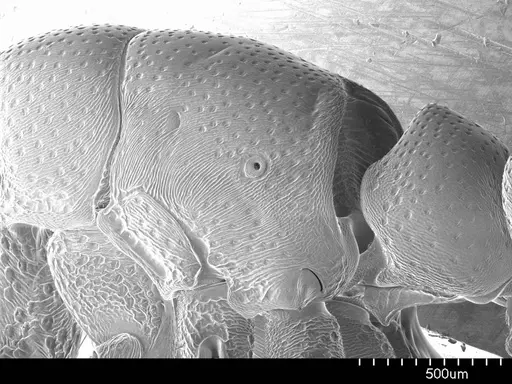
CASENT0004980
AntWeb'de Görüntüle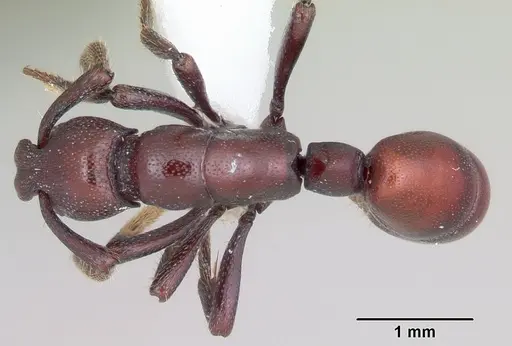
CASENT0102324
AntWeb'de Görüntüle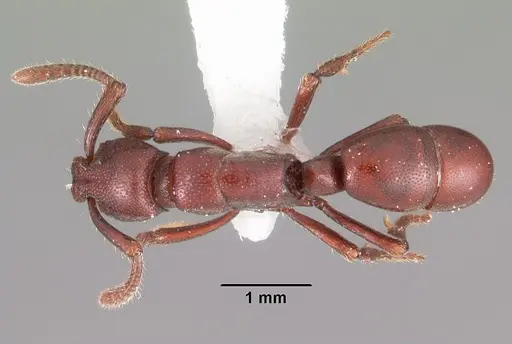
CASENT0900370
AntWeb'de Görüntüle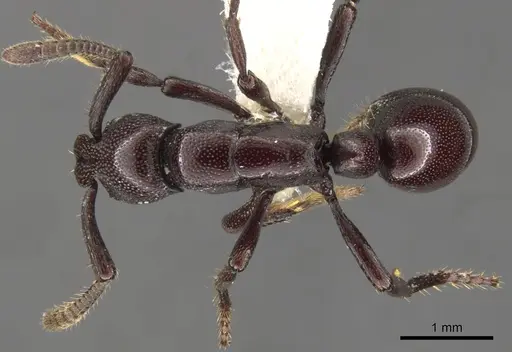
Literatür
Dağılım haritası yükleniyor...Ürünler yükleniyor...