
Leptogenys vogeli
- Bilimsel Adı
- Leptogenys vogeli
- Oymak (Tribe)
- Ponerini
- Alt Familya
- Ponerinae
- Yazar (Tanımlayan)
- Borgmeier, 1933
- Dağılım
- 0 ülkede bulundu
Giriş
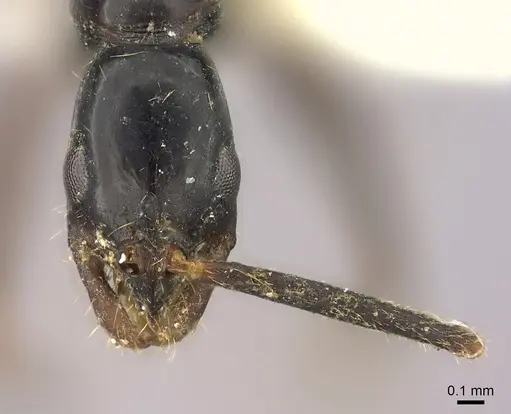
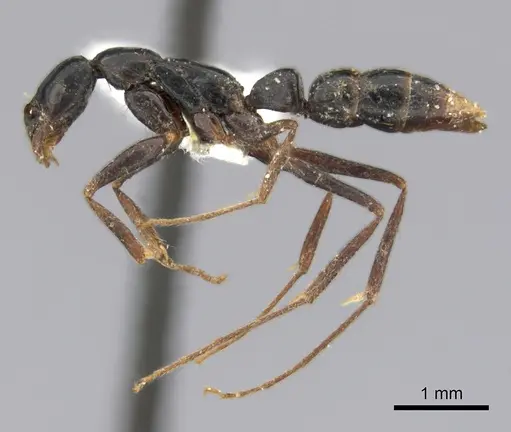
Leptogenys vogeli is a medium-sized ponerine ant native to the Neotropical region, found in Brazil and French Guiana. Workers have a distinctive subrectangular head that is slightly wider at the front than the back, with broadly convex eyes. The species has dark brown to ferruginous coloring - the scape, mandibles, legs, and gaster tip are dark brown while the funiculus is rusty brown. The petiole is notably elongate and cuneiform when viewed from above. This ant belongs to the crudelis species group and is closely related to Leptogenys gaigei, differing mainly in its more elongated head and the absence of a transparent cuticular lobe near the protibial apex. Nothing is known about the specific biology of this species. It was collected from transition forest in French Guiana, indicating it prefers humid tropical forest habitats . The queen caste has not been described.
Quick Summary
- Difficulty: Unknown, this species has no documented captive care literature
- Origin & Habitat: Brazil and French Guiana in the Neotropical region. Collected from transition forest in pristine Guianese rainforest [1]. Type locality is Rio de Janeiro, Petrópolis, Brazil [2].
- Colony Type: Unknown, colony structure has not been documented in scientific literature
- Size & Growth:
- Queen: Unknown, queen caste has not been described [3]
- Worker: Size data unavailable, partial measurements (head length, mesosoma length) exist but total body length is not documented. Inferred from Leptogenys genus: approximately 4-6mm [3]
- Colony: Unknown, no colony size data available
- Growth: Unknown
- Development: Unknown, no development data exists for this species (Based on related Leptogenys species, development likely takes several months at tropical temperatures. Ponerine ants typically have slower development than many myrmicines.)
- Antkeeping:
- Temperature: Unknown for this species. Based on its tropical Brazilian/French Guianan origin, likely requires warm conditions in the low-to-mid 20s°C range. Start around 24-26°C and observe colony activity.
- Humidity: Likely requires high humidity given its collection from rainforest transition forest. Keep nest substrate consistently moist but not waterlogged [1].
- Diapause: Unknown, tropical species from Brazil and French Guiana likely does not require diapause but may have reduced activity during cooler periods.
- Nesting: No specific nesting data exists. Based on related species in the crudelis group, likely nests in soil or rotting wood in humid forest floor environments. A naturalistic setup with moist substrate or a Y-tong/plaster nest works well for ponerine ants.
- Behavior: Behavior is unstudied. As a member of Ponerinae, this species has a functional stinger, Ponerinae ants are primitive hunters with potent stings. Leptogenys species are typically active hunters that pursue prey. Workers are not extremely small but can be fast-moving. Escape prevention should be moderate.
- Common Issues: no biological data exists, this is one of the least studied ant species in the hobby, care requirements are entirely inferred from related species and geographic origin, colony development may be slow, beginners may lose patience without visible progress, no confirmed diet acceptance, must experiment with various prey items, hibernation requirements unknown, may cause problems if kept in temperate climates without seasonal adjustment, queen caste has never been described, founding behavior is completely unknown
Species Identification and Taxonomy
Leptogenys vogeli was originally described by Borgmeier in 1933 as Leptogenys (Lobopelta) vogeli from workers collected in Petrópolis, Rio de Janeiro, Brazil. The species was later transferred to the genus Leptogenys when Lobopelta was synonymized under Leptogenys by Bolton in 1975. L. vogeli is a member of the crudelis species group, which contains several similar Neotropical species. It is most similar to Leptogenys gaigei but can be distinguished by its more elongated head and the lack of a transparent cuticular lobe next to the strigil on the protibial apex. The compound eye in L. vogeli is broadly convex, unlike the more flattened eye of L. gaigei. The metanotal groove and the constriction between abdominal segments III and IV are more pronounced in L. vogeli. [2][3]
Distribution and Habitat
Leptogenys vogeli is known from two locations in the Neotropical region: Brazil (specifically Rio de Janeiro state, Petrópolis) and French Guiana. The type specimens were collected from Petrópolis in January 1930. More recent records from French Guiana indicate the species occurs in transition forest within pristine rainforest environments. This suggests the species prefers humid, shaded forest floor habitats typical of many ponerine ants. The karyotype has been studied in specimens from Bahia, Brazil, revealing a diploid chromosome number of 2n=30 and haploid number of n=15. [2][1]
Why This Species Is Challenging to Keep
Leptogenys vogeli represents one of the most poorly documented ant species available in the hobby. Nothing has been published about its biology, colony structure, founding behavior, or captive care requirements. This makes it an extremely risky choice for antkeepers, as there are no established care protocols to follow. Every aspect of husbandry would require experimentation and guesswork based on related species. The complete lack of data on founding, development time, queen identity, colony size, and dietary preferences means keepers have no baseline to work from. For these reasons, this species cannot be recommended to any keeper except those with extensive experience who are conducting genuine biological research and can document their findings. [3]
Inferred Care from Related Species
While no specific data exists for L. vogeli, care can be reasonably inferred from what is known about the genus Leptogenys and the crudelis species group. Leptogenys species are typically predatory ponerine ants that hunt active prey. Most species in the genus are semi-claustral, meaning the queen must leave the nest periodically to hunt for food during the founding stage, she cannot survive on stored fat alone like claustral species. Ponerine ants generally require higher humidity than many common hobby species and often prefer naturalistic setups with moist soil or rotting wood. They are typically aggressive hunters with functional stingers. Based on the tropical distribution, temperatures in the low-to-mid 20s°C are likely appropriate, with high humidity mimicking the rainforest environment. [3]
Legal and Ethical Considerations
This species is not known to be established anywhere outside its native range of Brazil and French Guiana. It has not been documented as invasive anywhere. However, antkeepers should always exercise caution with any non-native species. Never release ants into the wild in non-native areas, this applies especially to predatory species that could disrupt local ecosystems. If you obtain this species, it is almost certainly through specialized breeders or researchers, not from the wild. Always verify the legal status of keeping this species in your jurisdiction and ensure any specimens were obtained legally. [3]
Frequently Asked Questions
Is Leptogenys vogeli a good species for beginners?
No. This species cannot be recommended for beginners or even intermediate antkeepers. Nothing is known about its biology, founding behavior, colony size, or captive care requirements. Every aspect of keeping this species would require guesswork. There are many well-documented species available that are much better choices.
What do Leptogenys vogeli ants eat?
Diet is unconfirmed for this specific species. Based on genus patterns, they are likely predatory and would accept small live invertebrates like fruit flies, pinhead crickets, and other micro-prey. Ponerine ants typically hunt active prey rather than scavenging. Sugar sources may or may not be accepted, this would need to be experimentally determined.
How long does it take for Leptogenys vogeli to produce first workers?
Unknown, no development data exists for this species. Most Leptogenys species are semi-claustral, meaning the queen must hunt during founding, which typically results in slower colony development than claustral species. Expect a timeline of several months to a year or more based on related species patterns.
What temperature should I keep Leptogenys vogeli at?
No specific temperature data exists. Based on its tropical origin in Brazil and French Guiana, aim for warm conditions around 24-26°C. Observe colony behavior and adjust as needed. Avoid temperatures below 20°C or above 30°C without data.
Can I keep multiple Leptogenys vogeli queens together?
Unknown, colony structure has not been documented for this species. The crudelis species group shows variation in colony structure, but no data exists for L. vogeli specifically. Do not attempt combining unrelated queens without documented evidence that this is safe.
What size colony does Leptogenys vogeli reach?
Unknown, no colony size data exists in scientific literature. Related Leptogenys species vary widely in colony size, from a few dozen to several hundred workers. This species' maximum colony size is completely unstudied.
Is Leptogenys vogeli monogyne or polygyne?
Unknown, colony structure has not been documented. The species group contains both single-queen and multi-queen species, but specific data for L. vogeli does not exist. The queen caste itself has not even been described.
What humidity do Leptogenys vogeli ants need?
Likely high humidity based on collection from rainforest transition forest in French Guiana. Keep nest substrate consistently moist but not waterlogged. Ponerine ants typically require more humidity than many common hobby species.
Should I hibernate Leptogenys vogeli?
Unknown, this is a tropical species from Brazil and French Guiana where temperatures remain warm year-round. It likely does not require a true diapause. However, some reduction in activity during cooler periods may occur naturally. Monitor your colony and adjust accordingly.
Report an Issue
The current care sheet is based fully on literature. See inconsistencies, or something that's incorrect? Please , it will be resolved after review from an admin. Contributing to the blogs tab also helps providing information, to make us be able to further improve the caresheets. Thank you for your support!
References

Bu bakım rehberi şu lisans altındadır: CC BY-SA 4.0 .
Topluluk Blogları
CASENT0217009
AntWeb'de Görüntüle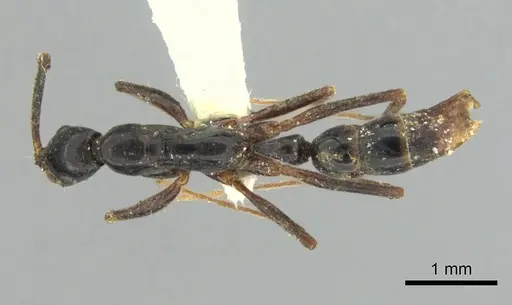
Literatür
Dağılım haritası yükleniyor...Ürünler yükleniyor...