
Leptogenys santacruzi
- Bilimsel Adı
- Leptogenys santacruzi
- Oymak (Tribe)
- Ponerini
- Alt Familya
- Ponerinae
- Yazar (Tanımlayan)
- Lattke, 2011
- Dağılım
- 0 ülkede bulundu
Giriş
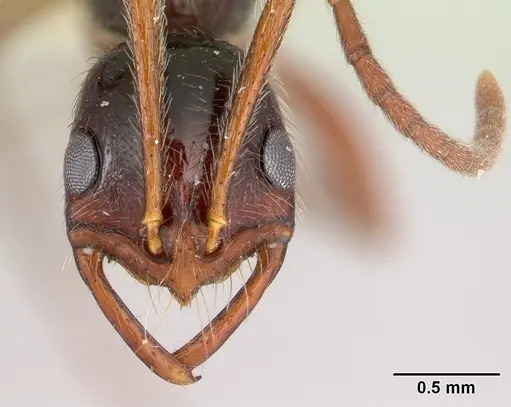
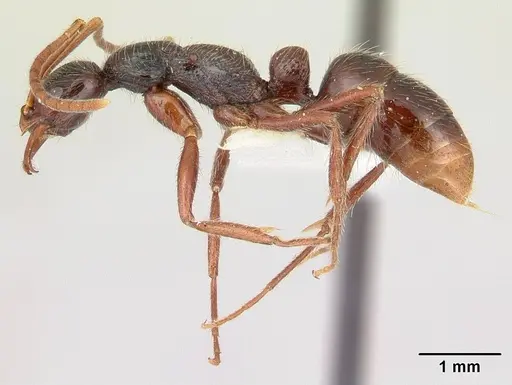
Leptogenys santacruzi is a large, dark brown ant found only on Santa Cruz and Isabela Islands in the Galápagos Archipelago. Workers have a distinctive rectangular petiole node that is taller than long, fine lengthwise striations on the pronotum, and a mostly smooth, shiny body surface. They inhabit extremely dry arid zones among cacti and deciduous vegetation. Scientists have never found a queen or male - only workers have been collected since its first description in 2011,making this one of the most mysterious ants in the Americas .
Quick Summary
- Difficulty: Impossible
- Origin & Habitat: Endemic to Santa Cruz and Isabela Islands, Galápagos, found in arid littoral and dry zones with deciduous forest and cacti [1][2].
- Colony Type: Unknown, queens and males have never been collected or described [3].
- Size & Growth:
- Queen: Unknown, queens never collected [3].
- Worker: ~8-10mm, inferred from Leptogenys genus typical size range
- Colony: Unknown, only individual workers and small groups collected [1].
- Growth: Unknown
- Development: Unknown (No development data exists. Founding behavior and brood development have never been observed.)
- Antkeeping:
- Temperature: Warm conditions typical of tropical islands, likely 22-30°C based on Galápagos climate
- Humidity: Arid conditions, low humidity with excellent ventilation, damp conditions will likely kill them [3].
- Diapause: No, tropical species with no winter rest period needed.
- Nesting: Likely under stones or in soil in well-drained dry forests [1].
- Behavior: Presumably predatory like other Leptogenys. Uses sting as defense mechanism (Ponerinae tribe). Temperament unknown. Escape risk is moderate due to size.
- Common Issues: queens are completely unknown, you cannot start a colony without a queen, and no one knows if this species has a typical queen caste or uses worker reproduction., extreme rarity and endemism, this species is only known from a few specimens collected on protected islands, removing them from the wild is unethical and likely illegal., arid habitat requirements, they need dry conditions with excellent ventilation, standard humid ant farms will kill them., unknown diet and behavior, we do not know what they eat or how colonies function, making captive care impossible to plan.
Natural History and Conservation Status
This species lives only on Santa Cruz and Isabela Islands in the Galápagos Archipelago. The Galápagos is famous for unique wildlife, and this ant is no exception. It inhabits the arid zones, the dry, deciduous forests that experience rain only briefly each year. The habitat features cacti like Opuntia and Jasminocereus, plus the incense tree Bursera graveolens. Since its first collection in 1982,scientists have recorded it only a few times. Most museum records are of individual workers, though some winged individuals have been spotted [1]. Despite extensive searching, no one has ever found a queen or male, leaving their reproduction a complete mystery [3]. The species is considered extremely rare and likely vulnerable due to its limited range.
Identification Features
Workers are large and distinctive, measuring approximately 8-10mm based on genus typical size. The body is dark brown with reddish-brown legs and antennae. Key features include fine lengthwise striations on the pronotum, a rectangular petiole node that is taller than it is long, and a mostly smooth, shiny surface. The node shape separates them from other Leptogenys in the arcuata group, theirs is smooth rather than striated on the sides [3].
Why You Cannot Keep Them
You cannot currently keep this species in a standard ant farm. Without known queens, there is no way to start a colony. Even if you found a queen, we do not know if she needs to hunt during founding (semi-claustral) or seals herself in (claustral), what she eats, or how long development takes. Additionally, this species is extremely rare and endemic to a protected World Heritage site. Collecting them would harm wild populations and likely violates Ecuadorian and international law. For now, they remain a species for scientific observation only, not the pet trade. [1][2][3]
Habitat and Climate Needs
Based on their collection sites, they need warm, dry conditions. The Santa Cruz arid zone receives minimal rainfall most of the year, with only a brief wet season. Temperatures in the Galápagos stay fairly stable year-round, roughly 20-30°C. They probably nest in soil or under stones in well-drained areas. If you were to attempt keeping them (which you should not without proper permits and a queen), you would need excellent ventilation, minimal humidity, and warm temperatures with a gradient. [3][1]
Frequently Asked Questions
Can I keep Leptogenys santacruzi in an ant farm?
No. This species is not available in the pet trade. It is endemic to the Galápagos Islands, extremely rare, and likely protected by law. Only a handful of specimens exist in scientific collections, and no one has ever kept them in captivity [1][2].
How do I find a queen Leptogenys santacruzi?
You cannot. Scientists have never found a queen or male of this species. Without knowing what the queen looks like or how founding works, colony founding is impossible [3].
What do Leptogenys santacruzi eat?
We do not know for certain. Other Leptogenys species are specialist predators that hunt specific prey like termites or isopods. They likely need live insects, but the exact diet is unconfirmed [3].
Do Leptogenys santacruzi need hibernation?
No. They come from the Galápagos Islands near the equator, where temperatures stay warm year-round. They do not need a winter rest period [3][1].
How big are Leptogenys santacruzi workers?
Workers are relatively large, measuring approximately 8-10mm based on genus typical size range [3].
Where do Leptogenys santacruzi live?
Only on Santa Cruz and Isabela Islands in the Galápagos, specifically in the dry littoral and arid zones near the coast among cacti and deciduous vegetation [1][2].
Are Leptogenys santacruzi dangerous?
They are large ants and can sting, as this genus belongs to the Ponerinae subfamily which possesses functional stingers. Handle with care if you ever encounter them, but you are unlikely to see them unless you are a researcher in the Galápagos.
Why are Leptogenys santacruzi so rare?
They are endemic to just two islands in the Galápagos, meaning they naturally occur nowhere else on Earth. They live in specific arid habitats and have only been collected a handful of times since their discovery in 1982,making them one of the least known ant species in the world [1][2].
Report an Issue
The current care sheet is based fully on literature. See inconsistencies, or something that's incorrect? Please , it will be resolved after review from an admin. Contributing to the blogs tab also helps providing information, to make us be able to further improve the caresheets. Thank you for your support!
References

Bu bakım rehberi şu lisans altındadır: CC BY-SA 4.0 .
Topluluk Blogları
CASENT0178793
AntWeb'de Görüntüle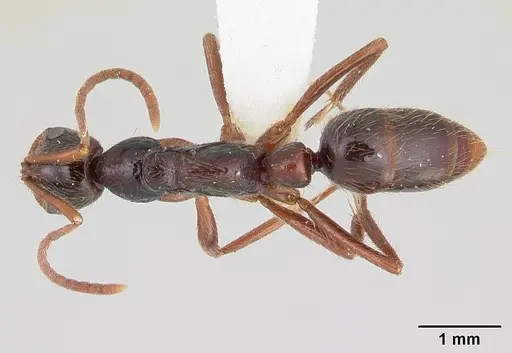
Literatür
Dağılım haritası yükleniyor...Ürünler yükleniyor...