
Holcoponera pilosa
- Bilimsel Adı
- Holcoponera pilosa
- Oymak (Tribe)
- Ectatommini
- Alt Familya
- Ectatomminae
- Yazar (Tanımlayan)
- Lattke, 1995
- Dağılım
- 0 ülkede bulundu
Giriş
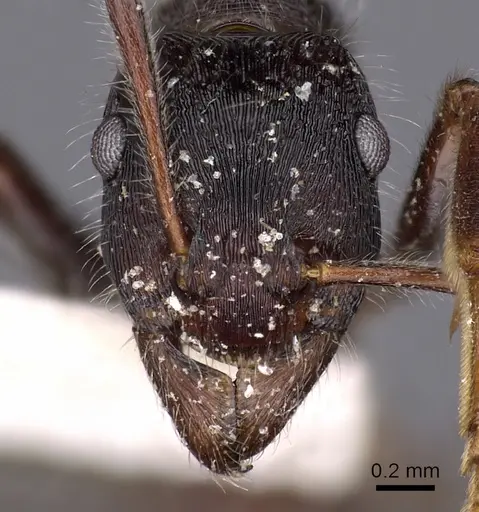
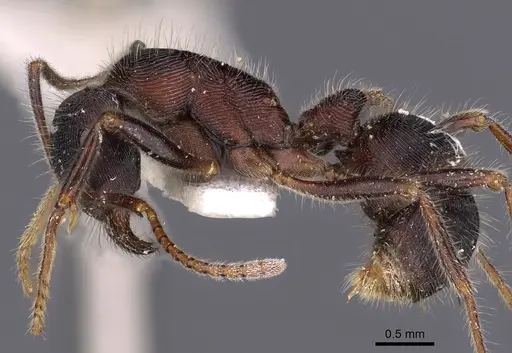
Holcoponera pilosa is a small predatory ant species native to western Colombia, where it inhabits cloud forests in the departments of Antioquía, Chocó, Quindío and Valle del Cauca . The species gets its name 'pilosa' (Greek for hair) from being the hairiest of all Holcoponera species, with abundant erect hairs covering its body, legs, antennae, and coxae . The head and mesosoma feature distinctive longitudinal striations, and the petiolar node is low and transversely striated . This species is part of the porcata subgroup within the striatula species group. Nothing is known about the biology of H. pilosa in the wild, including colony structure, founding behavior, or specific care requirements . The type specimens were collected from leaf litter in cloud forest at 900-1300m elevation near a stream, suggesting they prefer humid, shaded forest floor environments .
Quick Summary
- Difficulty: Unknown, no captive husbandry data available
- Origin & Habitat: Western Colombia, cloud forests in Antioquía, Chocó, Quindío, and Valle del Cauca departments at elevations from 230-1430m [4][1]
- Colony Type: Unknown, colony structure has not been documented
- Size & Growth:
- Queen: Undescribed, queen caste has not been documented in scientific literature
- Worker: Size data unavailable, no total body length measurements exist. Workers are small ants based on genus patterns.
- Colony: Unknown, no colony size data available
- Growth: Unknown
- Development: Unknown, development has not been studied (No data available on egg-to-worker development time.)
- Antkeeping:
- Temperature: Inferred: 20-25°C based on cloud forest origin. Provide a gentle thermal gradient and monitor colony activity.
- Humidity: Inferred: High humidity (70-85%) based on cloud forest collection data. Keep substrate consistently moist but not waterlogged.
- Diapause: Unknown, no data on overwintering requirements. Given the tropical/cloud forest origin, they likely do not require a true diapause but may show reduced activity in cooler periods.
- Nesting: Inferred: They likely nest in leaf litter, rotting wood, or under stones in captivity. A naturalistic setup with moist substrate or a Y-tong/plaster nest with high humidity works well.
- Behavior: Behavior is unstudied. Based on genus patterns, they are likely predatory on small invertebrates. This species possesses a functional sting used to inject neurotoxins for prey capture and defense. Their small size and dense pilosity may help with moisture regulation in humid environments. Escape prevention should be excellent due to their small worker size.
- Common Issues: no captive husbandry data exists, this is an expert-only species until husbandry protocols are developed, small size makes escape likely without fine mesh barriers, humidity requirements are inferred only, too dry conditions may be fatal, predatory diet may be difficult to provide in captivity, requires live small prey, virtually nothing is known about their biology, making captive care highly experimental
Natural History and Distribution
Holcoponera pilosa is known only from western Colombia, specifically the departments of Antioquía, Chocó, Quindío, and Valle del Cauca [1][2]. The type locality is in the Valle del Cauca region, Cañón El Pital near Calima, at an elevation of 900-1300m above sea level [3]. Additional specimens have been collected at various elevations ranging from 230m to 1430m, showing the species can tolerate a range of altitudes within its cloud forest habitat [4]. The type specimens were found on leaf litter in cloud forest by a stream called Quebrada El Pital, a tributary of Río Calima [3]. The site was at approximately 3°08'N 76°40'W and was scheduled to be flooded due to dam construction [3]. This species is the hairiest in the genus, with abundant erect to suberect hairs covering the body, extremities, coxae, propodeum, petiole, antennae, and legs [3]. Its nearest relatives are Holcoponera gracilis and Holcoponera ejuncida, with H. gracilis being endemic to the Guiana Shield area [3].
Identification and Morphology
Workers of Holcoponera pilosa are small ants based on genus patterns. The cephalic dorsum has longitudinal parallel striae that diverge posterad at the vertex, with 1-2 transverse striae parallel to the occipital carina [3]. The dorsal mesosomal surface, including the entire propodeum, is longitudinally striated, with striae curving around the propodeal spiracles [3]. The petiolar node is low and transversely striated, appearing convex from the anterior margin and concave from the posterior margin when viewed laterally, with the apex overhanging [3]. The gaster has transverse striations on the anterior three-fourths of the tergum, transitioning to longitudinal striation posteriorly [3]. The species has a well-developed lamella on the anterior clypeal margin and prominent eyes positioned on the posterior half of the head [3]. The scapes have fewer than 10 erect hairs along their posterior margin, while the tibiae and scapes each have 5 or more erect hairs [5].
Housing and Nesting
Since no captive husbandry data exists for this species, housing recommendations must be inferred from the natural habitat and related ant biology. The type specimens were collected from leaf litter in cloud forest at elevations between 900-1300m, suggesting they prefer humid, shaded microhabitats [3]. Additional collection data shows specimens from 230m to 1430m elevation, indicating some flexibility [4]. A naturalistic setup with moist substrate (like a soil-filled container with leaf litter and hiding spots) would best approximate their natural environment. Alternatively, a Y-tong or plaster nest with high humidity chambers would work if you can maintain consistent moisture. The key is providing high humidity (70-85%) while ensuring good ventilation to prevent mold. Given their small worker size, escape prevention must be excellent, use fine mesh barriers and tight-fitting lids.
Feeding and Diet
The diet of Holcoponera pilosa has not been documented, but the genus Holcoponera (formerly Gnamptogenys) belongs to the subfamily Ectatomminae, which contains primarily predatory ants. Based on related species in this subfamily, H. pilosa likely hunts small invertebrates such as springtails, mites, and other micro-arthropods found in leaf litter. In captivity, you should offer small live prey items appropriate to their size, springtails, fruit flies, and other tiny insects would be suitable. Given their small size, prey items should be no larger than they can handle. Sugar sources may or may not be accepted, some Ectatomminae species occasionally attend honeydew-producing insects, but protein from prey is likely their primary food source. Start with offering small live prey and observe acceptance.
Temperature and Humidity Requirements
Temperature and humidity requirements are not documented for this species, but can be inferred from their cloud forest origin in western Colombia. They were collected from elevations ranging from 230m to 1430m, with the type locality at 900-1300m in cloud forest [3][4]. Cloud forests typically have stable, humid conditions with moderate temperatures. Aim for temperatures in the range of 20-25°C, providing a gentle thermal gradient so the ants can self-regulate. Humidity should be high, around 70-85%, with substrate kept consistently moist but not waterlogged. Monitor your colony closely, if workers seem sluggish or cluster tightly together, try adjusting temperature slightly warmer, if they avoid the heated area, reduce temperature. Since this is entirely inferred care, be prepared to experiment and adjust based on observed colony behavior.
Colony Structure and Development
The colony structure of Holcoponera pilosa has not been documented in scientific literature. The queen caste has not been described, and nothing is known about founding behavior, colony size, or reproductive biology [3]. Whether colonies are single-queen (monogyne) or multi-queen (polygyne) is unknown. Development timeline from egg to worker is completely unstudied. Any colony information you can document would be scientifically valuable given how little is known about this species.
Frequently Asked Questions
How difficult is Holcoponera pilosa to keep?
Difficulty is unknown since no captive husbandry data exists for this species. It should be considered an expert-only species until protocols are developed. Virtually nothing is known about their biology, making captive care highly experimental.
What do Holcoponera pilosa ants eat?
Diet is unconfirmed, but based on related Ectatomminae, they are likely predatory on small invertebrates. Offer small live prey like springtails, fruit flies, and other micro-arthropods. Acceptance of sugar sources is unknown.
What temperature should I keep Holcoponera pilosa at?
Temperature requirements are not documented. Based on cloud forest origin, aim for 20-25°C with a gentle thermal gradient. Monitor colony activity and adjust as needed.
Do Holcoponera pilosa ants need hibernation?
Diapause requirements are unknown. Given their tropical/cloud forest origin in Colombia, they likely do not require a true hibernation but may show reduced activity in cooler periods.
How big do Holcoponera pilosa colonies get?
Colony size is unknown, no colony size data has been documented in scientific literature.
What is the colony structure of Holcoponera pilosa?
Colony structure is unconfirmed. Whether they are single-queen (monogyne) or multi-queen (polygyne) colonies has not been documented.
Can I keep multiple Holcoponera pilosa queens together?
This is unknown. Colony structure and queen behavior have not been studied. Do not attempt combining unrelated queens without documented evidence that this is safe.
How long does it take for Holcoponera pilosa to develop from egg to worker?
Development timeline is unknown, no studies have documented egg-to-worker development time for this species.
What humidity level do Holcoponera pilosa ants need?
Humidity requirements are not documented. Based on cloud forest origin, high humidity around 70-85% is inferred. Keep substrate consistently moist but not waterlogged.
Are Holcoponera pilosa ants aggressive or do they sting?
Behavior is unstudied. Based on genus patterns, they are likely not aggressive toward humans but are predatory toward small prey. This species possesses a functional sting used to inject neurotoxins for prey capture and defense.
Report an Issue
The current care sheet is based fully on literature. See inconsistencies, or something that's incorrect? Please , it will be resolved after review from an admin. Contributing to the blogs tab also helps providing information, to make us be able to further improve the caresheets. Thank you for your support!
References

Bu bakım rehberi şu lisans altındadır: CC BY-SA 4.0 .
Topluluk Blogları
CASENT0179985
AntWeb'de Görüntüle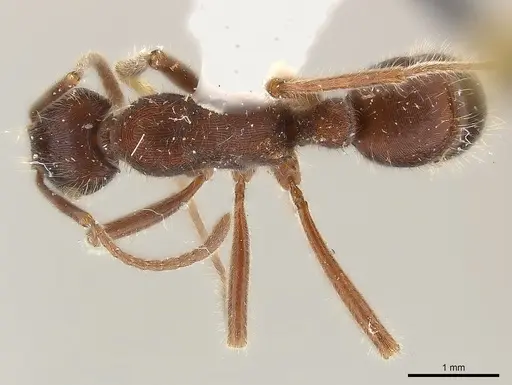
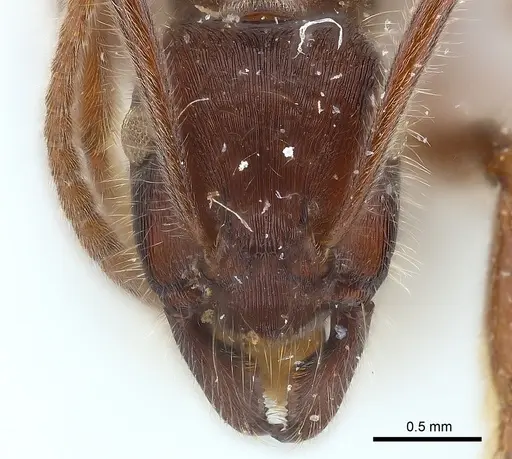
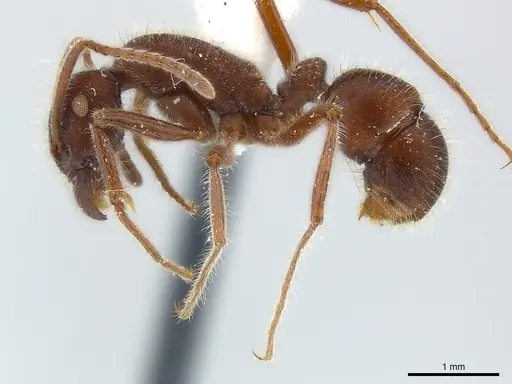
CASENT0900555
AntWeb'de Görüntüle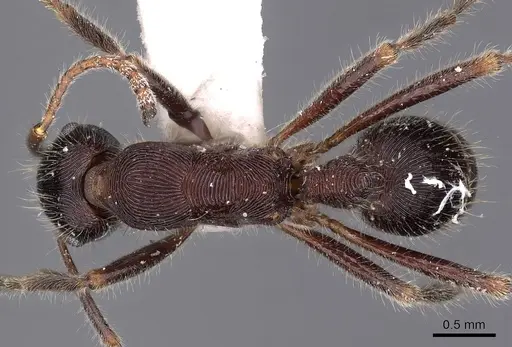
Literatür
Dağılım haritası yükleniyor...Ürünler yükleniyor...