
Dorymyrmex hypocritus
- Bilimsel Adı
- Dorymyrmex hypocritus
- Oymak (Tribe)
- Leptomyrmecini
- Alt Familya
- Dolichoderinae
- Yazar (Tanımlayan)
- Snelling, 1975
- Dağılım
- 0 ülkede bulundu
Giriş
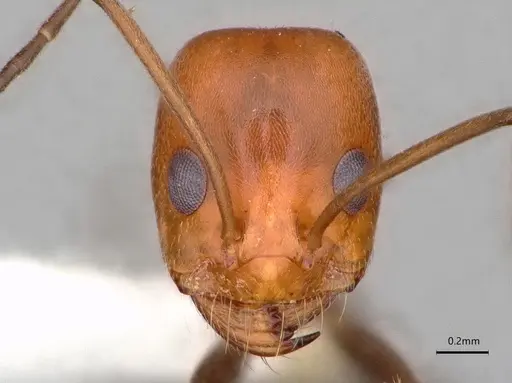
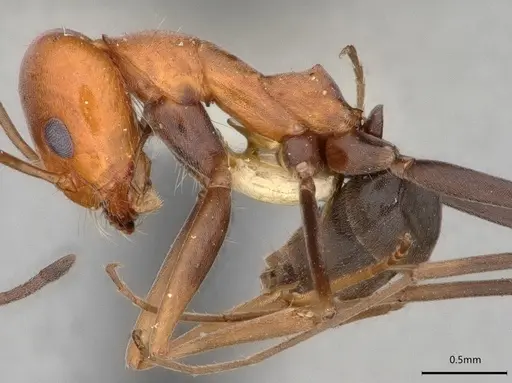
Dorymyrmex hypocritus is a small bicolored ant native to central Chile. Workers have a bright ferruginous (rusty red) head and thorax, while the gaster is blackish. The legs and antennae are dark brown. This species was originally described in 1975 and is notable for its extremely restricted distribution - it is only known from a small area near Santiago in the Cuesta la Dormida region, specifically around Fundo Santa Laura . The Latin name 'hypocritus' means 'mime or dissembler' because of its similarity to other Dorymyrmex species.
Quick Summary
- Difficulty: Medium
- Origin & Habitat: Central Chile, specifically the foothills near Santiago in the Cuesta la Dormida area. This species has an extremely restricted natural range and is only found in areas near human settlements, not in natural wildland areas. It was collected from Fundo Santa Laura in the precordillera (foothills) ecosystem [2][1].
- Colony Type: Colony structure is unconfirmed. This species has not been studied in detail.
- Size & Growth:
- Queen: Size data unavailable, no queen description exists
- Worker: Approximately 4-5mm total length, inferred from Dorymyrmex genus patterns
- Colony: Unknown, no colony size data exists for this species
- Growth: Unknown
- Development: Unknown, no development data exists for this species (Development timeline is unconfirmed for this species.)
- Antkeeping:
- Temperature: Keep at room temperature (20-24°C). This species is from central Chile's Mediterranean climate with warm summers and cool winters.
- Humidity: Moderate humidity is likely appropriate. Central Chile has dry summers and moist winters. Allow the nest substrate to dry partially between waterings.
- Diapause: Likely required. Central Chile experiences cool winters. Provide a winter rest period at 10-15°C for 2-3 months.
- Nesting: No specific nesting data exists. Based on related Dorymyrmex species, they likely nest in soil under stones or in shallow ground nests. A test tube setup works well for their small size.
- Behavior: Behavior is unstudied. Based on genus patterns, they are likely ground-nesting ants with typical Dolichoderine foraging behavior. They are probably not aggressive and unlikely to sting. Their very small size means escape prevention is important, use fine mesh barriers. They are likely generalist foragers.
- Common Issues: extremely limited distribution means wild colonies are rarely available, no published care information exists, all advice is inferred from genus patterns, their association with human settlements suggests they may have specific habitat requirements we don't understand, slow colony growth is common with poorly studied species, patience is essential, hibernation requirements are estimated, not confirmed
Appearance and Identification
Dorymyrmex hypocritus workers are small ants measuring approximately 4-5mm in total body length. They are easily recognized by their striking bicolored pattern: the head and thorax are a bright ferruginous (rusty orange-red) color, while the gaster (abdomen) is blackish. The legs and antennae are dark brown. The head is noticeably longer than broad, with the scapes extending well beyond the occipital margin. The psammophore (a brush of hairs used for carrying loose particles) has its basalmost setae positioned below the occipital foramen. This species was originally described in 1975 by R.R. Snelling and was later transferred from Araucomyrmex to Dorymyrmex by Shattuck in 1992.
Natural Distribution and Habitat
This species has an extremely restricted distribution known only from central Chile, specifically in the Santiago province foothills around Cuesta la Dormida and Fundo Santa Laura. Notably, research shows this species is only found in areas near human settlements, it was not recorded in sampling stations located 500 meters or more from human dwellings [2]. This strong association with human-modified environments suggests this species may be a synanthropic species that has adapted to living in close proximity to humans. The type specimens were collected in October 1971 from Santa Laura. This limited distribution makes wild collection difficult and underscores why this species is rarely kept in captivity.
Feeding and Diet
Feeding habits are unconfirmed for this species. As a Dolichoderinae ant, it likely has typical omnivorous feeding patterns similar to related genera like Linepithema (the Argentine ant). These ants typically feed on honeydew from aphids and scale insects, nectar from plants, and small insects for protein. In captivity, offer a varied diet including sugar water or honey as an energy source, and small protein sources like fruit flies, pinhead crickets, or other tiny arthropods. Given their very small worker size, prey items must be appropriately sized. Observe your colony to determine preferences and adjust feeding accordingly.
Temperature and Seasonal Care
This species originates from central Chile's Mediterranean climate zone, which features warm, dry summers and cool, moist winters. In captivity, maintain temperatures in the range of 20-24°C during the active season. During the Chilean winter (roughly June-August in the Southern Hemisphere), provide a diapause period at temperatures between 10-15°C for 2-3 months. This winter rest period likely matches their natural seasonal cycle. A heating cable on one side of the nest can create a temperature gradient, allowing the ants to self-regulate. Monitor colony activity, if workers consistently cluster in warmer areas, increase heat slightly, if they avoid heated areas, reduce temperature.
Nesting and Housing
No specific nesting data exists for this species, but related Dorymyrmex species typically nest in soil, often under stones or in shallow ground cavities. For captive care, a test tube setup works well for founding colonies. Once the colony reaches 20-30 workers, you can transition to a small formicarium with compact chambers scaled to their tiny size. The nest material should retain some moisture but not become waterlogged. Given their association with human settlements in the wild, they may tolerate slightly more disturbed conditions than some other ant species. Always ensure excellent escape prevention, their small size means they can squeeze through standard gaps easily.
Frequently Asked Questions
How long does it take for Dorymyrmex hypocritus to produce first workers?
The exact timeline is unknown. No specific development data exists for this species.
What do Dorymyrmex hypocritus ants eat?
Feeding is unconfirmed for this species, but based on related Dolichoderinae ants, offer sugar water or honey as an energy source, and small protein sources like fruit flies, tiny crickets, or other micro-arthropods. Their small worker size means prey must be appropriately sized.
Are Dorymyrmex hypocritus good for beginners?
This species is not recommended for beginners. Almost nothing is known about its biology in captivity, and it has an extremely restricted natural distribution making wild colonies rarely available. All care recommendations are inferred from genus patterns rather than documented experience.
Do Dorymyrmex hypocritus need hibernation?
Hibernation is likely required. This species is from central Chile, which experiences cool winters. Provide a winter rest period at 10-15°C for 2-3 months during the winter season.
How big do Dorymyrmex hypocritus colonies get?
Colony size is unknown. No colony size data exists for this species.
Can I keep multiple Dorymyrmex hypocritus queens together?
Colony structure is unconfirmed. Combining unrelated queens of this species has not been documented and is not recommended.
What temperature should I keep Dorymyrmex hypocritus at?
Maintain temperatures around 20-24°C during the active season. This species is from central Chile's temperate climate. A slight temperature gradient allows the colony to self-regulate.
Why are my Dorymyrmex hypocritus dying?
Without documented care information, troubleshooting is difficult. Common issues with poorly studied species include: incorrect humidity (too wet or too dry), temperature stress, inadequate prey size, or stress from disturbance. Start with moderate, stable conditions and observe colony behavior.
Where does Dorymyrmex hypocritus come from?
This species is only known from central Chile, specifically the foothills near Santiago in the Cuesta la Dormida area. It has an extremely restricted distribution and is only found near human settlements [2][1].
Report an Issue
The current care sheet is based fully on literature. See inconsistencies, or something that's incorrect? Please , it will be resolved after review from an admin. Contributing to the blogs tab also helps providing information, to make us be able to further improve the caresheets. Thank you for your support!
References

Bu bakım rehberi şu lisans altındadır: CC BY-SA 4.0 .
Topluluk Blogları
LACMENT164456
AntWeb'de Görüntüle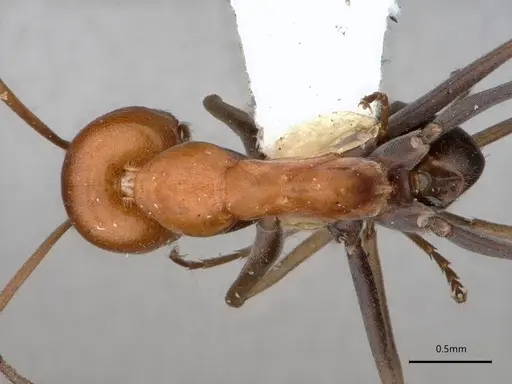
Literatür
Dağılım haritası yükleniyor...Ürünler yükleniyor...