
Dorymyrmex ebeninus
- Bilimsel Adı
- Dorymyrmex ebeninus
- Oymak (Tribe)
- Leptomyrmecini
- Alt Familya
- Dolichoderinae
- Yazar (Tanımlayan)
- Forel, 1914
- Dağılım
- 0 ülkede bulundu
Giriş
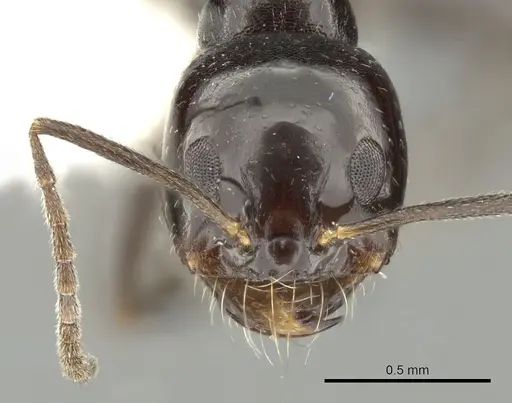
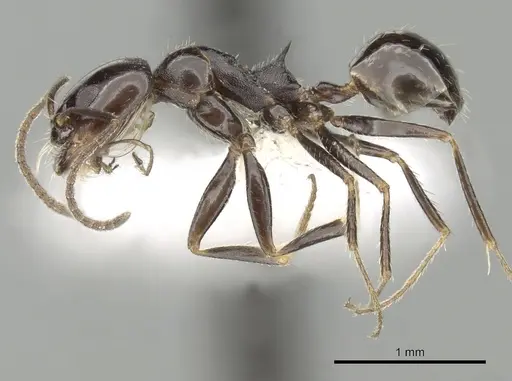
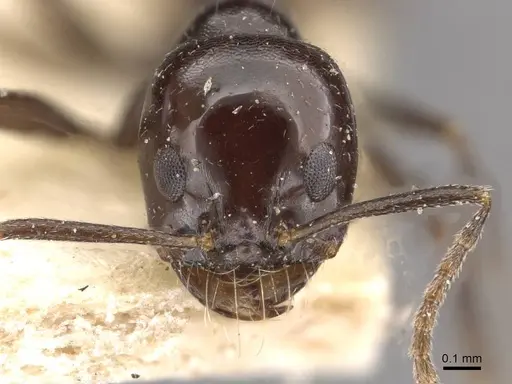
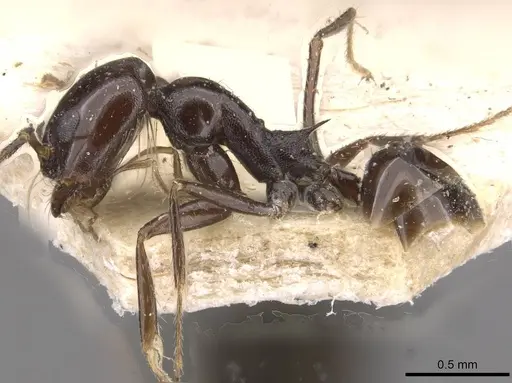
Dorymyrmex ebeninus is a small ant native to Argentina, belonging to the Dolichoderinae subfamily. Workers display the genus characteristic pyramid-shaped head, which gives these ants their common name. The species has a dark reddish-brown to black coloration typical of many Dorymyrmex species. This ant nests in the ground, creating small colonies in open and disturbed areas across the Argentine plains and hills. The species was originally described as a variety of Dorymyrmex bruchi in 1914 and was later elevated to full species status in 1978 . Phylogenetically, it belongs to Clade I (Dorymyrmex s. str.) and was once placed in the subgenus Spinomyrma, making it sister to the remaining four species in the flavescens group . This species shows an interesting mix of morphological features - possessing typical Dorymyrmex s. str. characteristics but also having apical palpomere attachments that are diagnostic of other genera like Conomyrma and Araucomyrmex . This makes it a particularly interesting species for antkeepers interested in taxonomic nuances.
Quick Summary
- Difficulty: Medium
- Origin & Habitat: Native to Argentina in the Neotropical Region. Inhabits open areas, plains, and disturbed habitats across central and northern Argentina. Nests in soil, typically creating small mounds or colonies under stones in sunny, open locations.
- Colony Type: Colony structure is not documented for this specific species. Further research needed to confirm colony size and structure.
- Size & Growth:
- Queen: size data unavailable, inferred from Dorymyrmex genus (~5-6mm)
- Worker: size data unavailable, inferred from Dorymyrmex genus (~3-4mm)
- Colony: up to several hundred workers based on related species
- Growth: Moderate, estimated based on typical Dolichoderinae development patterns
- Development: Estimated 6-8 weeks at optimal temperature based on related Dolichoderinae species (Direct development data unavailable for this species, estimates based on genus-level patterns)
- Antkeeping:
- Temperature: Keep at 22-26°C. Dorymyrmex species prefer warm conditions and are most active in sunny, heated areas. A heating cable on one side of the nest creates a suitable gradient.
- Humidity: Moderate humidity around 50-60%. These ants prefer drier conditions compared to many tropical species. Allow the nest substrate to dry partially between waterings.
- Diapause: Likely requires a mild winter rest period of 2-3 months at 10-15°C, consistent with Argentine temperate zone origins. Reduce feeding and keep cool during this period.
- Nesting: Natural nesting occurs in soil with small mound constructions or under stones in sunny locations. In captivity, a Y-tong (AAC) nest or plaster formicarium with dry to moderately moist substrate works well. Provide a small outworld for foraging.
- Behavior: Dorymyrmex ebeninus workers are active foragers that search for food both on the ground and up vegetation. Like other Dolichoderinae, they lack a functional stinger but can secrete defensive compounds from a slit-like opening at the tip of the abdomen as a defense mechanism. Workers are moderately aggressive when defending the nest but not dangerous to humans. They are fast-moving and can be skittish, quickly retreating when disturbed. Escape prevention is important due to their small size, use fine mesh barriers and tight-fitting lids. These ants are daytime foragers, most active during warm hours.
- Common Issues: small size means escapes are likely without fine mesh barriers, limited availability in the antkeeping hobby, rarely available from suppliers, winter diapause requirements may be unfamiliar to beginners, fast-moving workers can be difficult to contain during colony transfers, specific humidity preferences not well-documented, start with moderate levels and observe colony behavior
Housing and Nest Setup
Dorymyrmex ebeninus can be housed in various setups, but Y-tong (AAC) nests or plaster formicariums work particularly well for this genus. These ants prefer drier nest conditions than many other ants, so avoid overly damp substrates. A small outworld area allows workers to forage and explore. For founding colonies, a simple test tube setup with a cotton ball water reservoir works, but transfer to a proper nest once the colony reaches 20-30 workers. Escape prevention is critical due to their small size, use fluon on container edges and fine mesh on any ventilation holes. Provide a thin layer of substrate in the outworld for workers to walk on comfortably.
Feeding and Diet
Dorymyrmex species are generalist omnivores that readily accept both sugar and protein sources. Offer sugar water, honey, or diluted maple syrup as a constant carbohydrate source. For protein, provide small insects like fruit flies, pinhead crickets, or mealworm pieces. These ants are active foragers, so place food in the outworld where workers can discover it. Remove uneaten prey after 24-48 hours to prevent mold. In the wild, they likely also consume honeydew from aphids and small seeds, so occasional variety is beneficial. Feed small amounts several times per week, adjusting based on colony size and consumption rate.
Temperature and Seasonal Care
Maintain nest temperatures between 22-26°C for optimal colony development. Dorymyrmex ants are native to temperate Argentina and prefer warm, sunny conditions. A small heating cable placed on part of the nest creates a temperature gradient that allows ants to regulate their own exposure. During the winter months (roughly November-February in the Southern Hemisphere), reduce temperatures to 10-15°C for a 2-3 month diapause period. This mimics their natural seasonal cycle and supports healthy colony development. Reduce feeding during diapause but do not stop entirely, occasional sugar water prevents starvation. Room temperature around 20°C may be acceptable, but colonies will be more active and grow faster with supplemental heating.
Behavior and Colony Dynamics
Workers of Dorymyrmex ebeninus are active, fast-moving foragers that patrol the outworld throughout the day. They lack a functional stinger but possess the Dolichoderinae defense mechanism of secreting defensive compounds when threatened, this is harmless to humans but can deter predators. Colonies are moderately defensive, mounting quick responses to nest disturbances before retreating. The pyramid-shaped head that gives this genus its common name is particularly noticeable in workers. Queens are larger than workers and can be distinguished by their larger thorax and abdomen. Colony growth is moderate, expect the first workers (nanitics) to appear within 6-8 weeks of founding, with the colony expanding over 1-2 years under good conditions.
Frequently Asked Questions
How long does it take for Dorymyrmex ebeninus to produce first workers?
Expect first workers (nanitics) to emerge around 6-8 weeks after the queen lays her first eggs, assuming temperatures around 24-26°C. This is an estimate based on related Dolichoderinae species, as specific development data for this species is not available.
What temperature should I keep Dorymyrmex ebeninus at?
Maintain nest temperatures between 22-26°C. These ants prefer warm conditions and will be most active in this range. A heating cable on part of the nest creates a gradient that ants can use to regulate their temperature.
Can I keep multiple Dorymyrmex queens together?
This is not recommended. While specific data is lacking for this species, combining unrelated foundress queens risks fighting and colony failure.
How big do Dorymyrmex ebeninus colonies get?
Based on related species, colonies likely reach up to several hundred workers maximum. This is a moderate colony size compared to some other ant genera.
Do Dorymyrmex ebeninus need hibernation?
Yes, a mild winter rest period of 2-3 months at 10-15°C is recommended. This mimics their natural seasonal cycle in temperate Argentina and supports healthy colony development.
What do Dorymyrmex ebeninus eat?
They are generalist omnivores. Offer sugar water, honey, or maple syrup for carbohydrates, and small insects like fruit flies or mealworm pieces for protein. Remove uneaten prey after 24-48 hours.
Are Dorymyrmex ebeninus good for beginners?
This species is rated as Medium difficulty. While not the most challenging ant, the specific care requirements (temperature, diapause, escape prevention) require some experience. Beginners may want to start with more common species before attempting Dorymyrmex.
When should I move my colony to a formicarium?
Transfer from a founding test tube setup to a proper nest once the colony reaches 20-30 workers. Y-tong or plaster nests with dry to moderately moist conditions work well for this species.
Why are my Dorymyrmex escaping?
Their small size means they can squeeze through tiny gaps. Use fine mesh, apply fluon to container edges, and ensure all lids fit tightly. Check for gaps around tubing connections.
Report an Issue
The current care sheet is based fully on literature. See inconsistencies, or something that's incorrect? Please , it will be resolved after review from an admin. Contributing to the blogs tab also helps providing information, to make us be able to further improve the caresheets. Thank you for your support!
References

Bu bakım rehberi şu lisans altındadır: CC BY-SA 4.0 .
Topluluk Blogları
CASENT0249681
AntWeb'de Görüntüle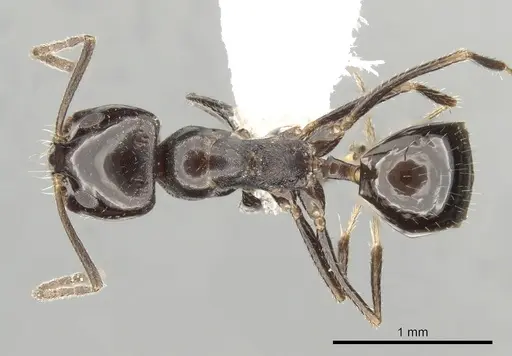
CASENT0909726
AntWeb'de Görüntüle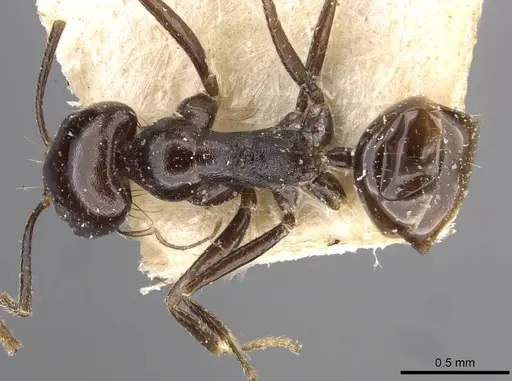
Literatür
Dağılım haritası yükleniyor...Ürünler yükleniyor...