
Dolichoderus maschwitzi
- Bilimsel Adı
- Dolichoderus maschwitzi
- Oymak (Tribe)
- Dolichoderini
- Alt Familya
- Dolichoderinae
- Yazar (Tanımlayan)
- Dill, 2002
- Dağılım
- 0 ülkede bulundu
Giriş
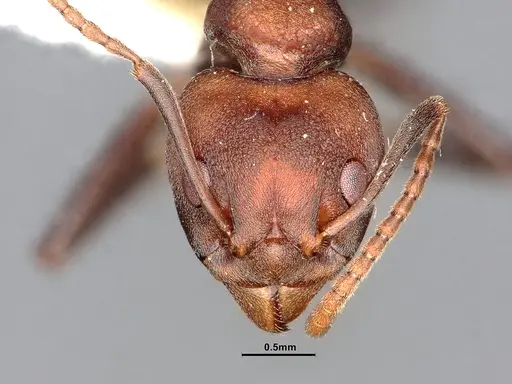
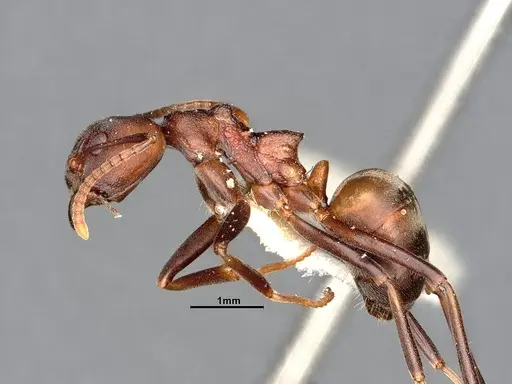
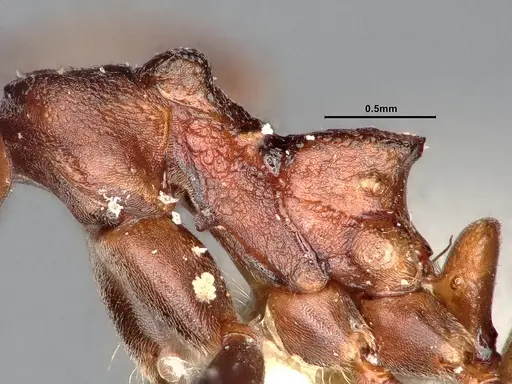
Dolichoderus maschwitzi is a small to medium-sized ant belonging to the Dolichoderus cuspidatus species group, commonly known as herdsmen ants. Workers measure 4.83-6.04 mm total length and display variable coloration ranging from yellow to reddish-brown or dark brown. They feature a distinctive bluntly coniform hump on the mesonotum and a well-developed superoccipital pit on the head. This species is native to the rainforests of Sabah in northeastern Borneo, where it lives among leaf litter on the forest floor . What makes D. maschwitzi unique is its specialized partnership with mealybugs. Like other herdsmen ants, it forms a mutualistic relationship with specific mealybug species (Promyrmococcus dilli and Promyrmococcus wayi), tending them for their honeydew secretions - similar to how farmers tend livestock. The queens are ergatoid, meaning they are wingless and develop within the colony rather than dispersing via nuptial flights .
Quick Summary
- Difficulty: Medium
- Origin & Habitat: Tropical rainforest of Sabah, northeastern Borneo. Found in leaf litter on the forest floor, where they build bivouac nests [1][2].
- Colony Type: Ergatoid queen system, queens are wingless and develop within the colony. Colony structure is not well documented.
- Size & Growth:
- Queen: size data unavailable, queen measurements in research are head measurements only (HL 1.47-1.49 mm), not total length [1]
- Worker: 4.83-6.04 mm total length [1]
- Colony: Unknown for this species, no specific colony size data available
- Growth: Unknown
- Development: Unknown, no specific development studies exist for this species (Development time is unconfirmed. Tropical ant species typically develop faster than temperate ones.)
- Antkeeping:
- Temperature: Keep warm at 24-28°C, these are tropical rainforest ants that need consistent warmth. Avoid temperatures below 22°C.
- Humidity: High humidity, they naturally live in damp leaf litter. Keep the nest substrate consistently moist but not waterlogged.
- Diapause: No, as a tropical species from Borneo, they do not require hibernation. Maintain consistent temperatures year-round [1].
- Nesting: They prefer ground-level nests in leaf litter or soil. In captivity, a naturalistic setup with moist substrate or a Y-tong/plaster nest works well. They are not arboreal, avoid tall nests. Keep nesting area dark and humid [1].
- Behavior: These are docile, non-aggressive ants that spend much of their time tending mealybugs for honeydew. Workers are active both day and night at trophobiosis sites. They do not have a functional sting and pose no danger to keepers. Escape risk is moderate, their medium size means standard formicarium barriers work well.
- Common Issues: maintaining humidity can be tricky, too dry and colonies struggle, too wet causes mold, specialized diet may be challenging, they prefer honeydew/sugar over solid protein, tropical species are sensitive to temperature drops below 22°C, ergatoid queens may be harder to establish than fully claustral species, wild-caught colonies may arrive with their mealybug partners and require specific care, colony size and growth rate are not well documented for this species
Housing and Nest Setup
Dolichoderus maschwitzi is a ground-nesting species that naturally lives in leaf litter on the rainforest floor. For captivity, a naturalistic setup with moist soil or coco fiber substrate works best, aim for a substrate depth of at least 3-4 cm to allow them to create chambers. Alternatively, a Y-tong or plaster nest with narrow chambers provides good visibility while maintaining humidity. Place the nest in a dark area of your setup, as these ants prefer dim conditions. The outworld should have a water tube and be escape-proof with standard barrier methods. [1]
Feeding and Diet
As herdsmen ants, D. maschwitzi has a strong preference for sugar sources. They naturally feed on honeydew secreted by their mealybug partners, so offering sugar water or diluted honey is ideal. Change sugar liquids every 2-3 days to prevent fermentation. For protein, they will accept small insects like fruit flies or small mealworm pieces, but these are secondary to their sugar needs. Unlike predatory ants, they are not active hunters, workers will collect sugar liquids readily but may ignore solid protein initially. Feed sugar constantly and protein 1-2 times per week. [1]
Temperature and Humidity
These tropical ants require warm, humid conditions. Keep the nest area at 24-28°C consistently, temperatures below 22°C can stress colonies and slow development. A small heating cable placed on one side of the nest creates a gentle gradient that workers can regulate by moving. Humidity should be high, mimicking the damp rainforest floor. The substrate should feel consistently moist but never waterlogged. Condensation on the nest walls is a good indicator of adequate humidity. Avoid placing the setup near air conditioning or drafty areas. Since they do not undergo diapause, maintain these conditions year-round without seasonal temperature drops. [1]
Colony Structure and Ergatoid Queens
One of the most interesting aspects of D. maschwitzi is its ergatoid queen system. Unlike most ant species where queens are winged and fly out to mate, ergatoid queens are born wingless and mate with males inside the nest. The queens are relatively small, the research provides head measurements of 1.47-1.49 mm, but total body length is not documented. This means founding colonies may not look dramatically different from established ones, the queen is not dramatically larger than workers and lacks wings. Colony establishment may be slower than species with larger claustral queens. [1]
Behavior and Activity
Dolichoderus maschwitzi is a docile, non-aggressive species that rarely shows defensive behavior. Workers are moderately active and can be observed both during the day and at night, which is typical for herdsmen ants that tend their mealybug partners around the clock. They do not possess a functional sting and pose no threat to keepers. In the wild, they spend significant time tending mealybugs and collecting honeydew, in captivity, this translates to a preference for sugar liquids over other food sources. [1]
Frequently Asked Questions
How long does it take for Dolichoderus maschwitzi to produce first workers?
This is unknown, no specific development studies exist for this species. Expect several months at optimal temperatures based on typical tropical ant development patterns.
What do Dolichoderus maschwitzi ants eat?
They prefer sugar sources, offer sugar water or diluted honey. They will also accept small protein sources like fruit flies or tiny mealworms, but sugar should always be available. This reflects their natural diet of honeydew from mealybugs.
Are Dolichoderus maschwitzi good for beginners?
They are rated as medium difficulty. While not aggressive, they have specific humidity and temperature requirements (tropical, high humidity) and prefer sugar-based diets. Beginners should be prepared to maintain warm, humid conditions year-round without hibernation breaks.
Do Dolichoderus maschwitzi need hibernation?
No, as a tropical species from Borneo, they do not require hibernation or winter cooling. Maintain consistent temperatures of 24-28°C year-round.
How big do Dolichoderus maschwitzi colonies get?
Colony size is not well documented for this specific species. Expect moderate growth over time, but exact maximum colony size is unknown.
What makes Dolichoderus maschwitzi different from other ants?
They are herdsmen ants that form mutualistic partnerships with mealybugs (Promyrmococcus species), tending them for honeydew like farmers. They also have ergatoid (wingless) queens that mate within the nest, unlike most ant species.
Can I keep multiple Dolichoderus maschwitzi queens together?
This has not been documented for this species. The natural colony structure is not well understood. Combining unrelated ergatoid queens is not recommended without evidence they can coexist.
What is the best nest type for Dolichoderus maschwitzi?
A naturalistic setup with moist substrate (soil or coco fiber) or a Y-tong/plaster nest works well. They are ground-nesters that prefer dark, humid conditions. Avoid arboreal or very dry setups.
Why are my Dolichoderus maschwitzi dying?
Common causes include: temperatures below 22°C (tropical species are cold-sensitive), low humidity causing desiccation, or improper diet (they need constant sugar access). Check that your heating and humidity levels are appropriate before assuming other issues.
Report an Issue
The current care sheet is based fully on literature. See inconsistencies, or something that's incorrect? Please , it will be resolved after review from an admin. Contributing to the blogs tab also helps providing information, to make us be able to further improve the caresheets. Thank you for your support!
References

Bu bakım rehberi şu lisans altındadır: CC BY-SA 4.0 .
Topluluk Blogları
CASENT0902964
AntWeb'de Görüntüle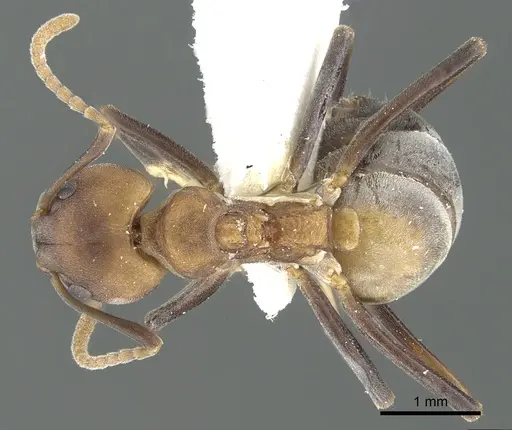
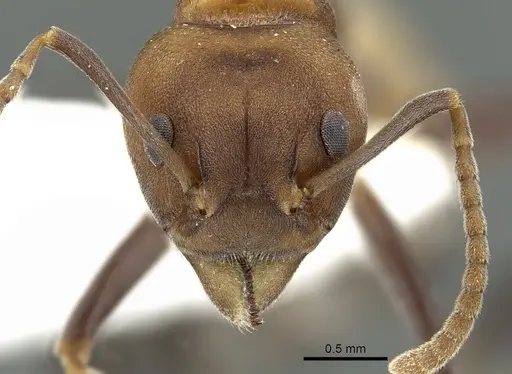
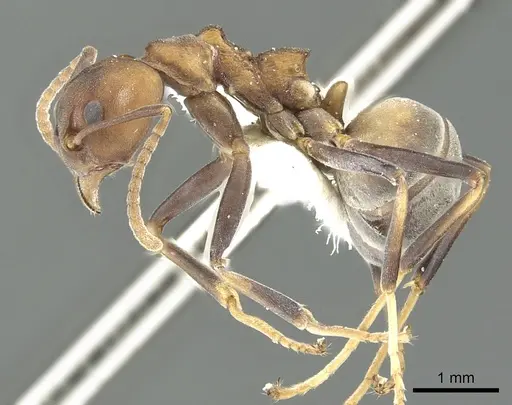
SMFHYM0008898
AntWeb'de Görüntüle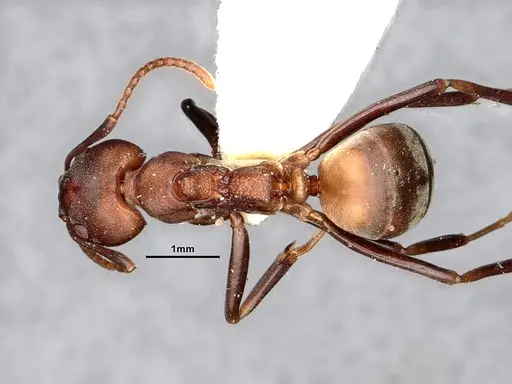
Literatür
Dağılım haritası yükleniyor...Ürünler yükleniyor...