
Colobopsis anderseni
- Bilimsel Adı
- Colobopsis anderseni
- Oymak (Tribe)
- Camponotini
- Alt Familya
- Formicinae
- Yazar (Tanımlayan)
- McArthur & Shattuck, 2001
- Dağılım
- 0 ülkede bulundu
Giriş
Colobopsis anderseni is a small ant native to the mangroves of Northern Australia. Major workers have a distinctive truncated, flattened head (called phragmotic) that they use to plug nest entrances when the tide comes in. Workers are yellowish-brown to reddish-brown with noticeably swollen fore femurs. This species belongs to the Camponotus macrocephalus species-group and was previously known as Camponotus anderseni before being reclassified to Colobopsis . What makes this ant extraordinary is its adaptation to one of the most challenging habitats on Earth. It nests exclusively in Sonneratia alba mangrove trees, where colonies face twice-daily tidal flooding. The ants have evolved the remarkable ability to survive complete submersion by sealing their nests with their specialized heads and switching to anaerobic respiration when oxygen runs out. They can survive for days in near-zero oxygen conditions - a feat unknown in any other ant species .
Quick Summary
- Difficulty: Expert
- Origin & Habitat: Northern Australia (Northern Territory and Kimberley region), exclusively in mangrove forests dominated by Sonneratia alba trees. Nests are located in twigs of terminal shoots, typically 5-6 meters above lowest astronomical tide, where they experience tidal inundation for over 60% of high tide periods [2][3].
- Colony Type: Single-queen colonies with documented queen replacement. Multiple founding queens may establish on the same branch, but only one dominant queen remains long-term.
- Size & Growth:
- Queen: ~6-7mm, inferred from Colobopsis genus
- Worker: ~4-6mm for minor workers, ~5-7mm for major workers, inferred from Colobopsis genus
- Colony: up to 30 workers
- Growth: Slow, colonies remain small
- Development: unknown (Colony growth is slow, with small numbers of brood present at any time (average 3.4 larvae and 2.5 pupae per nest) [2])
- Antkeeping:
- Temperature: This species is adapted to extreme heat. In their natural nests, temperatures reach 40-43°C during the day [2]. Keep nest area at 35-40°C to mimic their natural conditions. A heating cable on one side of the nest creates the necessary gradient. This is NOT a typical room-temperature ant, they need significant warmth.
- Humidity: Moderate to high. Natural habitat is mangrove with high humidity. Keep nest substrate consistently moist but not waterlogged. The species can tolerate brief saltwater exposure during tidal flooding in the wild, but freshwater is safer for captivity.
- Diapause: No, these ants live in a tropical mangrove environment with no cold season. They remain active year-round.
- Nesting: This is the most challenging aspect. In the wild, they nest exclusively inside living mangrove twigs (Sonneratia alba). The nest cavity extends through the entire internode (average 5.2cm length). In captivity, you would need to provide similar narrow, enclosed spaces, likely custom-built acrylic or plaster nests with narrow chambers. Standard test tubes are NOT suitable for this species.
- Behavior: Colobopsis anderseni is not aggressive and rarely leaves the safety of its nest cavity. Workers stay inside the branches, tending to coccids and caring for brood. They emerge briefly to feed on coccid secretions or hunt the specific coccid species (Myzolecanium) that lives in their nests. Major workers (soldiers) serve a unique defensive role: when the tide rises, they use their phragmotic heads to seal the entrance, protecting the colony from flooding. This is not a species that forages openly on surfaces. Escape risk is moderate, they are small but not particularly active outside the nest. As a Formicinae ant, they can spray formic acid from their acidopore when threatened, though they rely primarily on their head-plugging defense.
- Common Issues: Providing suitable nesting material is extremely difficult, they require narrow twig-like cavities that most antkeepers cannot source, Maintaining the extreme temperatures (35-40°C) they need is challenging and may damage other ant species, The obligate relationship with coccids means colonies may fail without their symbionts, Tidal flooding adaptation means they are highly sensitive to improper humidity and may drown if too wet, Small colony size and slow growth make them appear stagnant even when healthy
The Tidal Flooding Adaptation
This is arguably the most remarkable ant discovery of the last decade. Colobopsis anderseni is the first ant species ever documented to use anaerobic respiration, essentially switching to oxygen-free metabolism when submerged [2]. When major workers plug the nest entrance with their heads during high tide, oxygen inside the nest drops to near-zero within an hour. Rather than drowning, the ants survive by producing energy anaerobically, similar to how mammals produce lactate during intense exercise. They can survive an astonishing 72 hours in just 5% oxygen [2]. The CO2 tolerance is equally extreme, they can survive 10-15 hours in environments with over 30% CO2, concentrations that would kill most insects almost instantly. This adaptation allows them to thrive in a habitat where twice-daily flooding would be fatal to any other ant species.
Nesting in Mangrove Twigs
In the wild, Colobopsis anderseni nests exclusively inside the twigs of Sonneratia alba mangrove trees. The founding queen gnaws a small hole in a young green terminal shoot and excavates a cavity inside. Daughter workers later enlarge this cavity, but the nest always stays within a single internode (the section between two branch joints), averaging about 5.2cm in length [2]. Each tree functions as an isolated island, queens and workers have no way to reach other trees, so there's no inter-tree colony network. The lowest nests sit about 5-6 meters above the lowest astronomical tide, yet they still get flooded for over 60% of high tide events, sometimes with 2-3 meters of water above the nest [2]. In captivity, replicating this is extraordinarily difficult. You would need to provide narrow, enclosed spaces that mimic the interior of mangrove twigs.
The Coccid Symbiosis
This ant has an extremely specialized diet that makes captive keeping nearly impossible. Workers almost never leave the nest to forage. Instead, they rely almost entirely on two food sources: sugary secretions from coccids (scale insects) that live inside their nest cavities, and predation on a specific species of large coccid (Myzolecanium) that is found ONLY in Colobopsis anderseni nests [2]. These coccids are present in nearly every nest chamber, an average of 3.9 per nest, with up to 16 recorded. The coccids feed on plant sap from the twig walls and the ants tend them like livestock, protecting them and feeding on their honeydew. However, there's a catch: when the twig walls grow too thick (over 10-12mm), the coccids can no longer reach the phloem and die. This forces the colony to abandon the nest and establish a new one in a younger, thinner twig [2]. Without this obligate symbiosis, the ants cannot survive.
Extreme Temperature Tolerance
Colobopsis anderseni lives in one of the hottest ant habitats on the planet. The temperature inside their nests reaches an average of 40.1°C, with recorded highs of 43°C, that's just a few degrees below the lethal temperature for most insects [2]. The nests are essentially solar ovens, heating up far hotter than the surrounding air (which itself is 2.5°C warmer than official Darwin temperature readings). This extreme heat is likely part of their survival strategy: high temperatures increase metabolic rates, which may help them process the limited oxygen available during tidal flooding. For antkeepers, this means you cannot keep this species at typical room temperature. You would need to maintain nest temperatures in the 35-40°C range, hot enough to be uncomfortable for most human handlers and dangerous for other ant species.
Colony Structure and Reproduction
Colobopsis anderseni colonies are small but have complex social dynamics. A typical nest contains one dominant queen, around 16 workers, several larvae and pupae, and the ever-present coccid symbionts [2]. Multiple founding queens may establish on the same branch, but they compete until only one dominant queen remains. The old queen eventually becomes too swollen to move and is confined to the original chamber at the base of the branch. When she dies, she may be replaced by a newly established queen from the same branch [2]. Genetic studies confirm that when queens disappear from nests, they were killed by workers produced by the dominant queen, a form of intra-colony competition. This means colonies are functionally single-queen despite potentially starting with multiple foundresses.
Why This Species Is Not for Beginners
Let's be direct: Colobopsis anderseni is one of the most difficult ants to keep in captivity, possibly impossible for most hobbyists. The challenges are immense: they require nesting in narrow twig-like cavities (not standard formicaria), extreme temperatures of 35-40°C, a constant supply of live coccids (their obligate food source), and high humidity mimicking mangrove conditions. They cannot be fed standard ant foods like sugar water or protein insects, their entire diet depends on their symbiosis with coccids. There is no established captive breeding protocol because no one has successfully maintained this species long-term. Unless you have access to live mangrove twigs and coccid colonies, this species should remain an admiration-of-nature species rather than a keeper goal. Even advanced antkeepers should approach this with extreme caution. [2]
Frequently Asked Questions
Can I keep Colobopsis anderseni in a test tube?
No. Test tubes are completely unsuitable for this species. In the wild, they nest exclusively inside living mangrove twigs. The nests are narrow cavities extending through entire branch internodes (average 5.2cm long). You would need to provide similar narrow, enclosed spaces, likely custom-built acrylic or plaster nests with chambers that mimic twig interiors.
What do Colobopsis anderseni eat?
They eat almost nothing that typical antkeepers can provide. Workers rely almost entirely on sugary secretions from coccid symbionts that live in their nests, plus predation on a specific coccid species (Myzolecanium) found only in their nests. They do not accept standard sugar water, honey, or protein foods. Without their coccid symbionts, they will starve.
Do Colobopsis anderseni need hibernation?
No. These ants live in tropical Australian mangroves with no cold season. They remain active year-round and do not require any diapause or winter rest period.
Are Colobopsis anderseni good for beginners?
Absolutely not. This is an expert-only species, possibly impossible to keep in captivity. The challenges include: providing suitable twig-like nesting (not commercially available), maintaining extreme nest temperatures of 35-40°C, sourcing live coccid symbionts (their only food source), and replicating mangrove humidity. There is no established captive breeding protocol for this species.
How do Colobopsis anderseni survive being underwater?
Major workers plug the nest entrance with their specialized phragmotic (truncated, flattened) heads when the tide comes in. This creates a waterproof seal. When oxygen runs out, they become the first ant species known to switch to anaerobic respiration, processing energy without oxygen. They can survive 72 hours in just 5% oxygen and 10-15 hours in over 30% CO2 [2].
How big do Colobopsis anderseni colonies get?
Colonies remain small. A typical nest contains around 16 workers, with some nests reaching up to 30 workers. This is much smaller than most common ant species and reflects their specialized niche in narrow twig cavities [2].
What temperature do Colobopsis anderseni need?
Extremely high temperatures. In their natural nests, temperatures reach 40-43°C [2]. You would need to maintain nest areas at 35-40°C using heating cables or mats. This is far hotter than typical room temperature and would be uncomfortable for most other ant species.
Why do major workers have flat heads?
The truncated, flattened (phragmotic) head is a specialized adaptation for flood defense. Major workers use their heads like living plugs to seal the nest entrance when tidal waters rise. This prevents seawater from flooding the nest chamber but also stops gas exchange, which the ants survive through their unique anaerobic respiration ability [2][1].
Report an Issue
The current care sheet is based fully on literature. See inconsistencies, or something that's incorrect? Please , it will be resolved after review from an admin. Contributing to the blogs tab also helps providing information, to make us be able to further improve the caresheets. Thank you for your support!
References

Bu bakım rehberi şu lisans altındadır: CC BY-SA 4.0 .
Topluluk Blogları
CASENT0887751
AntWeb'de Görüntüle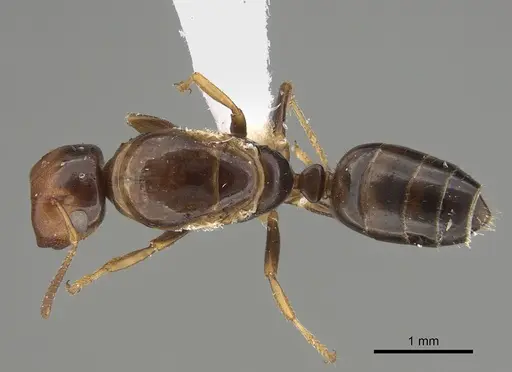
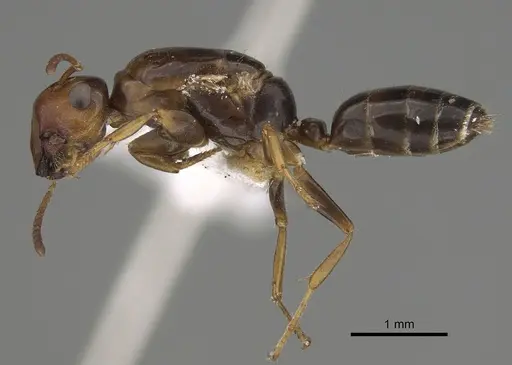
Literatür
Dağılım haritası yükleniyor...Ürünler yükleniyor...