
Cataulacus setosus
- Bilimsel Adı
- Cataulacus setosus
- Oymak (Tribe)
- Crematogastrini
- Alt Familya
- Myrmicinae
- Yazar (Tanımlayan)
- Smith, 1860
- Dağılım
- 0 ülkede bulundu
Giriş
Cataulacus setosus is a small arboreal ant species native to Southeast Asia and the Australasian region, found in Indonesia, Papua New Guinea, and the Philippines. Workers measure 4.1-4.2mm in total length with a distinctive appearance featuring long propodeal spines, coarse rugose sculpturing on the head and body, and numerous short erect hairs covering all surfaces. The species belongs to the granulatus group and is distinguished from related species by its particularly long propodeal spines and the sculpturation of its gaster. Queens are larger at 5.5-5.9mm and share similar morphology with reduced denticulation. This is an arboreal ant genus, meaning in the wild they likely nest in elevated locations such as in trees, rotting wood, or under bark. Almost nothing is known about the biology, colony structure, or captive care requirements of this species - it represents a genuine frontier for antkeepers.
Quick Summary
- Difficulty: Unknown, likely Medium to Hard
- Origin & Habitat: Tropical forests of Indonesia (Bacan, Waigeu), Papua New Guinea, and Philippines (Mindanao). Also recorded from Celebes (Tondano). Found across the Australasian and Indomalaya regions [1][2].
- Colony Type: Unconfirmed, colony structure has not been documented in scientific literature. As an arboreal Myrmicinae, likely forms moderate-sized colonies but the exact queen number (single or multiple) is unknown.
- Size & Growth:
- Queen: 5.5-5.9mm [1]
- Worker: 4.1-4.2mm [1]
- Colony: Unknown, no colony size data available
- Growth: Unknown
- Development: Unknown, no development data exists for this species (Development timeline has not been studied. Based on typical Myrmicinae patterns from tropical regions, development may take 4-8 weeks at warm temperatures, but this is purely estimated.)
- Antkeeping:
- Temperature: Unconfirmed, likely needs warm conditions (24-28°C) typical of tropical arboreal ants. Start in this range and observe colony activity.
- Humidity: Unconfirmed, likely requires moderate to high humidity (60-80%) typical of tropical forest species. Keep nest substrate moist but not waterlogged.
- Diapause: Unlikely, as a tropical species from New Guinea and Indonesia, diapause is probably not required. No seasonal data exists.
- Nesting: Arboreal species, likely nests in rotting wood, under bark, or in tree cavities in the wild. In captivity, a Y-tong (AAC) nest, plaster nest, or naturalistic setup with wood pieces works well. Avoid fully enclosed test tube setups, they prefer some vertical space and wood-based materials.
- Behavior: Behavior is unstudied. As a Cataulacus species, they are likely somewhat defensive but not overly aggressive. Their small size (4mm workers) means escape prevention is important, they can squeeze through small gaps. The long propodeal spines suggest they may have a defensive sting, though the sting is likely too small to penetrate human skin effectively. Arboreal ants are typically more active and may be faster-moving than ground-nesting species.
- Common Issues: no captive care information exists, this is a frontier species with no established husbandry protocols, escape prevention is critical due to small size, use fine mesh and tight-fitting lids, unknown founding behavior means introducing a queen to captivity is high-risk, lack of data on diet means experimental feeding is required, start with standard ant foods, tropical species may be sensitive to temperature drops, maintain warmth consistently
Species Overview and Identification
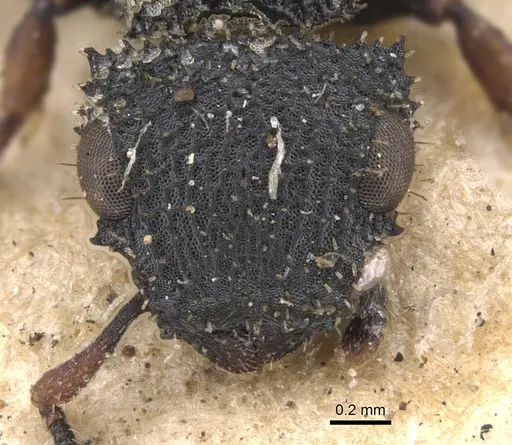
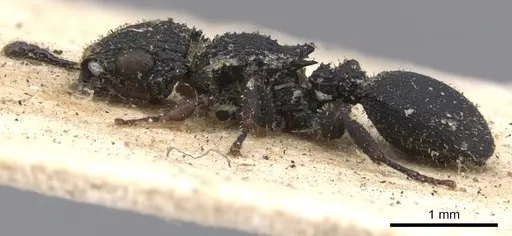
Cataulacus setosus is a small arboreal ant belonging to the Myrmicinae subfamily, specifically the Crematogastrini tribe. Workers measure 4.1-4.2mm in total length, making them a relatively small species. The most distinctive morphological feature is the pair of long propodeal spines, these are at least half as long as the distance between them, which is unusual and separates this species from most others in the genus. The body is covered in coarse, conspicuous sculpturing with a rugoreticulum pattern on the head and reticulate-rugose texture on the alitrunk. Short, thick, blunt erect hairs are numerous on all dorsal surfaces of the head, body, and appendages. Queens are larger at 5.5-5.9mm and have reduced denticulation compared to workers. The species was originally described by Frederick Smith in 1860 from Bacan Island (formerly Batjan) in Indonesia [3]. This species uses a smear defense mechanism, they have a modified, flattened spatulate stinger used to wipe or smear venom onto enemies rather than piercing flesh.
Distribution and Habitat
This species is known from a relatively limited range in the Australasian and Indomalayan regions. Specimens have been collected from Bacan Island and Waigeu in Indonesia, throughout Papua New Guinea, and from Mindanao in the Philippines. Additional records exist from Celebes (Tondano) [2]. The presence of Cataulacus setosus in New Guinea represents the furthest known easterly penetration of the genus Cataulacus. As an arboreal ant, they are associated with tropical forest environments where they likely nest in elevated locations such as rotting wood, under bark, or in tree hollows. The tropical distribution (near the equator at low latitudes) indicates they are adapted to warm, humid conditions year-round with no cold season.
Nest Preferences and Housing
Since Cataulacus is an arboreal genus, these ants almost certainly prefer nesting in wood or wood-based materials rather than soil. In captivity, provide a nest that mimics their natural arboreal habitat. Y-tong (acrylic) nests or plaster nests work well for arboreal Myrmicinae. You can also create naturalistic setups with pieces of rotting wood, cork bark, or similar materials. Avoid deep soil setups, these ants are not ground-nesters. The nest should have some vertical orientation and provide chambers scaled to their 4mm worker size. Ensure the nest material can hold moisture without becoming waterlogged, as moderate humidity is important. Given their small size, use tight-fitting lids and fine mesh on any access points to prevent escapes.
Feeding and Diet
The natural diet of Cataulacus setosus is completely unstudied. As a Myrmicinae, they likely have an omnivorous diet typical of most ants in this subfamily, accepting both carbohydrates (honey, sugar water) and protein sources (insects). Arboreal ants often supplement their diet with honeydew from aphids or scale insects, so sugar sources may be particularly important. Start with standard ant foods: offer sugar water or honey regularly, and provide small insects like fruit flies, pinhead crickets, or mealworms as protein. Since nothing is known about their specific dietary preferences, be prepared to experiment. Observe what the colony accepts and remove any uneaten food after 24-48 hours to prevent mold.
Temperature and Environmental Conditions
As a tropical species from Indonesia and Papua New Guinea, Cataulacus setosus almost certainly requires warm temperatures. Based on the tropical distribution and typical arboreal ant requirements, aim for temperatures in the range of 24-28°C. Room temperature may be sufficient if your home stays in this range, otherwise use a heating cable or heating mat on one side of the nest to create a gentle warmth gradient. Place the heating element on top of the nest to avoid evaporating moisture from below. Temperature drops below 20°C for extended periods would likely stress these ants. Humidity should be moderate to high (60-80%), keep the nest substrate moist but saturated. Since no diapause data exists and the species comes from a tropical climate with no winter, do not attempt hibernation.
Colony Structure and Reproduction
The colony structure of Cataulacus setosus is completely unknown, no scientific papers have documented whether they are monogyne (single queen) or polygyne (multiple queens). Similarly, nothing is known about their founding behavior, nuptial flight timing, or colony development. Most Myrmicinae are claustral, meaning the queen seals herself in a chamber and raises the first workers alone using stored fat reserves, but this is not confirmed for Cataulacus setosus. If you acquire a founding queen, provide her with a small, dark, humid chamber and do not disturb her. Expect a long wait (potentially several months) before seeing the first workers (nanitics), as no development timeline data exists for this species. Be patient, many tropical species develop slowly.
Frequently Asked Questions
How do I care for Cataulacus setosus ants?
Care is largely unknown since this species has never been documented in captivity. Based on the genus being arboreal and tropical, provide a warm (24-28°C), humid environment with a wood-based nest (Y-tong or plaster). Feed standard ant foods, sugar water and small insects. This is a frontier species where you will be experimenting.
What do Cataulacus setosus ants eat?
Their natural diet is unstudied. As a Myrmicinae, they likely accept both carbohydrates and protein. Offer sugar water or honey as a constant carbohydrate source, and small insects (fruit flies, pinhead crickets, mealworms) as protein. Remove uneaten food after 1-2 days.
What size colony does Cataulacus setosus reach?
Colony size is unknown, no scientific data exists on maximum colony size for this species.
Do Cataulacus setosus ants sting?
They have propodeal spines and belong to the Myrmicinae subfamily which uses a smear defense mechanism, they wipe venom onto enemies rather than piercing. Most small ants in this subfamily have stings that are too small to penetrate human skin. Handle gently regardless.
What temperature do Cataulacus setosus ants need?
Temperature requirements are unconfirmed but likely 24-28°C based on their tropical distribution in Indonesia and Papua New Guinea. Keep them warm and avoid temperatures below 20°C.
How long does it take for Cataulacus setosus to develop from egg to worker?
Development timeline is completely unknown, no research exists on this species. Based on typical tropical Myrmicinae, development may take 4-8 weeks at warm temperatures, but this is a rough estimate.
Is Cataulacus setosus a good species for beginners?
No, this is not a recommended species for beginners. Almost nothing is known about their care requirements, and they represent a genuine frontier where keepers will be establishing husbandry protocols through experimentation.
Do Cataulacus setosus need hibernation?
Probably not. As a tropical species from near the equator, they likely do not require a diapause period. No seasonal data exists to confirm this, but hibernation is unlikely to be necessary.
Can I keep multiple Cataulacus setosus queens together?
Unknown, colony structure (monogyne vs polygyne) has not been documented. Do not attempt combining unrelated queens until more is known about their social structure.
What type of nest should I use for Cataulacus setosus?
Use an arboreal-appropriate nest, Y-tong (AAC), plaster nest, or naturalistic setup with cork bark or rotting wood. Avoid test tubes and soil-based setups. They are arboreal ants, not ground-nesters.
Where is Cataulacus setosus found?
They are found in Indonesia (Bacan, Waigeu), Papua New Guinea, the Philippines (Mindanao), and Celebes (Tondano). This is a limited tropical distribution in the Australasian and Indomalayan regions.
Why is there so little information about Cataulacus setosus?
This species has simply never been studied in detail. It was described in 1860 but biological research on this ant is virtually non-existent. This makes it a frontier species for antkeepers, you would be pioneering captive husbandry for a species with no established protocols.
Report an Issue
The current care sheet is based fully on literature. See inconsistencies, or something that's incorrect? Please , it will be resolved after review from an admin. Contributing to the blogs tab also helps providing information, to make us be able to further improve the caresheets. Thank you for your support!
References

Bu bakım rehberi şu lisans altındadır: CC BY-SA 4.0 .
Topluluk Blogları
CASENT0280800
AntWeb'de Görüntüle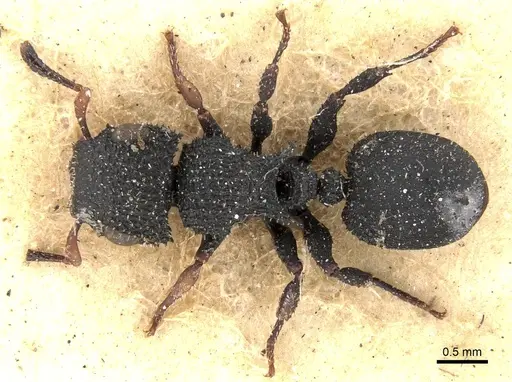
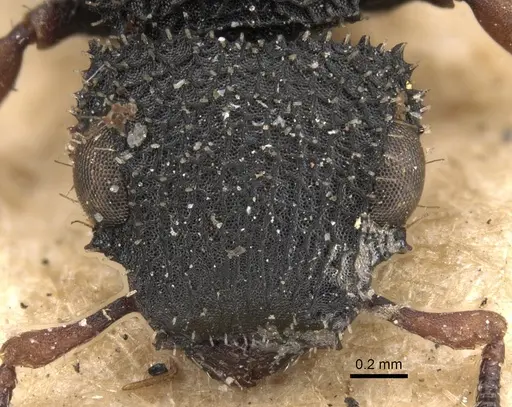
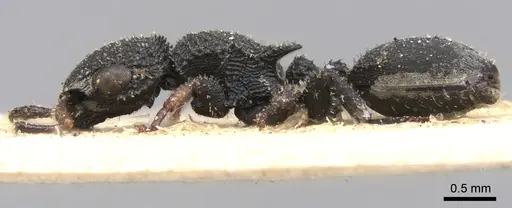
CASENT0901455
AntWeb'de Görüntüle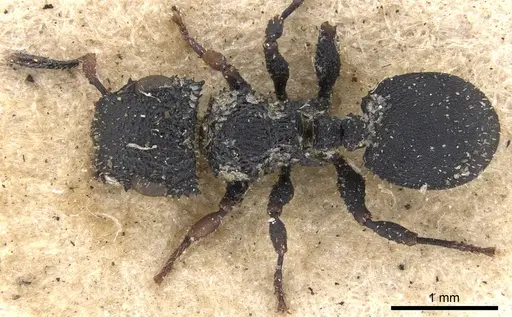
Literatür
Dağılım haritası yükleniyor...Ürünler yükleniyor...