
Carebara carinata
- Bilimsel Adı
- Carebara carinata
- Oymak (Tribe)
- Crematogastrini
- Alt Familya
- Myrmicinae
- Yazar (Tanımlayan)
- Bharti & Kumar, 2013
- Dağılım
- 0 ülkede bulundu
Giriş
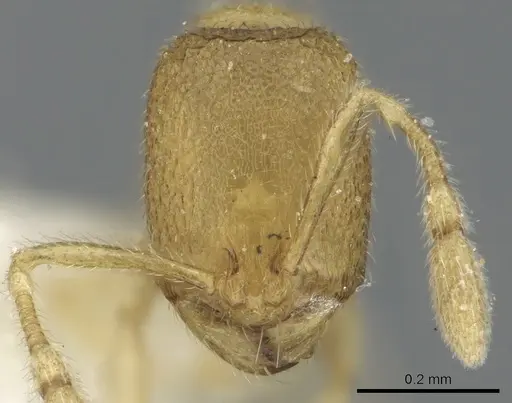
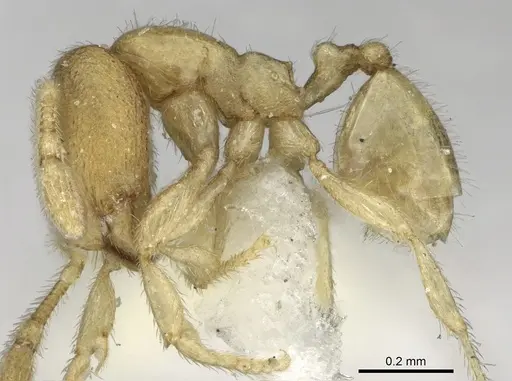
Carebara carinata is an extremely tiny ant species endemic to the Himalayan region of India. Workers measure approximately 1.6mm in total length, making them among the smallest ants you could keep . They are monomorphic, meaning all workers look the same size. This species is completely blind with no eyes, and has 11-segmented antennae . The most distinctive feature is a ridge (carina) across the back of the head - this is what the species name 'carinata' refers to . Their body is yellowish brown and covered in short erect hairs . This species was only described in 2013, and remarkably, only three worker specimens have ever been found . Nothing is known about their biology in the wild.
Quick Summary
- Difficulty: Expert
- Origin & Habitat: This species is only known from Ghati in Himachal Pradesh, northern India, at an elevation of around 450 meters [1]. The type specimens were collected from a soil core sample, suggesting they nest in soil [1]. The region has a subtropical highland climate with distinct seasons.
- Colony Type: Completely unknown. Only minor workers have been described, no queens, males, or colony structure has ever been documented [2].
- Size & Growth:
- Queen: Unknown, queen caste has never been described
- Worker: ~1.6mm total length [1]
- Colony: Unknown, no colony data exists
- Growth: Unknown
- Development: Unknown, no development data exists for this species (Given that no biology has been documented, development timeline cannot be estimated with any confidence)
- Antkeeping:
- Temperature: Unknown, no thermal data exists for this species. Related Carebara species are typically tropical to subtropical, so room temperature (20-26°C) would be a reasonable starting point if you obtain this species.
- Humidity: Unknown. The Ghati region experiences moderate humidity. Keep substrate moist but not waterlogged as a starting point.
- Diapause: Unknown, no seasonal data exists
- Nesting: Unknown. Type specimens were collected from soil cores, suggesting ground-nesting [1]. Use standard small-ant setups like test tubes or Y-tong nests with fine escape barriers.
- Behavior: Completely unstudied. As a Carebara species, they are likely predatory on small arthropods, but this is speculative. Their tiny size and lack of eyes suggest they may be subterranean or ground-dwelling. Escape risk is extremely high due to their minute 1.6mm size, use fine mesh barriers. Defense mechanism is unknown for this species specifically, but Myrmicinae ants typically use stingers to smear venom onto enemies.
- Common Issues: no biological data exists, this is one of the least studied ant species in the world, colony founding behavior is completely unknown, no confirmed diet, feeding success is entirely uncertain, very small size makes escape prevention critical, no information on whether they can be kept in groups or require specific colony structures, queen caste has never been described, captive breeding may be impossible
Identification and Distinction
Carebara carinata can be identified by several unique features. The most distinctive is the transverse carina (ridge) across the posterior margin of the head, this is the feature the species name refers to [1]. They have 11-segmented antennae, which is unusual among Indian Carebara species [1][2]. The propodeum has short triangular spines, and the metanotal groove is deep and narrow [1]. They can be distinguished from the similar C. sangi by having propodeal spines (C. sangi has none), a deeper metanotal groove, and a petiole peduncle without an anteroventral process [1]. Workers are completely blind with no eyes visible [1].
Distribution and Habitat
This species is endemic to India, known only from a single location in Himachal Pradesh state [3]. The type locality is Ghati, at approximately 450 meters elevation [1]. The coordinates are 31.935957°N, 75.934603°E [1]. This is in the foothills of the Himalayas in northern India. The specimens were collected using soil cores, indicating they nest in soil rather than in wood or under stones [1]. No other records of this species exist in scientific literature.
What We Don't Know - The Biology Gap
It cannot be overstated how little we know about Carebara carinata. This species was only described in 2013, and since then, no additional biological studies have been published [1]. Only three worker specimens exist in collections, the holotype and two paratypes [1]. We have no information on: the queen caste (never described), males (never seen), colony size, colony structure, founding behavior, diet, predators, seasonal activity patterns, or any aspect of their natural history [2]. This is one of the least-studied ant species in the world. Any care advice would be entirely speculative based on genus-level assumptions, not species-specific data. If you obtain this species, you would essentially be pioneering its husbandry from scratch.
Keeping Unknown Species - General Considerations
If you somehow obtain Carebara carinata, treat it as an experimental species. Start with standard protocols for tiny myrmicine ants: small test tube setups with cotton-plugged water reservoirs, keep them at room temperature (20-26°C), maintain moderate substrate moisture, and use fine mesh barriers for escape prevention given their minute 1.6mm size. Feed small protein sources like fruit flies, pinhead crickets, or similar micro-prey. Do not expect to find specific care guides, you may need to document your own observations and potentially contribute to scientific knowledge. This species is not recommended for beginners precisely because so little is known about its requirements.
Defense Mechanism
The defense mechanism for Carebara carinata specifically is unstudied. As a member of the Myrmicinae subfamily and Crematogastrini tribe, this species likely possesses a modified, flattened stinger used to wipe or smear venom onto enemies rather than piercing flesh. This is the typical defense strategy for this group. Given their extremely small size (1.6mm), any venom delivery would likely be imperceptible to humans.
Frequently Asked Questions
How do I keep Carebara carinata ants?
We genuinely do not know, no biological data exists for this species. If you obtain them, you would need to experiment with standard tiny-ant husbandry: test tube setups, room temperature, small prey items, and excellent escape prevention due to their 1.6mm size. Document your observations carefully.
What do Carebara carinata eat?
Unknown. As a Myrmicinae ant, they likely eat small invertebrates, but no feeding observations have been documented. Offer small live prey like fruit flies, springtails, or micro crickets as a starting point.
How long does Carebara carinata take to develop from egg to worker?
Unknown, no development data exists for this species. The queen caste has never been described, so even basic colony founding is a mystery.
Do Carebara carinata ants sting?
Unknown, no observations of their defense behavior exist. Given their tiny 1.6mm size, any sting would likely be imperceptible to humans. Myrmicinae ants typically smear venom using their stinger rather than inject it.
Are Carebara carinata good for beginners?
No. This species cannot be recommended for beginners because absolutely no husbandry information exists. Keeping them would be pure experimentation with unknown success odds.
What temperature do Carebara carinata need?
Unknown, no thermal studies exist. The type locality in Himachal Pradesh has a subtropical highland climate. Room temperature (20-26°C) would be a reasonable guess, but this is entirely speculative.
Do Carebara carinata need hibernation?
Unknown, no seasonal data exists. Himachal Pradesh does have cold winters, so some form of winter dormancy may be natural, but this is unconfirmed.
How big do Carebara carinata colonies get?
Unknown, no colony size data exists. Only three worker specimens have ever been collected.
Can I keep multiple Carebara carinata queens together?
Unknown, the colony structure is completely unstudied. The queen caste has never been described, so we do not even know if colonies are single-queen or multi-queen.
Where does Carebara carinata live?
Only known from Ghati in Himachal Pradesh, northern India, at 450m elevation. The species is endemic to this small area [1][3].
Report an Issue
The current care sheet is based fully on literature. See inconsistencies, or something that's incorrect? Please , it will be resolved after review from an admin. Contributing to the blogs tab also helps providing information, to make us be able to further improve the caresheets. Thank you for your support!
References

Bu bakım rehberi şu lisans altındadır: CC BY-SA 4.0 .
Topluluk Blogları
CASENT0906089
AntWeb'de Görüntüle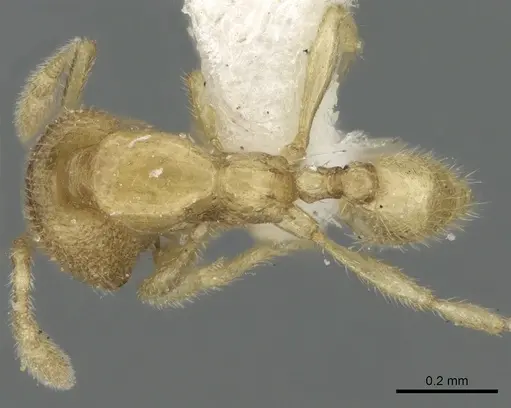
Literatür
Dağılım haritası yükleniyor...Ürünler yükleniyor...