
Camponotus improprius
- Bilimsel Adı
- Camponotus improprius
- Alt Cins
- Pseudocolobopsis
- Oymak (Tribe)
- Camponotini
- Alt Familya
- Formicinae
- Yazar (Tanımlayan)
- Forel, 1879
- Dağılım
- 0 ülkede bulundu
Giriş
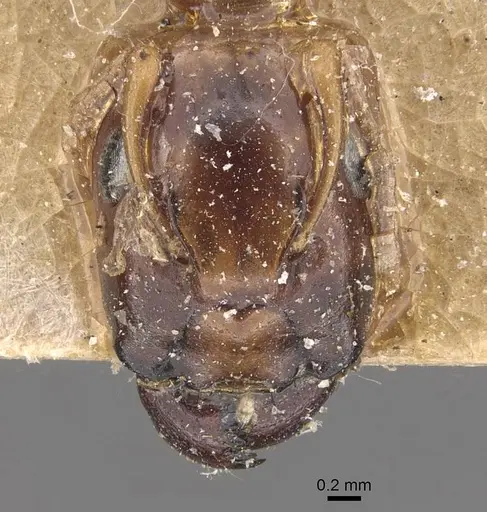
Camponotus improprius is a Neotropical carpenter ant endemic to the mountains of northern Colombia. Major workers have a distinctive flattened clypeus (the area above the mouth) that is trapezoidal and bell-shaped with two lobes on the front edge - a unique identification feature . This species belongs to the subgenus Pseudocolobopsis and is known only from the department of Norte de Santander, specifically the Ocaña region . The biology of this ant has never been studied in the wild or in captivity - all care recommendations are based on typical Camponotus genus patterns rather than species-specific research.
Quick Summary
- Difficulty: Medium
- Origin & Habitat: Norte de Santander, Colombia, mountainous Neotropical region around Ocaña [1][2]
- Colony Type: Unknown, no research on colony structure for this species
- Size & Growth:
- Queen: Size data unavailable, no measurements exist for this species [1]
- Worker: Size data unavailable, no measurements exist for this species [1]
- Colony: Unknown, no research on colony size for this species
- Growth: Unknown, no species-specific growth data
- Development: Unknown, development has not been studied for this species (No development data exists, estimates based on genus patterns would be speculative)
- Antkeeping:
- Temperature: Unknown, no species-specific research exists. As a Neotropical Colombian species, likely needs warm conditions (22-26°C) typical of the genus, but this is unconfirmed.
- Humidity: Unknown, no species-specific research exists. Based on Neotropical carpenter ant patterns, moderate humidity is likely appropriate.
- Diapause: Likely minimal or no true diapause, Colombia has mild seasons with little temperature variation [1]
- Nesting: Based on subgenus Pseudocolobopsis, likely nests in rotting wood [1]. Y-tong (AAC) or plaster nests recommended.
- Behavior: Behavior is unstudied. Based on typical Camponotus patterns, workers likely forage individually, primarily at night, and are moderately defensive. They will bite and spray formic acid when threatened (standard Formicinae defense). Escape risk is moderate, standard barriers should work.
- Common Issues: biology is completely unknown, colonies may have unexpected requirements, no species-specific temperature or humidity data exists, slow founding phase is normal for Camponotus but exact timing is unknown, wild-caught colonies may carry parasites or diseases, neotropical species may not tolerate temperature drops that temperate ants can survive
Identification and Range
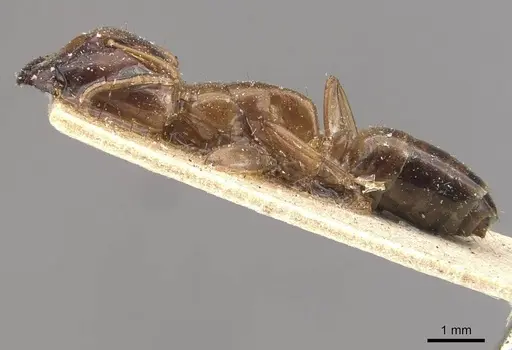
Camponotus improprius is identified by its major workers having a strongly flattened, almost concave clypeus that is trapezoidal bell-shaped with two lobes on the anterior border [1]. The scape apex is slightly wider than the axis, and the frontal carina extends slightly beyond the level of the middle of the eye [1]. This species is a member of the subgenus Pseudocolobopsis [1]. It is similar to Camponotus claviscapus but can be distinguished by having the entire clypeus surface in the same plane, whereas C. claviscapus only has the anterior half in the same plane [1]. It could be confused with C. curviscapus but does not have the anterior part of the head truncated as that species does [1]. This ant is known only from the type locality in Ocaña, department Norte de Santander, Colombia [1][2].
Nest Preferences and Housing
This species belongs to the subgenus Pseudocolobopsis, a group known for nesting in rotting wood [1]. In captivity, Y-tong (AAC) nests or plaster nests that maintain moderate humidity are recommended. A test tube setup works well for founding queens. Provide a water tube connected to the nest for humidity control. Since the natural nesting habitat is likely rotting wood, adding a small piece of wood or bark to the outworld can help them feel at home.
Feeding and Diet
Like other Camponotus species, these ants are omnivorous. They accept sugar sources (honey, sugar water) and protein (dead insects, small crickets, mealworms). Carpenter ants are typically nocturnal foragers, so offering food in the evening and removing uneaten food after 24-48 hours helps prevent mold. A constant sugar source is recommended, with protein offered several times per week depending on colony size.
Temperature and Seasonal Care
As a Neotropical species from Colombia, this ant likely needs warm conditions year-round. Keep the nest area in the low-to-mid 20s°C range. A heating cable placed on one side of the nest creates a temperature gradient. Avoid temperatures below 18°C for extended periods. Unlike temperate Camponotus that undergo true hibernation, this species likely experiences only minor seasonal slowdowns due to Colombia's mild climate.
Defense Mechanism
Camponotus improprius belongs to the subfamily Formicinae and tribe Camponotini. Like all ants in this group, they lack a functional sting. Their defense involves biting the target and spraying a stream of concentrated formic acid from an acidopore into the wound.
Frequently Asked Questions
How long does it take for Camponotus improprius to raise first workers?
Unknown, development has not been studied for this species. Typical Camponotus development takes 6-10 weeks, but this is unconfirmed for C. improprius.
Can I keep multiple Camponotus improprius queens together?
Not recommended. While not directly studied, most Camponotus species form single-queen colonies. Combining unrelated foundresses would likely result in fighting.
What do Camponotus improprius eat?
They are omnivorous like other carpenter ants. Offer a constant sugar source (honey or sugar water) and protein sources like dead insects, small crickets, or mealworms several times per week.
Are Camponotus improprius good for beginners?
This species is not ideal for beginners because its biology is completely unknown, there is no species-specific care research. Experienced antkeepers who can adapt to unexpected needs would have the best chance of success.
What temperature do Camponotus improprius need?
No species-specific data exists. As a Neotropical Colombian species, keeping them warm (22-26°C) is a reasonable starting point, but you may need to experiment.
Do Camponotus improprius need hibernation?
Probably not. As a Colombian Neotropical species, they likely do not require a true hibernation period. Simply maintaining normal warm temperatures year-round is recommended.
When should I move Camponotus improprius to a formicarium?
Keep them in a test tube setup for the founding phase. Once the colony reaches 20-30 workers and you see the queen regularly leaving the nest to forage, transition to a proper nest (Y-tong or plaster nest).
How big do Camponotus improprius colonies get?
Unknown, no research exists on colony size for this species. Typical Camponotus colonies reach several hundred workers over several years.
Why is my Camponotus improprius colony not growing?
Check temperature (keep warm), humidity (moderate but not waterlogged), and food availability. Since biology is unknown, experimental adjustment of conditions may be needed. Slow growth can also be normal during the founding phase.
Report an Issue
The current care sheet is based fully on literature. See inconsistencies, or something that's incorrect? Please , it will be resolved after review from an admin. Contributing to the blogs tab also helps providing information, to make us be able to further improve the caresheets. Thank you for your support!
References

Bu bakım rehberi şu lisans altındadır: CC BY-SA 4.0 .
Topluluk Blogları
CASENT0910662
AntWeb'de Görüntüle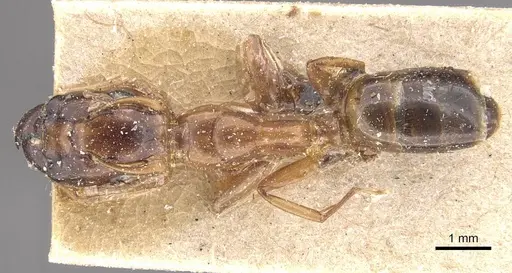
Literatür
Dağılım haritası yükleniyor...Ürünler yükleniyor...