
Axinidris okekai
- Bilimsel Adı
- Axinidris okekai
- Oymak (Tribe)
- Tapinomini
- Alt Familya
- Dolichoderinae
- Yazar (Tanımlayan)
- Snelling, 2007
- Dağılım
- 1 ülkede bulundu
Giriş
Axinidris okekai are tiny arboreal ants from Kenya's Kakamega Forest. Workers are minute - among the smallest ants known - with dark brown bodies, slightly paler mesosomas, and yellowish mandible bases . All known specimens have been collected from vines and forest canopy vegetation using fogging techniques; no queens or males have ever been described . This makes the species currently impossible to keep in captivity, as colony establishment requires a queen that has never been documented.
Quick Summary
- Difficulty: Expert (currently unavailable)
- Origin & Habitat: Kenya, specifically Kakamega Forest at approximately 1600 meters elevation (Afrotropical region) [1][2]. Arboreal, collected from vines and forest canopy including Teclea nobilis and Heinsenia diervillioides [1].
- Colony Type: Unknown, only worker caste documented [2]
- Size & Growth:
- Antkeeping:
- Temperature: Likely tropical requirements, Kakamega Forest has stable warm temperatures year-round. If housing workers, start around 24-26°C.
- Humidity: High humidity expected for rainforest species, keep nest materials damp but not waterlogged.
- Diapause: Likely not required, tropical species from equatorial Kenya.
- Nesting: Arboreal, in nature they inhabit vines and trees. Would need vertical setups with branches or vines [1].
- Behavior: Arboreal foragers. Extremely small size creates extreme escape risk, they can pass through gaps that would contain much larger ants [1].
- Common Issues: only workers known, no queens described means colonies cannot be started., extremely small size requires specialized micro-containment not needed for larger species., complete absence of captive care data makes any attempt high-risk., wild collection requires specialized fogging equipment and permits.
Why Axinidris okekai Cannot Currently Be Kept
Axinidris okekai exists in a peculiar position for antkeepers: scientists know the species exists, but have never found a queen. All specimens collected to date have been workers [2]. Without queens, you cannot start a colony. Workers alone cannot reproduce, and without a foundress, there is no brood to raise. This species represents a reality of ant science, many tropical ants are known only from stray workers caught in fogging samples or vegetation surveys. Until researchers discover a nest with queens and brood, or document a nuptial flight, this species remains unavailable to the antkeeping hobby.
Natural History and Arboreal Habits
In their native Kakamega Forest in Kenya, Axinidris okekai live high above the ground. Researchers found them on vines and in the canopy, collecting specimens by fogging trees including Teclea nobilis and Heinsenia diervillioides [1]. This arboreal lifestyle means they likely forage along branches and vines, possibly tending sap-sucking insects for honeydew like many relatives in the subfamily Dolichoderinae. The forest sits at around 1600 meters elevation with high rainfall and stable warm temperatures year-round.
Identification and Size
These are among the smallest ants you might encounter. Workers measure less than 1.1 mm in body length [1]. They appear dark brown overall with slightly paler mesosomas and yellowish mandible bases. Key identifying features include the lack of erect hairs on the antennal scape and pronotal disc, plus short right-angled spines on the propodeum [1]. Their tiny size means they would require extremely fine mesh or barriers to contain, standard ant setups would be escape-proof fortresses for these minute insects.
Theoretical Care Requirements
If queens were ever found, care would likely mirror other tiny arboreal ants. You would need a vertical setup with branches or vines, high humidity to match their rainforest home, and warm stable temperatures around 24-28°C. Feeding would likely involve sugar sources like honeydew or sugar water, plus tiny protein prey. However, these are educated guesses based on related species. Without confirmed founding behavior, even basic questions like whether queens seal themselves in or must forage remain unanswered.
Frequently Asked Questions
Can I keep Axinidris okekai in a test tube setup?
No. Test tube setups require a queen to start a colony, and Axinidris okekai queens have never been described. Only workers are known to science, and workers cannot start colonies.
How big are Axinidris okekai workers?
They are extremely small, workers measure less than 1.1 mm in body length [1].
Where do Axinidris okekai come from?
They are native to Kakamega Forest in Kenya, East Africa. Specimens have been collected from vines and by fogging trees in this tropical rainforest [1].
Do Axinidris okekai queens exist?
Queens have never been collected or described. All known specimens are workers [2].
What do Axinidris okekai eat?
Their diet is unconfirmed. Based on their subfamily and arboreal habits, they likely collect honeydew from sap-sucking insects and possibly small prey, but this is speculation.
Are Axinidris okekai good for beginners?
No. They are unsuitable for any keeper at present because colonies cannot be established without queens, which remain undiscovered.
How long until Axinidris okekai get their first workers?
This is unknown. Development timelines require observing a founding queen, which has never been documented for this species.
Do Axinidris okekai need hibernation?
Likely not. They come from tropical Kenya where temperatures remain stable year-round. If kept, they would probably need consistent warmth without a winter rest period.
Report an Issue
The current care sheet is based fully on literature. See inconsistencies, or something that's incorrect? Please , it will be resolved after review from an admin. Contributing to the blogs tab also helps providing information, to make us be able to further improve the caresheets. Thank you for your support!
References

Bu bakım rehberi şu lisans altındadır: CC BY-SA 4.0 .
Topluluk Blogları
CASENT0217092
AntWeb'de Görüntüle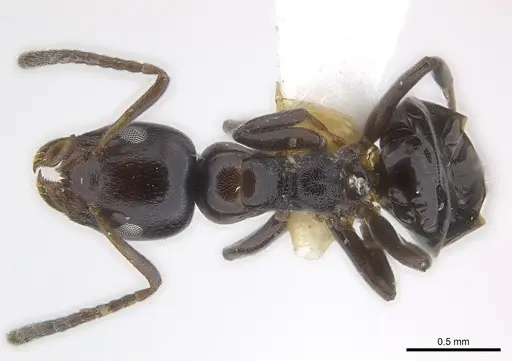
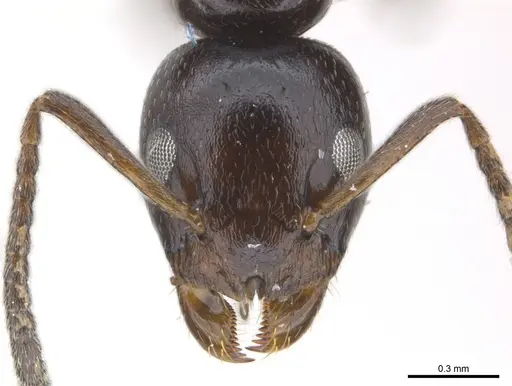
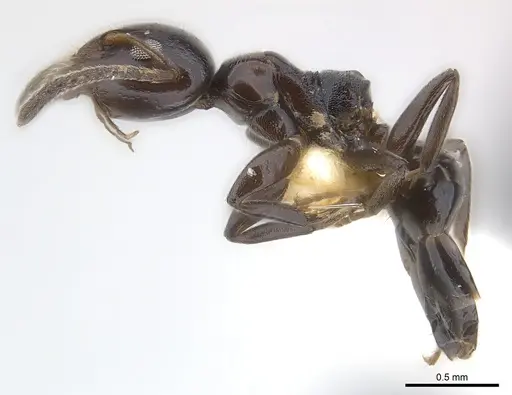
Literatür
Dağılım haritası yükleniyor...Ürünler yükleniyor...