
Axinidris hylekoites
- Bilimsel Adı
- Axinidris hylekoites
- Oymak (Tribe)
- Tapinomini
- Alt Familya
- Dolichoderinae
- Yazar (Tanımlayan)
- Shattuck, 1991
- Dağılım
- 0 ülkede bulundu
Giriş
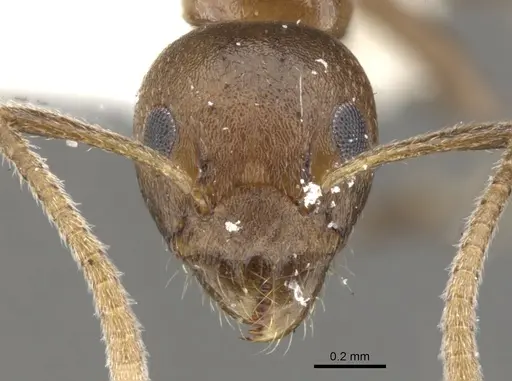
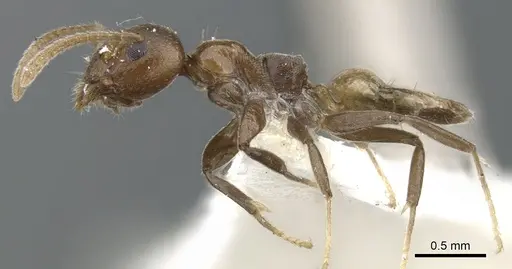
Axinidris hylekoites is a tiny, reddish-yellow ant native to Ghana in West Africa. Workers have reddish heads and mesosomas with yellowish gasters . This species is exceptionally rare in scientific collections, known only from specimens collected from a single nest inside a rotten tree branch at the Cocoa Research Institute in Tafo, Ghana in 1971 . Males have never been collected, and no living colonies have been studied by scientists .
Quick Summary
- Difficulty: Expert
- Origin & Habitat: Ghana, West Africa, tropical forest, specifically collected from a rotten tree branch in a cocoa research plantation [2][1].
- Colony Type: Unknown, only type specimens exist, no colony structure studies available [2].
- Size & Growth:
- Queen: Size data unavailable, paratype queen exists but was not measured [2].
- Worker: Approximately 2-3mm total length, inferred from head width of 0.69mm typical of tiny Dolichoderinae [1].
- Colony: Unknown, no colony data available [2].
- Growth: Unknown
- Development: Unknown, no development studies exist for this species. (Development timeline unstudied.)
- Antkeeping:
- Temperature: Likely 24-28°C based on tropical Ghanaian climate. Start at 25°C and adjust based on activity levels.
- Humidity: Moderate to high humidity, nest in rotting wood suggests consistently moist but not waterlogged conditions.
- Diapause: Unlikely, tropical species typically do not require winter rest.
- Nesting: Arboreal species that nests in rotten tree branches. In captivity, a naturalistic setup with rotting wood or a plaster nest with wood inserts would be appropriate [1].
- Behavior: Unknown temperament in captivity. As a Dolichoderine ant, they likely move quickly and are arboreal. Their tiny size means escape prevention must be excellent.
- Common Issues: extreme rarity means legal acquisition is effectively impossible for private keepers., unknown biology means all captive care is speculative and untested., tiny worker size requires exceptional escape prevention including fine mesh and barriers., lack of males in collections suggests potential breeding difficulties or seasonal constraints not understood.
Rarity and Availability
Axinidris hylekoites is one of the rarest ants in scientific collections. It is known only from the type series collected in 1971 from a single rotten branch in Ghana [2]. No additional specimens have been reported in scientific literature since the original description. This means there are no established captive populations, and the species is effectively unavailable to ant keepers through legal trade. Any care information provided here is theoretical, based on the single nest observation and general patterns within the genus Axinidris and subfamily Dolichoderinae.
Natural History and Nesting
The single known nest was found in a rotten tree branch at the Cocoa Research Institute of Ghana in Tafo [2][1]. This arboreal nesting habit suggests the species lives in forest canopy or edge habitats, possibly favoring dead wood in living trees. The reddish-yellow coloration may provide camouflage against decaying wood and leaf litter. Workers possess erect hairs on their antennae and thorax, which may help with sensory perception in dark cavities [1].
Housing and Captive Setup
Given their arboreal nature and tiny size, Axinidris hylekoites would require a secure, vertically-oriented setup if ever kept in captivity. A naturalistic formicarium with rotting wood pieces or cork bark would replicate their natural nesting substrate. Because workers are under 3mm, escape prevention must be extreme, fine mesh and Fluon or PTFE barriers would be essential. The nest area should maintain humidity similar to rotting wood: damp but not wet, with good ventilation to prevent mold. [1]
Temperature and Environment
As a tropical West African species, they likely require warm, stable temperatures year-round. Based on the climate of Ghana's Eastern Region, aim for 24-28°C with moderate humidity. They likely do not require diapause given their tropical origin. A heating cable on one side of the nest would allow the ants to thermoregulate by moving closer or farther from the heat source. [2]
Feeding and Diet
While specific dietary preferences are unknown, Dolichoderinae ants are typically generalist foragers. They likely feed on honeydew from sap-sucking insects in trees, nectar, and small prey items. In captivity, they would probably accept sugar water or honey water, along with tiny live prey such as springtails, fruit flies, or very small insect pieces. However, this is speculative, the feeding biology of Axinidris remains completely unstudied.
Frequently Asked Questions
How rare is Axinidris hylekoites?
Extremely rare. The species is known only from five specimens collected from a single nest in Ghana in 1971. No other collections have been reported in scientific literature [2].
Can I buy Axinidris hylekoites for my ant farm?
No. This species is not available in the ant keeping trade. It exists only in museum collections, and no captive colonies are known to exist.
How big are Axinidris hylekoites workers?
Very small. Workers measure approximately 2-3mm in total length based on head width measurements [1].
Do Axinidris hylekoites need hibernation?
Unlikely. As a tropical species from Ghana, they probably do not require winter diapause and should be kept at stable warm temperatures year-round.
What do Axinidris hylekoites eat?
Unknown. Based on their subfamily, they likely eat honeydew and small insects, but specific dietary studies have never been conducted.
Are Axinidris hylekoites good for beginners?
No. This is an expert-only species due to extreme rarity, lack of captive care information, and tiny size requiring specialized equipment. Beginners should start with common species like Lasius niger or Camponotus species.
Where do Axinidris hylekoites nest in the wild?
In rotten tree branches. The only known nest was found in decaying wood within a tree branch at a cocoa research station in Ghana [1][2].
How long does Axinidris hylekoites take to develop from egg to worker?
Unknown. No studies have documented their development timeline.
Report an Issue
The current care sheet is based fully on literature. See inconsistencies, or something that's incorrect? Please , it will be resolved after review from an admin. Contributing to the blogs tab also helps providing information, to make us be able to further improve the caresheets. Thank you for your support!
References

Bu bakım rehberi şu lisans altındadır: CC BY-SA 4.0 .
Topluluk Blogları
CASENT0902932
AntWeb'de Görüntüle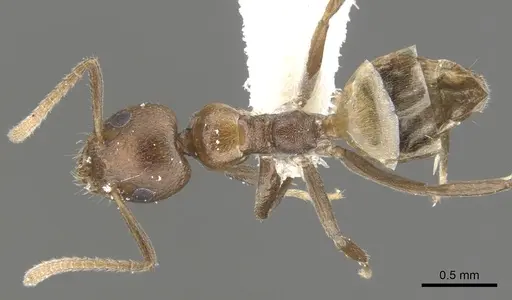
Literatür
Dağılım haritası yükleniyor...Ürünler yükleniyor...