
Aphaenogaster gamagumayaa
- Bilimsel Adı
- Aphaenogaster gamagumayaa
- Oymak (Tribe)
- Stenammini
- Alt Familya
- Myrmicinae
- Yazar (Tanımlayan)
- Naka & Maruyama, 2018
- Dağılım
- 0 ülkede bulundu
Giriş
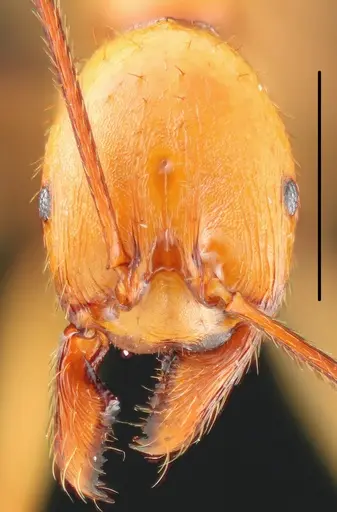
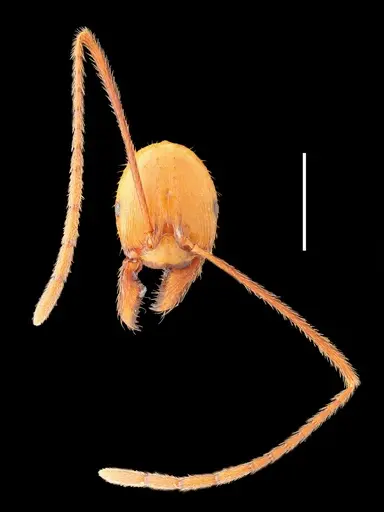
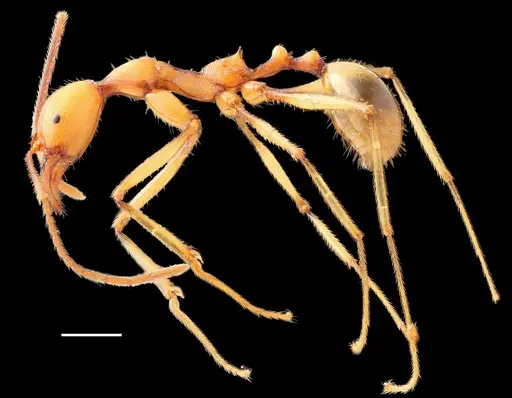
Aphaenogaster gamagumayaa is one of only two troglobiotic (true cave-dwelling) ant species known worldwide, the other being Leptogenys khammouanensis from Laos . Workers are pale yellowish with elongated bodies, extremely long antennae and legs, and tiny reduced eyes adapted to complete darkness . This species lives exclusively in a single limestone cave on Okinawa Island, Japan, where workers forage in bat guano deposits approximately 20 meters from the entrance . Only twelve workers have ever been observed, likely all from one nest, and queens remain completely unknown to science .
Quick Summary
- Difficulty: Expert
- Origin & Habitat: Okinawa Island, Japan, limestone caves with bat guano deposits in complete darkness [2]
- Colony Type: Unknown, queens and males have never been collected [2]
- Size & Growth:
- Antkeeping:
- Behavior: Solitary foragers that freeze and hide when disturbed, observed carrying guano into nest holes, do not exhibit gaster bending behavior typical of other Aphaenogaster species [2]
- Common Issues: queens and males are unknown, making captive colony founding impossible., requires complete darkness and specific cave microhabitat that is nearly impossible to replicate in captivity., only known from a single cave location, any collection threatens the only known wild population., the species may have legal protection as an endemic Okinawan species with extremely restricted range.
Cave Adaptations and Natural History
This species shows classic cave adaptations called troglomorphy. Workers have pale yellowish bodies, extremely long antennae and legs for sensing in darkness, and very small eyes that measure only 0.19 times the length of the temple region [2]. They live in a guano hall 20 meters inside a limestone cave where no light reaches [2]. The environment has wet clay soil and stays cooler than outside air, below 25°C compared to 28-32°C outside [2]. Workers forage alone and carry guano into holes in the cave floor, presumably for nutrition or nest building [2]. When disturbed, they freeze and wave their antennae to assess the threat [2]. Unlike other Aphaenogaster species, they do not show gaster bending behavior [2]. The species name gamagumayaa comes from the Ryukyuan dialect meaning cave-dwelling hermit [2].
Conservation Status
This ant is one of the rarest in the world. Scientists have found only twelve workers in one cave on Okinawa [2]. Taking specimens from the wild would harm the only known population. You should not attempt to collect or keep this species. The species may have legal protection as an endemic Okinawan species with an extremely restricted range.
Why This Species Is Not Available
Queens are unknown, so you cannot start a colony. Even if you found workers, you could not establish a breeding population. The species requires specific cave conditions including bat guano deposits, complete darkness, and cool temperatures below 25°C that are nearly impossible to maintain in captivity [2]. Extensive searches outside the cave found no specimens, confirming this species lives only inside this specific cave system [2].
Frequently Asked Questions
Can I keep Aphaenogaster gamagumayaa in a test tube setup?
No. Queens are unknown, and the species likely has legal protection as an Okinawan endemic. Only twelve workers have ever been found in the wild [2]. This species should not be kept in captivity.
How long does Aphaenogaster gamagumayaa take from egg to worker?
Unknown. No queens or brood have ever been observed [2].
What do Aphaenogaster gamagumayaa eat?
Workers carry guano, suggesting they may use bat guano for nutrition or nesting material, but their exact diet is unknown [2].
What temperature does Aphaenogaster gamagumayaa need?
Keep temperatures below 25°C based on cave measurements. The cave interior stays cooler than the 28-32°C exterior temperatures [2].
Where can I buy Aphaenogaster gamagumayaa?
You cannot buy this species. It is not available in the pet trade and should not be collected from the wild [2][1].
Is Aphaenogaster gamagumayaa dangerous?
They are small ants with no known sting. They freeze and hide when disturbed [2].
Do Aphaenogaster gamagumayaa need hibernation?
Unknown. They live in a stable cave environment that stays cool year-round [2].
Can I collect Aphaenogaster gamagumayaa from the cave in Okinawa?
No. The species is likely protected as an endemic, and collecting could endanger the only known population [2].
Report an Issue
The current care sheet is based fully on literature. See inconsistencies, or something that's incorrect? Please , it will be resolved after review from an admin. Contributing to the blogs tab also helps providing information, to make us be able to further improve the caresheets. Thank you for your support!
References

Bu bakım rehberi şu lisans altındadır: CC BY-SA 4.0 .
Topluluk Blogları
MMANT001
AntWeb'de Görüntüle
Literatür
Dağılım haritası yükleniyor...Ürünler yükleniyor...