
Anonychomyrma murina
- Bilimsel Adı
- Anonychomyrma murina
- Oymak (Tribe)
- Leptomyrmecini
- Alt Familya
- Dolichoderinae
- Yazar (Tanımlayan)
- Emery, 1911
- Dağılım
- 0 ülkede bulundu
Giriş
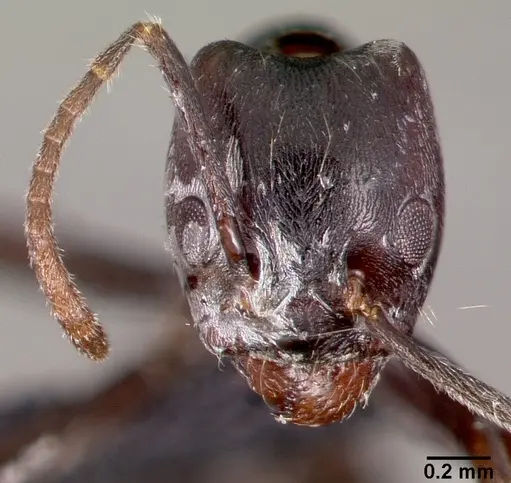
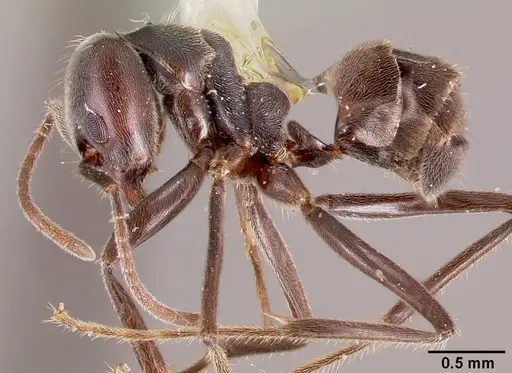
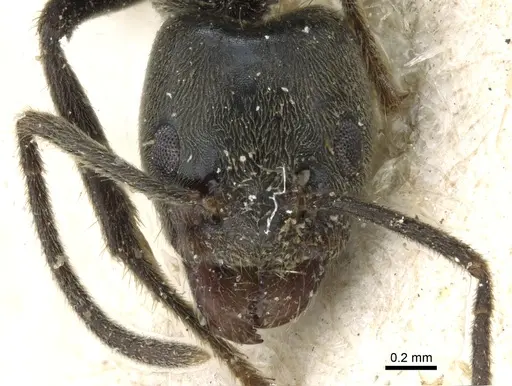
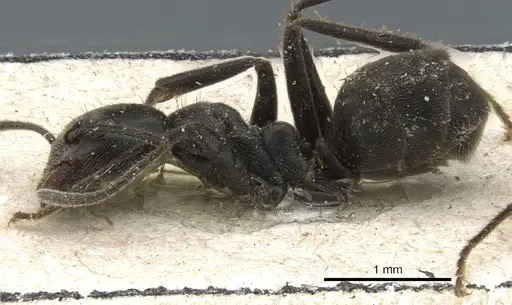
These tiny ants from New Guinea are known from specimens collected over a century ago at Wa Udu and Jamūr. Workers measure 3-4 mm and appear black with rust-brown mandibles and tarsus tips . Their bodies carry a dense coating of short gray hairs, giving them a slightly fuzzy look . The head is longer than wide with strongly curved sides and a widely notched back edge . The thorax shows a deep narrow waist behind the middle section, and the waist segment itself is thin and scale-like, curved on the front and slightly hollowed behind . Almost nothing is known about their behavior, colony structure, or care requirements in captivity.
Quick Summary
- Difficulty: Expert
- Origin & Habitat: New Guinea (Wa Udu, Jamūr), tropical forest based on collection location [1]
- Colony Type: Unknown, related Dolichoderinae are typically single-queen, but unconfirmed for this species
- Size & Growth:
- Antkeeping:
- Temperature: Keep warm and stable, roughly 25-28°C, based on tropical New Guinea origin [1]
- Humidity: Keep nest material damp but not waterlogged, tropical forest origin suggests high humidity needs [1]
- Diapause: No, tropical species active year-round [1]
- Nesting: Unknown, likely small cavities in rotting wood or under bark based on genus patterns
- Behavior: Unknown activity patterns. Their small size requires excellent escape prevention, tiny workers can slip through minute gaps [1]. As Dolichoderinae, they lack a functional sting and instead smear defensive chemical compounds from a slit-like opening at the tip of the abdomen when threatened [2].
- Common Issues: extreme scarcity of care data means husbandry is largely experimental., tiny 3-4mm workers escape through minute gaps, use fine mesh and barriers [1]., tropical humidity requirements may be difficult to maintain without proper setup., wild-caught colonies from New Guinea may introduce parasites or pathogens.
Appearance and Identification
Workers are small at just 3-4 mm, making them among the tinier ants in the hobby [1]. Their bodies are black with rust-brown mandibles and tarsus tips, creating a distinctive two-tone look [1]. A dense coat of very short gray hairs covers the entire body, giving them a slightly fuzzy or dusty appearance [1]. The head is noticeably longer than it is wide, with strongly curved sides and a widely notched back edge [1]. Their antennae are proportionally long, with the first segment extending past the back of the head [1]. The thorax has a deep constriction behind the middle section, and the waist segment is thin and scale-like [1]. Legs are proportionally long for their size [1].
Housing and Nest Setup
Because their natural nesting preferences are unknown, start with standard small-ant setups. Test tubes work well for founding colonies. For established colonies, use small formicaria with tight-fitting lids and fine mesh ventilation. Given their 3-4mm size, escape prevention must be excellent, use Fluon or baby powder barriers on all vertical surfaces, and ensure any mesh is fine enough to stop tiny workers [1]. If they follow patterns seen in related species, they may prefer small cavities in rotting wood or under bark rather than open soil nests.
Temperature and Humidity
Collected in tropical New Guinea, these ants need warm, stable conditions [1]. Start around 25-27°C and observe activity levels. If workers cluster near heat sources, they may prefer slightly higher temperatures, if they avoid warm areas, reduce heat. High humidity appears necessary given their forest origin, keep the nest substrate damp to the touch but not waterlogged [1]. Provide a moisture gradient if possible, with one side slightly drier so workers can choose their preferred humidity. Avoid hibernation, as a tropical species, they remain active year-round [1].
Feeding and Diet
Specific dietary preferences are unstudied, but as Dolichoderinae, they likely accept sugar water and small insects [2]. Offer diluted honey water or sugar water in a test tube or small feeder. For protein, provide tiny live prey such as springtails, fruit flies, or pinhead crickets chopped into appropriate sizes. Remove uneaten food quickly to prevent mold in the humid conditions they need. Avoid large prey items that could overwhelm tiny workers or rot before being consumed.
Behavior and Temperament
Little is known about their behavior in the wild or captivity. Their small size suggests they are fast-moving and potentially good climbers [1]. They lack stingers, typical for the subfamily Dolichoderinae, but may smear defensive chemicals when threatened [2]. Colony aggression levels are unknown. Their tiny size means they can exploit the smallest gaps in enclosures, so vigilance against escapes is essential [1].
Frequently Asked Questions
Can I keep Anonychomyrma murina in a test tube?
Yes, standard test tube setups are appropriate for small species like this. However, whether queens found colonies alone in sealed chambers or need to forage during founding is unconfirmed, so monitor founding queens carefully.
How long until Anonychomyrma murina gets its first workers?
Unconfirmed. Based on similar tropical Dolichoderinae, egg to worker development likely takes roughly 6-10 weeks at 25-27°C, but this is speculative for this species.
Do Anonychomyrma murina need hibernation?
No. They come from tropical New Guinea and remain active year-round at stable warm temperatures [1].
Are Anonychomyrma murina good for beginners?
No. The extreme lack of data about their care requirements, combined with their tiny size and escape risk, makes them suitable only for experienced keepers willing to experiment with unstudied species.
What do Anonychomyrma murina eat?
Unknown in detail. As Dolichoderinae, they likely accept sugar water and small insects, but specific preferences have not been studied. Offer honey water and tiny prey like springtails or fruit flies.
How big do Anonychomyrma murina colonies get?
Unknown. Colony size for this species has never been documented.
Can I keep multiple Anonychomyrma murina queens together?
Not recommended. Whether this species accepts multiple queens is unknown. Unrelated founding queens will likely fight, and even related queens may not be tolerated.
Why are my Anonychomyrma murina dying?
Likely causes include desiccation (they need tropical humidity), escape (tiny workers easily slip through gaps), or incorrect founding conditions (which are unstudied). Ensure high humidity, excellent escape prevention, and stable warm temperatures.
Report an Issue
The current care sheet is based fully on literature. See inconsistencies, or something that's incorrect? Please , it will be resolved after review from an admin. Contributing to the blogs tab also helps providing information, to make us be able to further improve the caresheets. Thank you for your support!
References

Bu bakım rehberi şu lisans altındadır: CC BY-SA 4.0 .
Topluluk Blogları
CASENT0003185
AntWeb'de Görüntüle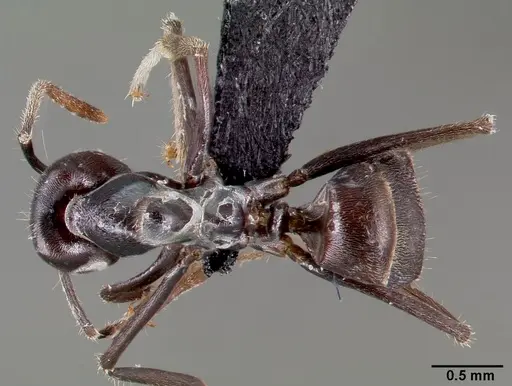
CASENT0905050
AntWeb'de Görüntüle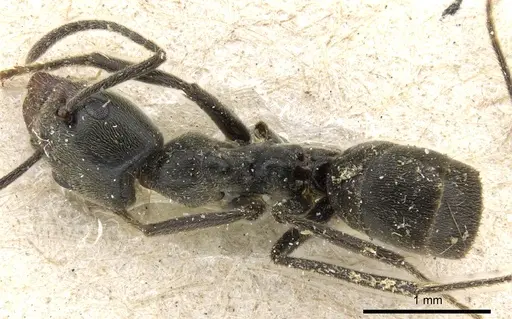
Literatür
Dağılım haritası yükleniyor...Ürünler yükleniyor...