
Anochetus strigatellus
- Bilimsel Adı
- Anochetus strigatellus
- Oymak (Tribe)
- Ponerini
- Alt Familya
- Ponerinae
- Yazar (Tanımlayan)
- Brown, 1978
- Dağılım
- 0 ülkede bulundu
Giriş
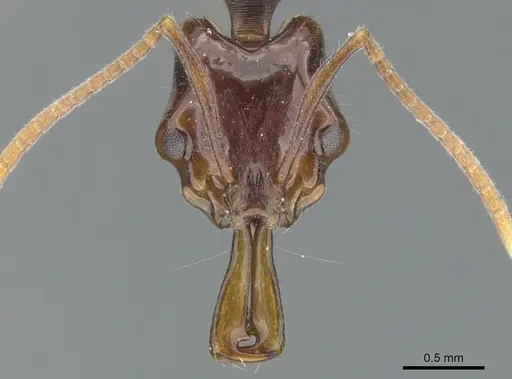
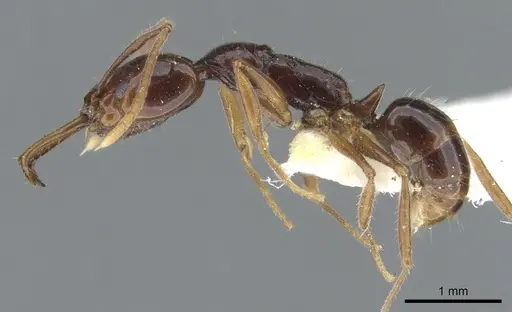
Anochetus strigatellus is a trap-jaw ant species in the Ponerinae subfamily. Workers are slender and measure 5.2-5.5mm in total length, with a dark reddish-brown coloration. They belong to the risii species group and can be identified by their extensive frontal striation that extends to within 0.2mm of the nuchal carina, a smooth and shining pronotal disc, and fine propodeal striation. Their most distinctive feature is their trap-jaw mandibles, which are very broad at the base with stronger teeth on the mesial part. The petiolar node has a narrowly rounded, nipple-like apex. This species is known only from the Malaysian Peninsula (Trengganu region).
Quick Summary
- Difficulty: Unknown, biology unstudied
- Origin & Habitat: Malaysian Peninsula (Trengganu), Indomalaya Region. Found in tropical forest habitats, though specific microhabitat preferences are unconfirmed. [3]
- Colony Type: Unknown, only workers have been described. Queens and males remain unknown. [3]
- Size & Growth:
- Queen: Unknown, queens have not been described [3]
- Worker: 5.2-5.5mm total length [3]
- Colony: Unknown, colony biology unstudied [3]
- Growth: Unknown, development timeline unstudied
- Development: Unknown, no development data exists for this species (No research has documented the development timeline. Related Anochetus species typically take 6-10 weeks from egg to worker at tropical temperatures, but this is an estimate for similar species only.)
- Antkeeping:
- Temperature: Unknown for this species. Based on related Anochetus species from Southeast Asia, likely prefer warm conditions in the range of 24-28°C. Start in the mid-20s and observe colony activity.
- Humidity: Unknown, no humidity data exists. Being a Malaysian species, likely prefers moderate to high humidity similar to other tropical Ponerinae.
- Diapause: Unknown, no seasonal data exists. Malaysian ants typically do not enter true diapause but may reduce activity during cooler or drier periods.
- Nesting: Unknown, natural nesting behavior unstudied. Related Anochetus species typically nest in soil, rotting wood, or under stones in forest floor habitats. A naturalistic setup with moist substrate or a Y-tong/plaster nest would be appropriate starting points.
- Behavior: Trap-jaw ants with powerful mandibles used to capture prey. Like other Anochetus species, they are likely predatory hunters that actively forage for small invertebrates. Workers are moderately sized (5.2-5.5mm) and should be handled with care due to their bite potential. Escape prevention should be moderate, their size is not extremely small but they are agile.
- Common Issues: no biological data exists, this is one of the least studied ant species in the hobby, queen and male castes unknown, cannot obtain mated queens for captive breeding, colony size and growth rate completely unstudied, temperature and humidity requirements are estimates only, no documented captive breeding success exists for this species
Species Identification and Taxonomy
Anochetus strigatellus was described by Brown in 1978 based on worker specimens collected from Trengganu in the Malaysian Peninsula. It belongs to the risii species group, characterized by extensive frontal striation that fans out over the central vertex. The species can be distinguished from related species like Anochetus incultus and Anochetus modicus by its expanded frontal striation reaching back to within 0.2mm of the nuchal carina, the less reduced (longer) mesonotal disc, fine crisp propodeal striation (approximately 40 striae), and darker body color. The petiolar node is slender with a narrowly rounded, almost nipple-like apex. This is a trap-jaw ant related to Odontomachus, with very broad mandibles at the base and stronger teeth on the mesial portion. [1][2][3]
Distribution and Habitat
Anochetus strigatellus is known only from the Malaysian Peninsula, specifically the Trengganu region. This places it in the Indomalaya biogeographic region. The type specimens were collected in February 1974. As a tropical Malaysian ant, it likely inhabits forest floor environments in the humid tropical climate of the region. The specific microhabitat preferences (rotting wood, soil depth, shade levels) remain unstudied. This is one of only eight Anochetus species documented from Malaysia. [3][1]
Current State of Knowledge
Anochetus strigatellus is one of the least studied ant species in the hobby. The scientific literature provides only morphological descriptions of workers, nothing is known about their biology, colony structure, queen reproduction, nuptial flights, development timeline, or captive care requirements. Queens and males have never been described, meaning wild colonies have not been observed with reproductive castes. This represents a significant gap in antkeeping knowledge for this species. Any captive keeping recommendations would be speculative guesses based on related Anochetus species rather than species-specific data. [3]
Trap-Jaw Ant General Care (Related Species Reference)
While specific care for A. strigatellus is unknown, trap-jaw ants in the genus Anochetus are generally predatory hunters that use their powerful mandibles to capture prey. Related species from Southeast Asia typically prefer warm, humid conditions. They are not colonial species and should be kept in single-queen arrangements. Workers are moderately sized and can deliver a painful bite if handled roughly. For any related Anochetus species in captivity, keepers typically provide a protein-rich diet of small insects, maintain moderate to high humidity, and keep temperatures in the mid-20s Celsius. However, these are general patterns and may not apply to this specific species.
Frequently Asked Questions
How do I care for Anochetus strigatellus ants?
There is no established care guide for this species, the biology is completely unstudied. Any recommendations would be speculative guesses based on related Anochetus species. If you obtain this species, expect to experiment with temperature (likely 24-28°C), humidity (likely 60-80%), and diet (likely small live prey). This species is not recommended for beginners due to the complete lack of biological data. [3]
What do Anochetus strigatellus ants eat?
Unknown for this specific species. Based on genus-level knowledge, Anochetus ants are predatory and likely hunt small invertebrates. Related species typically accept small insects like fruit flies, pinhead crickets, and other micro-arthropods. Sugar sources may or may not be accepted. No documented feeding observations exist for this species.
Can I breed Anochetus strigatellus in captivity?
This is likely not possible at this time. Queens and males have never been described in the scientific literature, meaning no one has documented the reproductive castes or nuptial flights for this species. Without knowing what the queen looks like or when/how they mate, captive breeding would be extremely difficult if not impossible. [3]
How big do Anochetus strigatellus colonies get?
Unknown, colony size has never been studied. Related Anochetus species typically form colonies of several hundred workers, but this is just an estimate. The maximum colony size for this species is completely undocumented. [3]
What temperature do Anochetus strigatellus ants need?
Unknown, no temperature data exists for this species. As a Malaysian tropical ant, they likely prefer warm conditions in the range of 24-28°C. This is an estimate based on related species from similar climates. Start in the mid-20s and monitor colony activity to find the ideal range.
Are Anochetus strigatellus good for beginners?
No. This species is not recommended for beginners due to the complete lack of biological data. There are no established care guidelines, no documented captive breeding success, and queens have never been described. Beginners should choose species with well-documented care requirements. [3]
Where can I find Anochetus strigatellus queens?
Queens of this species have never been described in the scientific literature. It is extremely unlikely that any antkeeper has successfully located or kept a true queen of this species. The reproductive biology is completely unknown, making queen acquisition essentially impossible at this time. [3]
Do Anochetus strigatellus ants need hibernation?
Unknown, no seasonal data exists. As a Malaysian species from a tropical climate, they likely do not require true hibernation. They may reduce activity during cooler or drier periods, but this is unstudied.
What type of nest should I use for Anochetus strigatellus?
Unknown, natural nesting behavior is unstudied. Based on related Anochetus species, they likely nest in soil, rotting wood, or under stones in forest habitats. A naturalistic setup with moist substrate or a Y-tong/plaster nest would be reasonable starting points. Monitor for escape and adjust based on colony behavior.
Report an Issue
The current care sheet is based fully on literature. See inconsistencies, or something that's incorrect? Please , it will be resolved after review from an admin. Contributing to the blogs tab also helps providing information, to make us be able to further improve the caresheets. Thank you for your support!
References

Bu bakım rehberi şu lisans altındadır: CC BY-SA 4.0 .
Topluluk Blogları
CASENT0902438
AntWeb'de Görüntüle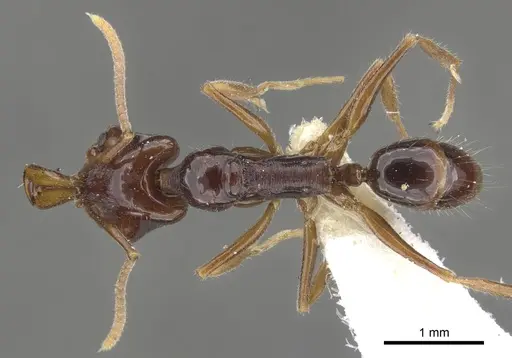
Literatür
Dağılım haritası yükleniyor...Ürünler yükleniyor...